• Fri frakt över 249 kr
  • •
  • Snabba leveranser
  • •
  • Billiga böcker
Kundservice

Du är på sajten för privatpersoner.

Företag, bibliotek eller offentlig verksamhet?

Du handlar på classic.bokus.com, där alla dina funktioner finns intakta.
Till classic.bokus.com
Bokus logotyp. Gå till startsidan.
  • Erbjudanden
  • Nyheter
  • Student
  • Topplistor
  • Barn & ungdom
  • Bokus Play
  • E-böcker
  • Pocketböcker
  • Spel & pussel

10% rabatt på allt med kod NYSTART10 →

Sidfot

Mina sidor

    Hjälp

    • Kundservice
    • Vanliga frågor och svar
    • Frakt och leverans
    • Retur vid ångerrätt
    • Reklamera vara
    • Betalning
    • Köpvillkor
    • Allmänna villkor
    • Information om webbplatsens tillgänglighet

    Om Bokus

    • Om oss
    • Pressrum
    • För studenter
    • För företag
    • För bibliotek och offentlig verksamhet
    • För leverantörer
    • Hållbarhet

    Populärt

    • Aktuella erbjudanden
    • Presentkort
    • Studentlitteratur
    • Nya böcker
    • Topplistor
    • Signerade böcker
    • Engelska böcker

    Inspiration

    • Boktips
    • BookTok
    • Populära bokserier
    • Barnbokskaraktärer
    • Populära författare
    Logotyp för Bokus
    Följ oss på Facebook (extern länk)Följ oss på Instagram (extern länk)Följ oss på YouTube (extern länk)Följ oss på TikTok (extern länk)
    bokus @ CookiesAnpassa cookiesIntegritetspolicyKöpvillkor
    Till Citymail hemsida (extern länk)Till Budbee hemsida (extern länk)Till Postnord hemsida (extern länk)Till Schenker hemsida (extern länk)Till Early Bird hemsida (extern länk)Till Walleys hemsida (extern länk)
    1. Samhälle och politik
    2. Samhälle och kultur
    3. Sociala grupper och identitet
    4. Genusvetenskap

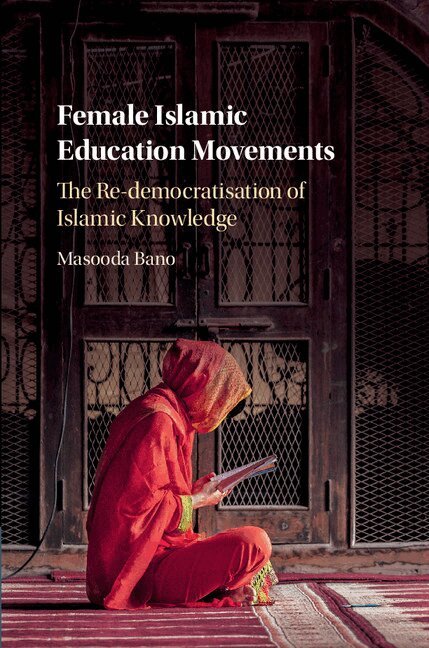
    Female Islamic Education Movements

    The Re-democratisation of Islamic Knowledge

    AvMasooda Bano

    Inbunden, Engelska, 2017

    1 335 kr

    Tillfälligt slut

    Fler format och utgåvor

    Häftad

    463 kr

    Beskrivning

    Since the 1970s, movements aimed at giving Muslim women access to the serious study of Islamic texts have emerged across the world. In this book, Masooda Bano argues that the creative spirit that marked the rise and consolidation of Islam, whereby Islam inspired serious intellectual engagement to create optimal societal institutions, can be found within these education movements. Drawing on rich ethnographic material from Pakistan, northern Nigeria and Syria, Bano questions the restricted notion of agency associated with these movements, exploring the educational networks which have attracted educated, professional and culturally progressive Muslim women to textual study, thus helping to reverse the most damaging legacy of colonial rule in Muslim societies: the isolation of modern and Islamic knowledge. With its comparative approach, this will appeal to those studying and researching the role of women across Africa, the Middle East and South Asia, as well as the wider Muslim world.

    Produktinformation

    • Utgivningsdatum:2017-08-31
    • Mått:155 x 234 x 16 mm
    • Vikt:550 g
    • Format:Inbunden
    • Språk:Engelska
    • Antal sidor:262
    • Förlag:Cambridge University Press
    • ISBN:9781107188839

    Utforska kategorier

    • Genusvetenskap inom Samhälle och politik

    Mer om författaren

    Masooda Bano is Associate Professor in the Oxford Department of International Development (ODID), and Senior Golding Fellow at Brasenose College, Oxford. She is currently leading a five-year long European Research Council (ERC) funded project entitled Changing Structures of Islamic Authority and Consequences for Social Change: A Transnational Review. She has previously authored and co-edited three books on Islamic education in contemporary Muslim societies.

    Innehållsförteckning

    • 1. Understanding knowledge creation: a re-reading of female Islamic education movements; Part I. The Power of Dispersed Knowledge: 2. Incentivising creative outcomes: historical patterns; 3. Knowledge production and student profiles; Part II. Incentivising the Mixing of Knowledge: 4. Institutional shifts: facilitating emergence; 5. Institutional shifts: facilitating expansion; 6. Institutional shifts: the rise of Western feminism; Part III. Conclusion: 7. Incentivising creative outcomes: looking forward.