• Fri frakt över 249 kr
  • •
  • Snabba leveranser
  • •
  • Billiga böcker
Kundservice

Du är på sajten för privatpersoner.

Företag, bibliotek eller offentlig verksamhet?

Du handlar på classic.bokus.com, där alla dina funktioner finns intakta.
Till classic.bokus.com
Bokus logotyp. Gå till startsidan.
  • Erbjudanden
  • Student
  • Topplistor
  • Barn & ungdom
  • Bokus Play
  • E-böcker
  • Ljudböcker
  • Pocketböcker
  • Spel och pussel

Pocketfynda! Hundratals böcker för 49 kr/st →

Sidfot

Mina sidor

    Hjälp

    • Kundservice
    • Vanliga frågor och svar
    • Frakt och leverans
    • Retur vid ångerrätt
    • Reklamera vara
    • Betalning
    • Köpvillkor
    • Allmänna villkor
    • Information om webbplatsens tillgänglighet

    Om Bokus

    • Om oss
    • Pressrum
    • För studenter
    • För företag
    • För bibliotek och offentlig verksamhet
    • För leverantörer
    • Hållbarhet

    Populärt

    • Aktuella erbjudanden
    • Presentkort
    • Studentlitteratur
    • Nya böcker
    • Topplistor
    • Signerade böcker
    • Engelska böcker

    Inspiration

    • Boktips
    • BookTok
    • Barnbokskaraktärer
    • Populära författare
    Logotyp för Bokus
    Följ oss på Facebook (extern länk)Följ oss på Instagram (extern länk)Följ oss på YouTube (extern länk)Följ oss på TikTok (extern länk)
    bokus @ CookiesAnpassa cookiesIntegritetspolicyKöpvillkor
    Till Citymail hemsida (extern länk)Till Budbee hemsida (extern länk)Till Postnord hemsida (extern länk)Till Schenker hemsida (extern länk)Till Early Bird hemsida (extern länk)Till Walleys hemsida (extern länk)
    1. Skönlitteratur
    2. Litteraturvetenskap
    3. Litteraturvetenskap

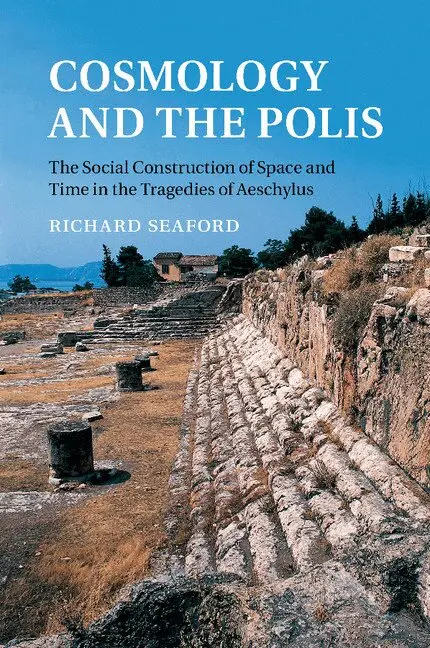
    Cosmology and the Polis

    The Social Construction of Space and Time in the Tragedies of Aeschylus

    AvRichard Seaford

    Häftad, Engelska, 2015

    625 kr

    Beställningsvara. Skickas inom 7-10 vardagar. Fri frakt över 249 kr.

    Fler format och utgåvor

    Inbunden

    1 771 kr

    Beskrivning

    This book further develops Professor Seaford's innovative work on the study of ritual and money in the developing Greek polis. It employs the concept of the chronotope, which refers to the phenomenon whereby the spatial and temporal frameworks explicit or implicit in a text have the same structure, and uncovers various such chronotopes in Homer, the Homeric Hymn to Demeter, Presocratic philosophy and in particular the tragedies of Aeschylus. Mikhail Bakhtin's pioneering use of the chronotope was in literary analysis. This study by contrast derives the variety of chronotopes manifest in Greek texts from the variety of socially integrative practices in the developing polis - notably reciprocity, collective ritual and monetised exchange. In particular, the Oresteia of Aeschylus embodies the reassuring absorption of the new and threatening monetised chronotope into the traditional chronotope that arises from collective ritual with its aetiological myth. This argument includes the first ever demonstration of the profound affinities between Aeschylus and the (Presocratic) philosophy of his time.

    Produktinformation

    • Utgivningsdatum:2015-01-01
    • Mått:153 x 230 x 22 mm
    • Vikt:560 g
    • Format:Häftad
    • Språk:Engelska
    • Antal sidor:382
    • Förlag:Cambridge University Press
    • ISBN:9781107470729

    Utforska kategorier

    • Litteraturvetenskap inom Skönlitteratur

    Mer om författaren

    Richard Seaford is Professor of Ancient Greek at the University of Exeter. His publications range from Homer to the New Testament and include commentaries on Euripides' Cyclops (1984) and Euripides' Bacchae (1996), Reciprocity and Ritual: Homer and Tragedy and the Developing City-State (1994) and Money and the Early Greek Mind: Homer, Philosophy, Tragedy (2004). In 2009 he was President of the Classical Association.

    Recensioner i media

    'This is an important work that redefines our conception of central categories of early Greek thought: space, time, ritual, and money. It will be of interest to scholars and advanced students working in the areas of classical Greek literature, Greek history, philosophy, and theatre.' Vayos Liapis, The Classical Journal

    Innehållsförteckning

    • Introduction; Part I. The Social Construction of Space, Time and Cosmology: 1. Homer: the reciprocal chronotope; 2. Demeter Hymn: the aetiological chronotope; 3. From reciprocity to money; Part II. Dionysiac Festivals: 4. Royal household and public festival; 5. Aetiological chronotope and dramatic mimesis; 6. Monetisation and tragedy; Part III. Limit and the Unlimited in Confrontational Space: 7. Telos and the unlimitedness of money; 8. Suppliants; 9. Septem; 10. Confrontational space in Oresteia; 11. The unlimited in Oresteia; 12. Persians; Part IV. The Unity of Opposites: 13. Form-parallelism and the unity of opposites; 14. Aeschylus and Herakleitos; 15. From the unity of opposites to their differentiation; Part V. Cosmology of the Integrated Polis: 16. Metaphysics and the polis in Pythagoreanism; 17. Pythagoreanism in Aeschylus; 18. Household, cosmos and polis; Appendix: was there a skēnē for all the extant plays of Aeschylus?