Richard Seaford – författare
Visar alla böcker från författaren Richard Seaford. Handla med fri frakt och snabb leverans.
27 produkter
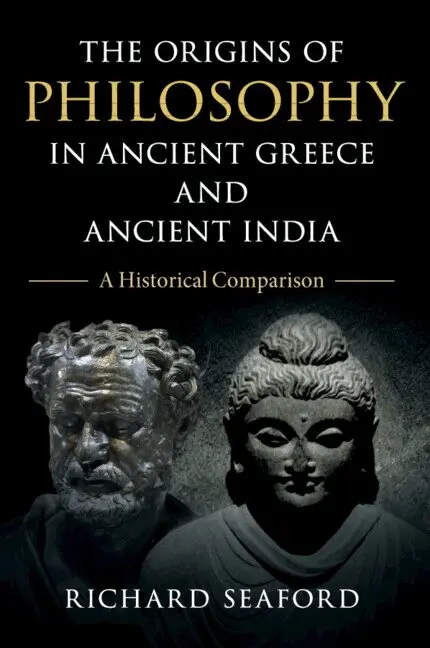
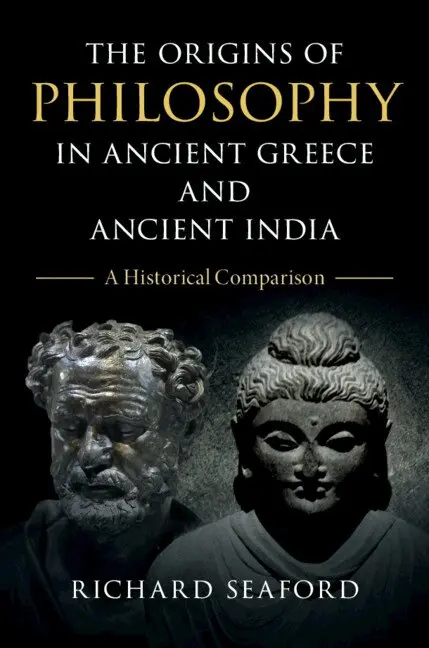
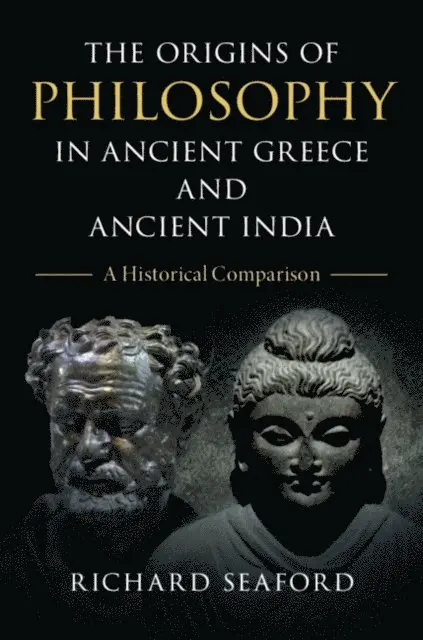
The Origins of Philosophy in Ancient Greece and Ancient India
A Historical Comparison
Häftad, 2024
471 kr
Lägg i varukorg
Why did Greek philosophy begin in the sixth century BCE? Why did Indian philosophy begin at about the same time? Why did the earliest philosophy take the form that it did? Why was this form so similar in Greece and India? And how do we explain the differences between them? These questions can only …
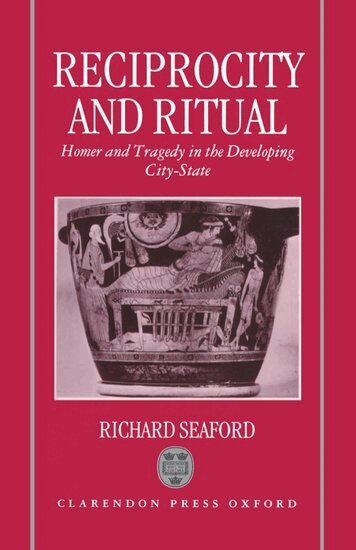
Reciprocity and Ritual
Homer and Tragedy in the Developing City-State
Inbunden, 1994
1324 kr
Lägg i varukorg
This is an exciting and entirely new synthesis, combining anthropology, political and social history, and the close reading of central Greek texts, to account for two the most significant hallmarks in Homeric epic and Athenian tragedy: the representation of ritual and codes of reciprocity.Both …
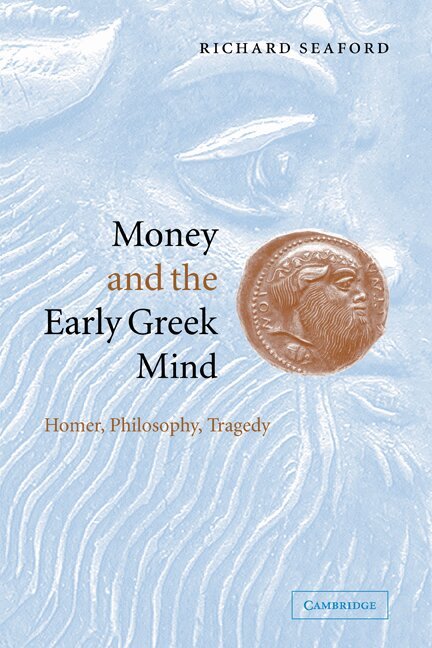
Money and the Early Greek Mind
Homer, Philosophy, Tragedy
Häftad, 2004
796 kr
Lägg i varukorg
How were the Greeks of the sixth century BC able to invent philosophy and tragedy? In this book Richard Seaford argues that a large part of the answer can be found in another momentous development, the invention and rapid spread of coinage which produced the first ever thoroughly monetised society. …
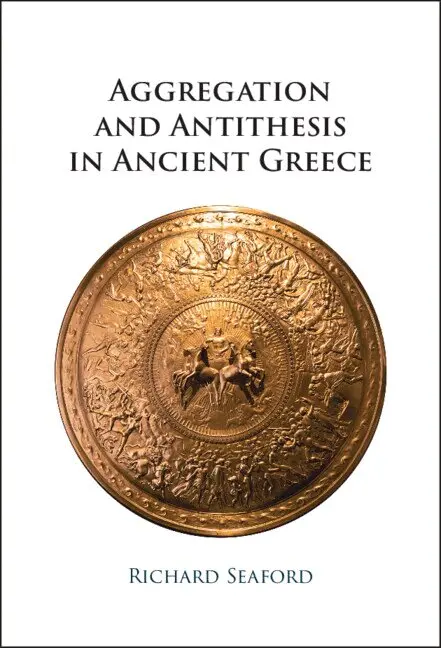
Aggregation and Antithesis in Ancient Greece
Inbunden, 2025
1481 kr
Lägg i varukorg
What is the relationship between forms of thought in literature, philosophy and visual art in ancient Greece, and how are these forms related to their socio-political and economic context? This is the question raised by Richard Seaford in his final book. His answer is framed in terms of the …
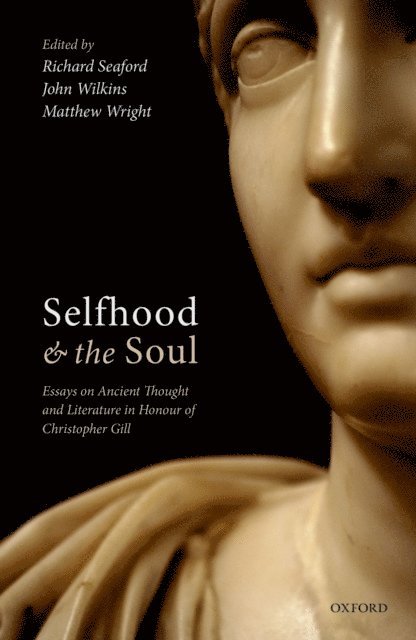
Selfhood and the Soul
Essays on Ancient Thought and Literature in Honour of Christopher Gill
Av Matthew Wright, John Wilkins m. fl.
E-bok, 2017
1645 kr
Lägg i varukorg
Selfhood and the Soul is a collection of new and original essays in honour of Christopher Gill, Emeritus Professor of Ancient Thought at the University of Exeter. All of the essays in the volume contribute to a shared project - the exploration of ancient concepts of self and soul, understood in a …
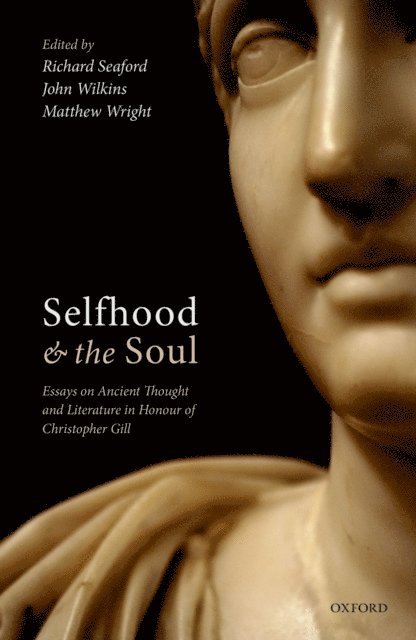
Selfhood and the Soul
Essays on Ancient Thought and Literature in Honour of Christopher Gill
Av Matthew Wright, John Wilkins m. fl.
E-bok, 2017
1645 kr
Lägg i varukorg
Selfhood and the Soul is a collection of new and original essays in honour of Christopher Gill, Emeritus Professor of Ancient Thought at the University of Exeter. All of the essays in the volume contribute to a shared project - the exploration of ancient concepts of self and soul, understood in a …
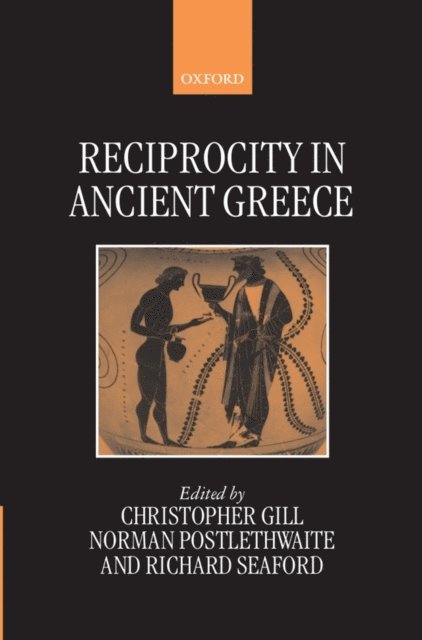
Reciprocity in Ancient Greece
Av Richard Seaford, Norman Postlethwaite m. fl.
E-bok, 1998
3606 kr
Lägg i varukorg
In this collection of new essays, an international group of experts explores the significance of reciprocity (the principle and practice of voluntary requital, of benefit for benefit or harm for harm) in ancient Greek culture. Reciprocity has been seen as an important notion for anthropologists …
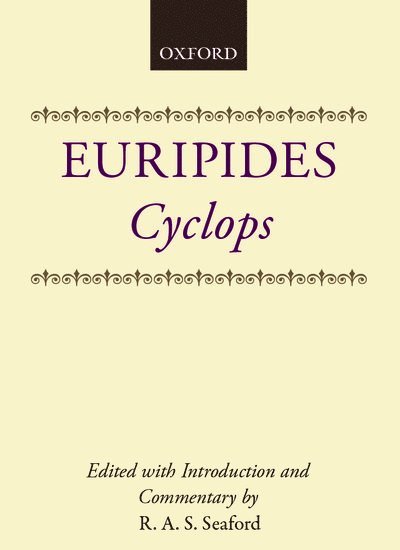
Cyclops
Häftad, 1988
229 kr
Lägg i varukorg
This paperback edition of Euripides' Cyclops (first published in hardback in 1984) provides an invaluable introduction to the text for students. The play itself is the only example of satyric drama to have survived complete into the modern world. This edition uses the Oxford Classical Text, edited …
Reciprocity in Ancient Greece
Av Christopher Gill, Norman Postlethwaite m. fl.
Inbunden, 1998
5453 kr
Lägg i varukorg
In this collection of new essays, an international group of experts explores the significance of reciprocity (the principle and practice of voluntary requital, of benefit for benefit or harm for harm) in ancient Greek culture. Reciprocity has been seen as an important notion for anthropologists …
Reciprocity and Ritual
Homer and Tragedy in the Developing City-State
Häftad, 1995
1640 kr
Lägg i varukorg
This is an exciting and entirely new synthesis, combining anthropology, political and social history, and the close reading of central Greek texts, to account for two the most significant hallmarks in Homeric epic and Athenian tragedy: the representation of ritual and codes of reciprocity.Both …
Selfhood and the Soul
Essays on Ancient Thought and Literature in Honour of Christopher Gill
Av Richard Seaford, Richard Seaford m. fl.
Inbunden, 2017
2605 kr
Lägg i varukorg
Selfhood and the Soul is a collection of new and original essays in honour of Christopher Gill, Emeritus Professor of Ancient Thought at the University of Exeter. All of the essays in the volume contribute to a shared project - the exploration of ancient concepts of self and soul, understood in a …
Dionysos
Inbunden, 2006
2136 kr
Lägg i varukorg
Covering a wide range of issues which have been overlooked in the past, including mystery, cult and philosophy, Richard Seaford explores Dionysos – one of the most studied figures of the ancient Greek gods.Popularly known as the god of wine and frenzied abandon, and an influential figure for …
Dionysos
Häftad, 2006
532 kr
Lägg i varukorg
Covering a wide range of issues which have been overlooked in the past, including mystery, cult and philosophy, Richard Seaford explores Dionysos – one of the most studied figures of the ancient Greek gods.Popularly known as the god of wine and frenzied abandon, and an influential figure for …
Money and the Early Greek Mind
Homer, Philosophy, Tragedy
Inbunden, 2004
1872 kr
Lägg i varukorg
How were the Greeks of the sixth century BC able to invent philosophy and tragedy? In this book Richard Seaford argues that a large part of the answer can be found in another momentous development, the invention and rapid spread of coinage which produced the first ever thoroughly monetised society. …
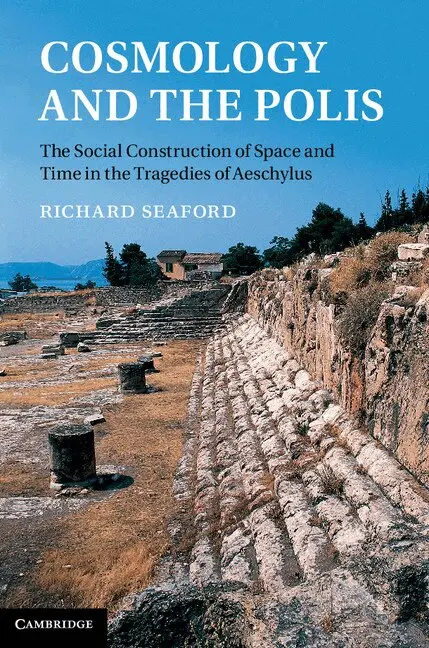
Cosmology and the Polis
The Social Construction of Space and Time in the Tragedies of Aeschylus
Inbunden, 2012
2153 kr
Lägg i varukorg
This book further develops Professor Seaford's innovative work on the study of ritual and money in the developing Greek polis. It employs the concept of the chronotope, which refers to the phenomenon whereby the spatial and temporal frameworks explicit or implicit in a text have the same structure, …
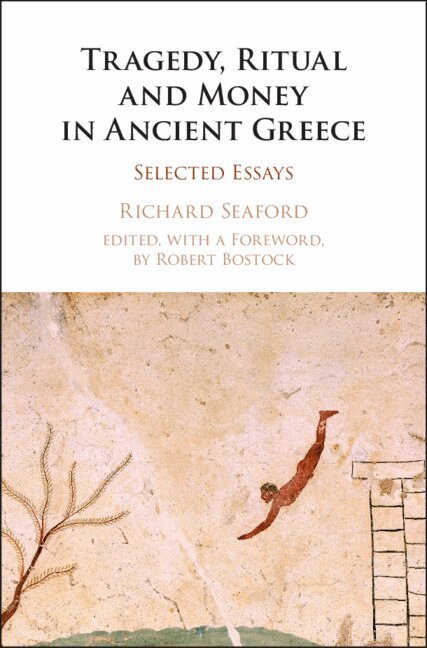
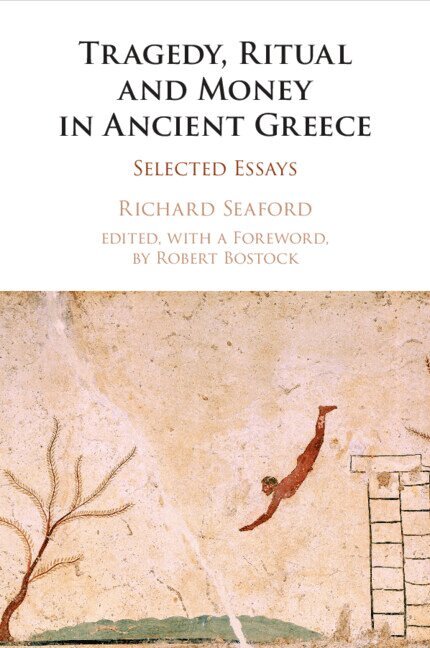
Tragedy, Ritual and Money in Ancient Greece
Selected Essays
Av Richard Seaford, Robert Bostock
Inbunden, 2018
2095 kr
Lägg i varukorg
Richard Seaford is one of the most original and provocative classicists of his age. This volume brings together a wide range of papers written with a single focus. Several are pioneering explorations of the tragic evocation and representation of rites of passage: mystic initiation, the wedding, and …
Cosmology and the Polis
The Social Construction of Space and Time in the Tragedies of Aeschylus
Häftad, 2015
767 kr
Lägg i varukorg
This book further develops Professor Seaford's innovative work on the study of ritual and money in the developing Greek polis. It employs the concept of the chronotope, which refers to the phenomenon whereby the spatial and temporal frameworks explicit or implicit in a text have the same structure, …
The Origins of Philosophy in Ancient Greece and Ancient India
A Historical Comparison
Inbunden, 2019
634 kr
Lägg i varukorg
Why did Greek philosophy begin in the sixth century BCE? Why did Indian philosophy begin at about the same time? Why did the earliest philosophy take the form that it did? Why was this form so similar in Greece and India? And how do we explain the differences between them? These questions can only …
Origins of Philosophy in Ancient Greece and Ancient India
A Historical Comparison
E-bok, 2019
447 kr
Lägg i varukorg
Why did Greek philosophy begin in the sixth century BCE? Why did Indian philosophy begin at about the same time? Why did the earliest philosophy take the form that it did? Why was this form so similar in Greece and India? And how do we explain the differences between them? These questions can only …
Origins of Philosophy in Ancient Greece and Ancient India
A Historical Comparison
E-bok, 2019
457 kr
Lägg i varukorg
Why did Greek philosophy begin in the sixth century BCE? Why did Indian philosophy begin at about the same time? Why did the earliest philosophy take the form that it did? Why was this form so similar in Greece and India? And how do we explain the differences between them? These questions can only …
Dionysos
E-bok, 2006
610 kr
Lägg i varukorg
Covering a wide range of issues which have been overlooked in the past, including mystery, cult and philosophy, Richard Seaford explores Dionysos – one of the most studied figures of the ancient Greek gods. Popularly known as the god of wine and frenzied abandon, and an influential figure for …
Dionysos
E-bok, 2006
610 kr
Lägg i varukorg
Covering a wide range of issues which have been overlooked in the past, including mystery, cult and philosophy, Richard Seaford explores Dionysos – one of the most studied figures of the ancient Greek gods. Popularly known as the god of wine and frenzied abandon, and an influential figure for …
Tragedy, Ritual and Money in Ancient Greece
Selected Essays
Av Richard Seaford, Robert Bostock
Häftad, 2024
766 kr
Lägg i varukorg
Richard Seaford is one of the most original and provocative classicists of his age. This volume brings together a wide range of papers written with a single focus. Several are pioneering explorations of the tragic evocation and representation of rites of passage: mystic initiation, the wedding, and …
Universe and Inner Self in Early Indian and Early Greek Thought
Inbunden, 2016
1397 kr
Lägg i varukorg
From the sixth century BCE onwards there occurred a revolution in thought, with novel ideas such as such as that understanding the inner self is both vital for human well-being and central to understanding the universe. This intellectual transformation is sometimes called the beginning of …
Universe and Inner Self in Early Indian and Early Greek Thought
Av Richard Seaford, Richard Seaford
Häftad, 2017
677 kr
Lägg i varukorg
This volume brings together Hellenists and Indologists representing a variety of perspectives on the similarities and differences between the two cultures. It offers a collaborative contribution to the burgeoning interest in the Axial Age and will be of interest to anyone intrigued by the big …