• Fri frakt över 249 kr
  • •
  • Snabba leveranser
  • •
  • Billiga böcker
Kundservice

Du är på sajten för privatpersoner.

Företag, bibliotek eller offentlig verksamhet?

Du handlar på classic.bokus.com, där alla dina funktioner finns intakta.
Till classic.bokus.com
Bokus logotyp. Gå till startsidan.
  • Erbjudanden
  • Nyheter
  • Student
  • Topplistor
  • Barn & ungdom
  • Bokus Play
  • E-böcker
  • Pocketböcker
  • Spel & pussel

10% studentrabatt med kod TERM26

Sidfot

Mina sidor

    Hjälp

    • Kundservice
    • Vanliga frågor och svar
    • Frakt och leverans
    • Retur vid ångerrätt
    • Reklamera vara
    • Betalning
    • Köpvillkor
    • Allmänna villkor
    • Information om webbplatsens tillgänglighet

    Om Bokus

    • Om oss
    • Pressrum
    • För studenter
    • För företag
    • För bibliotek och offentlig verksamhet
    • För leverantörer
    • Hållbarhet

    Populärt

    • Aktuella erbjudanden
    • Presentkort
    • Studentlitteratur
    • Nya böcker
    • Topplistor
    • Signerade böcker
    • Engelska böcker

    Inspiration

    • Boktips
    • BookTok
    • Populära bokserier
    • Barnbokskaraktärer
    • Populära författare
    Logotyp för Bokus
    Följ oss på Facebook (extern länk)Följ oss på Instagram (extern länk)Följ oss på YouTube (extern länk)Följ oss på TikTok (extern länk)
    bokus @ CookiesAnpassa cookiesIntegritetspolicyKöpvillkor
    Till Citymail hemsida (extern länk)Till Budbee hemsida (extern länk)Till Postnord hemsida (extern länk)Till Schenker hemsida (extern länk)Till Early Bird hemsida (extern länk)Till Walleys hemsida (extern länk)
    1. Kultur
    2. Konstböcker
    3. Konsthistoria

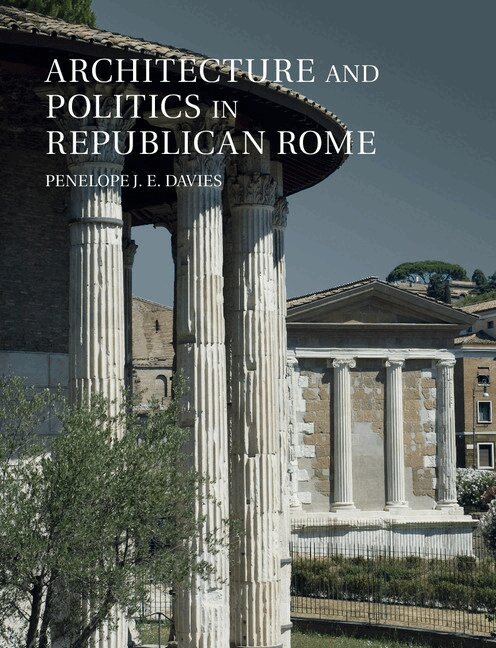
    Architecture and Politics in Republican Rome

    AvPenelope J. E. Davies

    Häftad, Engelska, 2020

    509 kr

    Beställningsvara. Skickas inom 10-15 vardagar. Fri frakt över 249 kr.

    Beskrivning

    Architecture and Politics in Republican Rome is the first book to explore the intersection between Roman Republican building practices and politics (c.509-44 BCE). At the start of the period, architectural commissions were carefully controlled by the political system; by the end, buildings were so widely exploited and so rhetorically powerful that Cassius Dio cited abuse of visual culture among the reasons that propelled Julius Caesar's colleagues to murder him in order to safeguard the Republic. In an engaging and wide-ranging text, Penelope J. E. Davies traces the journey between these two points, as politicians developed strategies to manoeuver within the system's constraints. She also explores the urban development and image of Rome, setting out formal aspects of different types of architecture and technological advances such as the mastery of concrete. Elucidating a rich corpus of buildings that have been poorly understand, Davies demonstrates that Republican architecture was much more than a formal precursor to that of imperial Rome.

    Produktinformation

    • Utgivningsdatum:2020-06-09
    • Mått:217 x 278 x 18 mm
    • Vikt:1 060 g
    • Format:Häftad
    • Språk:Engelska
    • Antal sidor:376
    • Förlag:Cambridge University Press
    • ISBN:9781107476110

    Utforska kategorier

    • Konsthistoria inom Kultur

    Mer om författaren

    Penelope J. E. Davies is Associate Professor in the Department of Art and Art History at the University of Texas, Austin. She earned her PhD in Classical Archaeology from Yale University, Connecticut. Her work focuses on public monuments of Rome and their propagandistic functions. Author of Death and the Emperor: Roman Imperial Funerary Monuments from Augustus to Marcus Aurelius (Cambridge, 2000), she also co-authored Janson's History of Art, 7th and 8th editions (2006, 2011).

    Recensioner i media

    'In this perceptive book Davies interrogates the evolving, mutually exploitative exchange between architecture and politics in Rome of the Republic. Drawing on deep research, she expertly reveals how such factors as term limits, religious traditions, materials, and cultural shifts constrained and enriched politicians and architectural projects alike. It is an informative and compelling story, told with verve and insight.' Diane Favro, University of California, Los Angeles

    Innehållsförteckning

    • Introduction; 1. A republic takes shape; 2. An age of individualism, c.338–218 BCE; 3. A state of fear and new horizons, c.217–133 BCE; 4. Turmoil and tension, c.133–90 BCE; 5. Civil war and aftermath, c.89–70 BCE; 6. Pompey, Caesar, and rivals: c.69–55 BCE; 7. Caesar, Pompey, and rivals: c.54–44 BCE; Endnotes; Bibliography; Index.