• Fri frakt över 249 kr
  • •
  • Snabba leveranser
  • •
  • Billiga böcker
Kundservice

Du är på sajten för privatpersoner.

Företag, bibliotek eller offentlig verksamhet?

Du handlar på classic.bokus.com, där alla dina funktioner finns intakta.
Till classic.bokus.com
Bokus logotyp. Gå till startsidan.
  • Erbjudanden
  • Nyheter
  • Student
  • Topplistor
  • Barn & ungdom
  • Bokus Play
  • E-böcker
  • Pocketböcker
  • Spel & pussel

10% rabatt på allt med kod NYSTART10 →

Sidfot

Mina sidor

    Hjälp

    • Kundservice
    • Vanliga frågor och svar
    • Frakt och leverans
    • Retur vid ångerrätt
    • Reklamera vara
    • Betalning
    • Köpvillkor
    • Allmänna villkor
    • Information om webbplatsens tillgänglighet

    Om Bokus

    • Om oss
    • Pressrum
    • För studenter
    • För företag
    • För bibliotek och offentlig verksamhet
    • För leverantörer
    • Hållbarhet

    Populärt

    • Aktuella erbjudanden
    • Presentkort
    • Studentlitteratur
    • Nya böcker
    • Topplistor
    • Signerade böcker
    • Engelska böcker

    Inspiration

    • Boktips
    • BookTok
    • Populära bokserier
    • Barnbokskaraktärer
    • Populära författare
    Logotyp för Bokus
    Följ oss på Facebook (extern länk)Följ oss på Instagram (extern länk)Följ oss på YouTube (extern länk)Följ oss på TikTok (extern länk)
    bokus @ CookiesAnpassa cookiesIntegritetspolicyKöpvillkor
    Till Citymail hemsida (extern länk)Till Budbee hemsida (extern länk)Till Postnord hemsida (extern länk)Till Schenker hemsida (extern länk)Till Early Bird hemsida (extern länk)Till Walleys hemsida (extern länk)
    1. Historia och arkeologi
    2. Historia
    3. Allmän historia och världshistoria

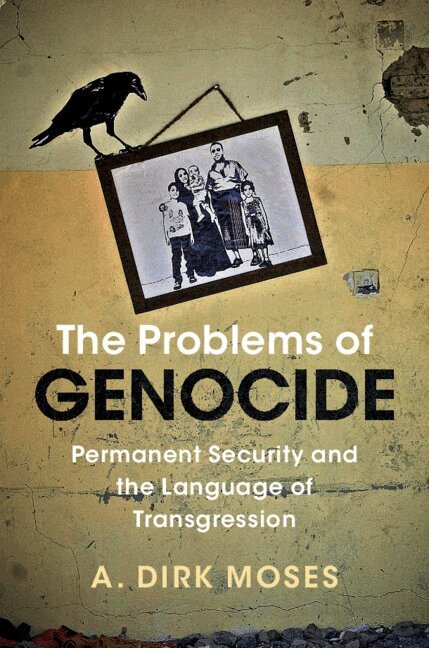
    The Problems of Genocide

    Permanent Security and the Language of Transgression

    AvA. Dirk Moses

    Häftad, Engelska, 2021

    Del i serien Human Rights in History

    443 kr

    Beställningsvara. Skickas inom 10-15 vardagar. Fri frakt över 249 kr.

    Fler format och utgåvor

    Inbunden

    1 444 kr

    Beskrivning

    Genocide is not only a problem of mass death, but also of how, as a relatively new idea and law, it organizes and distorts thinking about civilian destruction. Taking the normative perspective of civilian immunity from military attack, A. Dirk Moses argues that the implicit hierarchy of international criminal law, atop which sits genocide as the 'crime of crimes', blinds us to other types of humanly caused civilian death, like bombing cities, and the 'collateral damage' of missile and drone strikes. Talk of genocide, then, can function ideologically to detract from systematic violence against civilians perpetrated by governments of all types. The Problems of Genocide contends that this violence is the consequence of 'permanent security' imperatives: the striving of states, and armed groups seeking to found states, to make themselves invulnerable to threats.

    Produktinformation

    • Utgivningsdatum:2021-02-04
    • Mått:152 x 229 x 31 mm
    • Vikt:808 g
    • Format:Häftad
    • Språk:Engelska
    • Serie:Human Rights in History
    • Antal sidor:612
    • Förlag:Cambridge University Press
    • ISBN:9781107503120

    Utforska kategorier

    • Allmän historia och världshistoria inom Historia och arkeologi

    Mer om författaren

    A. Dirk Moses is the Frank Porter Graham Distinguished Professor in Global Human Rights History at the University of North Carolina, Chapel Hill. He is the co-editor of Decolonization, Self-Determination, and the Rise of Global Human Rights Politics (2020) and The Holocaust in Greece (2018).

    Recensioner i media

    'This refreshingly original book turns the problem of genocide on its head. Contrariwise to international law and the dominant memory regimes, Moses points at the aspiration for permanent security as the crux of the matter. Passionate and historically sweeping.' Maria Mälksoo, author of The Politics of Becoming European: A Study of Polish and Baltic Post-Cold War Security Imaginaries

    Innehållsförteckning

    • Introduction: The Problems of Genocide; Part I. The Language of Transgression: 1. The Language of Transgression, 1500s to 1890s; 2. The Language of Transgression, 1890s to 1930s; 3. Raphael Lemkin and the Protection of Small Nations; 4. The Many Types of Destruction; 5. Inventing Genocide in the 1940s; Part II. Permanent Security: 6. Permanent Security in History: Empire and Settler Colonialism; 7. The Nazi Empire as Illiberal Permanent Security; 8. Human Rights, Population 'Transfer', and the Foundation of the Postwar Order; 9. Imagining Nation-Security in South Asia and Palestine: Partition, Population Exchange, and Communal Hostages; Part III. The Language of Transgression, Permanent Security, and Holocaust Memory: 10. Lemkin, Arendt, Vietnam, and Liberal Permanent Security; 11. Genocide Studies and the Repression of the Political; 12. Holocaust Memory, Exemplary Victims, and Permanent Security Today.