Häftad, Engelska, 2018
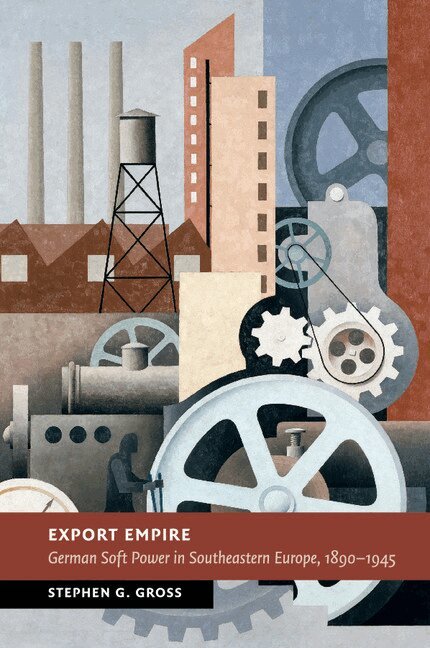
Export Empire
German Soft Power in Southeastern Europe, 1890-1945
Del i serien New Studies in European History
687 kr
Beställningsvara. Skickas inom 5-8 vardagar. Fri frakt över 249 kr.
Fler format och utgåvor
Beskrivning
Produktinformation
- Utgivningsdatum: 2018-02-08
- Mått: 150 x 228 x 22 mm
- Vikt: 590 g
- Format: Häftad
- Språk: Engelska
- Serie: New Studies in European History
- Antal sidor: 402
- Förlag: Cambridge University Press
- ISBN: 9781107531482
Utforska kategorier
Mer om författaren
Stephen G. Gross is an assistant professor in the Department of History and the Center for European and Mediterranean Studies at New York University, and a former government economist at the Bureau of Economic Analysis, Washington DC. His research has been supported by the Fulbright Fellowship, the German Academic Exchange Service (DAAD), and the Berlin Program for Advanced German and European Studies. At New York University he teaches the history of capitalism, modern German history, the history of fascism, and theories of political economy, and he won an outstanding instructor award during his graduate studies at the University of California, Berkeley. His articles have appeared in numerous journals, including Central European History, Contemporary European History, German Politics and Society, and Eastern European Politics and Society.
Recensioner i media
'Overall, this is an extremely valuable book for economic historians as it underlines that the study of international trade and economic development cannot be separated from the broader power struggle during the period 1890–1945. In doing so, the book sheds light on the previously unknown mechanisms that contributed to the rise of German empire at the heart of Europe, a process which eventually led to the Second World War. In this regard, it is likely to remain a key reference work for years to come on German imperial and economic history.' A. Coşkun Tunçer, Economic History Review
Betyg & recensioner
0 recensioner
Inga recensioner tillgängliga.