• Fri frakt över 249 kr
  • •
  • Snabba leveranser
  • •
  • Billiga böcker
Kundservice

Du är på sajten för privatpersoner.

Företag, bibliotek eller offentlig verksamhet?

Du handlar på classic.bokus.com, där alla dina funktioner finns intakta.
Till classic.bokus.com
Bokus logotyp. Gå till startsidan.
  • Erbjudanden
  • Student
  • Topplistor
  • Barn & ungdom
  • Bokus Play
  • E-böcker
  • Ljudböcker
  • Pocketböcker
  • Spel och pussel

Pocketfynda! Hundratals böcker för 49 kr/st →

Sidfot

Mina sidor

    Hjälp

    • Kundservice
    • Vanliga frågor och svar
    • Frakt och leverans
    • Retur vid ångerrätt
    • Reklamera vara
    • Betalning
    • Köpvillkor
    • Allmänna villkor
    • Information om webbplatsens tillgänglighet

    Om Bokus

    • Om oss
    • Pressrum
    • För studenter
    • För företag
    • För bibliotek och offentlig verksamhet
    • För leverantörer
    • Hållbarhet

    Populärt

    • Aktuella erbjudanden
    • Presentkort
    • Studentlitteratur
    • Nya böcker
    • Topplistor
    • Signerade böcker
    • Engelska böcker

    Inspiration

    • Boktips
    • BookTok
    • Barnbokskaraktärer
    • Populära författare
    Logotyp för Bokus
    Följ oss på Facebook (extern länk)Följ oss på Instagram (extern länk)Följ oss på YouTube (extern länk)Följ oss på TikTok (extern länk)
    bokus @ CookiesAnpassa cookiesIntegritetspolicyKöpvillkor
    Till Citymail hemsida (extern länk)Till Budbee hemsida (extern länk)Till Postnord hemsida (extern länk)Till Schenker hemsida (extern länk)Till Early Bird hemsida (extern länk)Till Walleys hemsida (extern länk)
    1. Historia och arkeologi
    2. Historia
    3. Afrikas historia

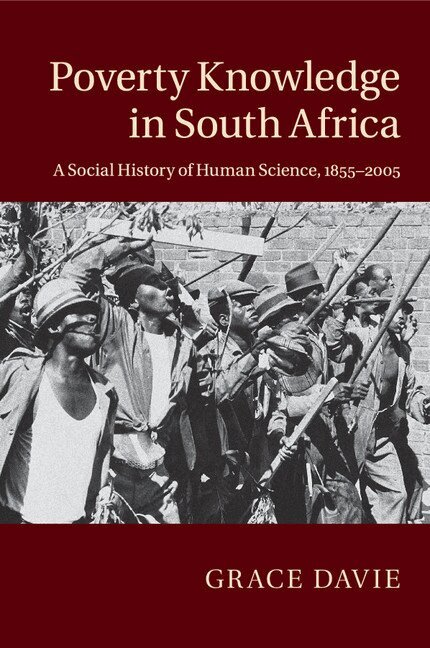
    Poverty Knowledge in South Africa

    A Social History of Human Science, 1855-2005

    AvGrace Davie

    Häftad, Engelska, 2015

    353 kr

    Beställningsvara. Skickas inom 7-10 vardagar. Fri frakt över 249 kr.

    Fler format och utgåvor

    Inbunden

    877 kr

    Beskrivning

    Poverty is South Africa's greatest challenge. But what is 'poverty'? How can it be measured? And how can it be reduced if not eliminated? In South Africa, human science knowledge about the cost of living grew out of colonialism, industrialization, apartheid and civil resistance campaigns, which makes this knowledge far from neutral or apolitical. South Africans have used the Poverty Datum Line (PDL), Gini coefficients and other poverty thresholds to petition the state, to chip away at the pillars of white supremacy, and, more recently, to criticize the postapartheid government's failures to deliver on some of its promises. Rather than promoting one particular policy solution, this book argues that poverty knowledge teaches us about the dynamics of historical change, the power of racism in white settler societies, and the role of grassroots protest movements in shaping state policies and scientific categories. Readers will gain new perspectives on today's debates about social welfare, redistribution and human rights, and will ultimately find reasons to rethink conventional approaches to advocacy.

    Produktinformation

    • Utgivningsdatum:2015-08-06
    • Mått:153 x 230 x 20 mm
    • Vikt:520 g
    • Format:Häftad
    • Språk:Engelska
    • Antal sidor:346
    • Förlag:Cambridge University Press
    • ISBN:9781107551732

    Utforska kategorier

    • Afrikas historia inom Historia och arkeologi

    Mer om författaren

    Grace Davie is Associate Professor of History at Queens College, City University of New York. Her articles have appeared in the Journal of Southern African Studies, Waging Nonviolence, YES! magazine, and OD Practitioner.

    Innehållsförteckning

    • Part I. Lay Knowledge Meets Human Science, 1855–1940: The Co-production of the 'Poor White Problem': 1. Before poverty measurement: conjuring worlds without want; 2. The human sciences in interwar South Africa: William Macmillan, I. D. MacCrone, and the Carnegie Commission; Part II. The Limits of Invention, 1940–70: Social Reform and Quantitative Objectivity: 3. The minimum standards moment: Edward Batson and the Poverty Datum Line (PDL); 4. Rethinking governmentality: urban planning, rural betterment, and the apartheid state; Part III. The People's Facts: Epistemic Mobility and the Negotiated Settlement, 1970–2005: 5. Agitation through quantification: white student activists in the era of black consciousness; 6. From people's power to corporate power: poverty research and the transition to democracy; 7. Baselines and battle lines: social surveying after apartheid; Conclusion; Epilogue.