• Fri frakt över 249 kr
  • •
  • Snabba leveranser
  • •
  • Billiga böcker
Kundservice

Du är på sajten för privatpersoner.

Företag, bibliotek eller offentlig verksamhet?

Du handlar på classic.bokus.com, där alla dina funktioner finns intakta.
Till classic.bokus.com
Bokus logotyp. Gå till startsidan.
  • Erbjudanden
  • Student
  • Topplistor
  • Barn & ungdom
  • Bokus Play
  • E-böcker
  • Ljudböcker
  • Pocketböcker
  • Spel och pussel

5% studentrabatt – använd koden KURSBOK27 →

Sidfot

Mina sidor

    Hjälp

    • Kundservice
    • Vanliga frågor och svar
    • Frakt och leverans
    • Retur vid ångerrätt
    • Reklamera vara
    • Betalning
    • Köpvillkor
    • Allmänna villkor
    • Information om webbplatsens tillgänglighet

    Om Bokus

    • Om oss
    • Pressrum
    • För studenter
    • För företag
    • För bibliotek och offentlig verksamhet
    • För leverantörer
    • Hållbarhet

    Populärt

    • Aktuella erbjudanden
    • Presentkort
    • Studentlitteratur
    • Nya böcker
    • Topplistor
    • Signerade böcker
    • Engelska böcker

    Inspiration

    • Boktips
    • BookTok
    • Barnbokskaraktärer
    • Populära författare
    Logotyp för Bokus
    Följ oss på Facebook (extern länk)Följ oss på Instagram (extern länk)Följ oss på YouTube (extern länk)Följ oss på TikTok (extern länk)
    bokus @ CookiesAnpassa cookiesIntegritetspolicyKöpvillkor
    Till Citymail hemsida (extern länk)Till Budbee hemsida (extern länk)Till Postnord hemsida (extern länk)Till Schenker hemsida (extern länk)Till Early Bird hemsida (extern länk)Till Walleys hemsida (extern länk)
    1. Ekonomi och Ledarskap
    2. Nationalekonomi
    3. Ekonomisk politik

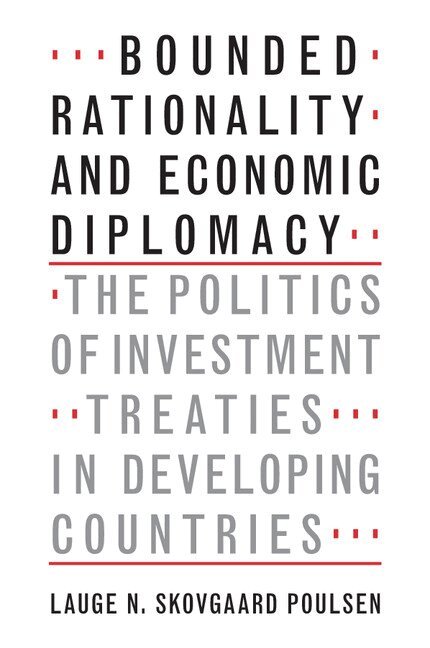
    Bounded Rationality and Economic Diplomacy

    The Politics of Investment Treaties in Developing Countries

    AvLauge N. Skovgaard Poulsen

    Häftad, Engelska, 2017

    477 kr

    Beställningsvara. Skickas inom 7-10 vardagar. Fri frakt över 249 kr.

    Fler format och utgåvor

    Inbunden

    1 378 kr

    Beskrivning

    Modern investment treaties give private arbitrators power to determine whether governments should pay compensation to foreign investors for a wide range of sovereign acts. In recent years, particularly developing countries have incurred significant liabilities from investment treaty arbitration, which begs the question why they signed the treaties in the first place. Through a comprehensive and timely analysis, this book shows that governments in developing countries typically overestimated the economic benefits of investment treaties and practically ignored their risks. Rooted in insights on bounded rationality from behavioural psychology and economics, the analysis highlights how policy-makers often relied on inferential shortcuts when assessing the implications of the treaties, which resulted in systematic deviations from fully rational behaviour. This not only sheds new light on one of the most controversial legal regimes underwriting economic globalization but also provides a novel theoretical account of the often irrational, yet predictable, nature of economic diplomacy.

    Produktinformation

    • Utgivningsdatum:2017-04-06
    • Mått:153 x 230 x 14 mm
    • Vikt:400 g
    • Format:Häftad
    • Språk:Engelska
    • Antal sidor:264
    • Förlag:Cambridge University Press
    • ISBN:9781107552012

    Utforska kategorier

    • Ekonomisk politik inom Ekonomi och Ledarskap

    Mer om författaren

    Lauge N. Skovgaard Poulsen is a Lecturer in International Political Economy at University College London.

    Recensioner i media

    'Well before the current hype in Europe over investor-state dispute settlement, Poulsen pioneered the view that many countries signed up to investment protection treaties in less than rational ways. This book provides careful, country-specific evidence in support, with eye-opening stories from across the world, ranging from Pakistan and Ghana to the Czech Republic, Costa Rica and South Africa. Countries simply assumed the economic benefits of investment treaties and underestimated the possibility and costs of legal claims. World Bank and UN officials promoted the treaties and so did Western lawyers and advisors. Debunking the rational premise of much of the academic scholarship, this book should be compulsory reading for a new generation of policymakers and scholars alike, if only to avoid the mistakes of the past and find better ways to address today's increasingly complex challenges of economic diplomacy.' Joost Pauwelyn, Graduate Institute, Geneva

    Innehållsförteckning

    • Preface: the curious case of Pakistan; 1. Unanticipated consequences; 2. Bounded rationality and the spread of investment treaties; 3. A difficult beginning; 4. Promoting investment treaties; 5. A less then rational competition; 6. Narcissistic learning; 7. Letting down the guard: a case study; 8. Expanding the bounds of rationality in the investment regime.