• Fri frakt över 249 kr
  • •
  • Snabba leveranser
  • •
  • Billiga böcker
Kundservice

Du är på sajten för privatpersoner.

Företag, bibliotek eller offentlig verksamhet?

Du handlar på classic.bokus.com, där alla dina funktioner finns intakta.
Till classic.bokus.com
Bokus logotyp. Gå till startsidan.
  • Erbjudanden
  • Student
  • Topplistor
  • Barn & ungdom
  • Bokus Play
  • E-böcker
  • Ljudböcker
  • Pocketböcker
  • Spel & pussel

10% rabatt på allt med kod NYSTART10 →

Sidfot

Mina sidor

    Hjälp

    • Kundservice
    • Vanliga frågor och svar
    • Frakt och leverans
    • Retur vid ångerrätt
    • Reklamera vara
    • Betalning
    • Köpvillkor
    • Allmänna villkor
    • Information om webbplatsens tillgänglighet

    Om Bokus

    • Om oss
    • Pressrum
    • För studenter
    • För företag
    • För bibliotek och offentlig verksamhet
    • För leverantörer
    • Hållbarhet

    Populärt

    • Aktuella erbjudanden
    • Presentkort
    • Studentlitteratur
    • Nya böcker
    • Topplistor
    • Signerade böcker
    • Engelska böcker

    Inspiration

    • Boktips
    • BookTok
    • Populära bokserier
    • Barnbokskaraktärer
    • Populära författare
    Logotyp för Bokus
    Följ oss på Facebook (extern länk)Följ oss på Instagram (extern länk)Följ oss på YouTube (extern länk)Följ oss på TikTok (extern länk)
    bokus @ CookiesAnpassa cookiesIntegritetspolicyKöpvillkor
    Till Citymail hemsida (extern länk)Till Budbee hemsida (extern länk)Till Postnord hemsida (extern länk)Till Schenker hemsida (extern länk)Till Early Bird hemsida (extern länk)Till Walleys hemsida (extern länk)
    1. Historia och arkeologi
    2. Arkeologi

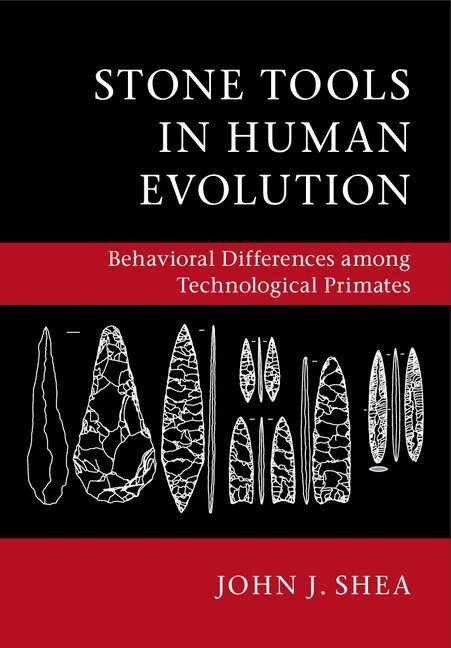
    Stone Tools in Human Evolution

    Behavioral Differences among Technological Primates

    AvJohn J. Shea

    Häftad, Engelska, 2016

    456 kr

    . Fri frakt över 249 kr.

    Fler format och utgåvor

    Inbunden

    1 462 kr

    E-bok

    553 kr

    E-bok

    553 kr

    Beskrivning

    In Stone Tools in Human Evolution, John J. Shea argues that over the last three million years hominins' technological strategies shifted from occasional tool use, much like that seen among living non-human primates, to a uniquely human pattern of obligatory tool use. Examining how the lithic archaeological record changed over the course of human evolution, he compares tool use by living humans and non-human primates and predicts how the archaeological stone tool evidence should have changed as distinctively human behaviors evolved. Those behaviors include using cutting tools, logistical mobility (carrying things), language and symbolic artifacts, geographic dispersal and diaspora, and residential sedentism (living in the same place for prolonged periods). Shea then tests those predictions by analyzing the archaeological lithic record from 6,500 years ago to 3.5 million years ago.

    Produktinformation

    • Utgivningsdatum:2016-11-07
    • Mått:177 x 254 x 11 mm
    • Vikt:540 g
    • Format:Häftad
    • Språk:Engelska
    • Antal sidor:306
    • Förlag:Cambridge University Press
    • ISBN:9781107554931

    Utforska kategorier

    • Arkeologi inom Historia och arkeologi

    Mer om författaren

    John J. Shea is Professor of Anthropology at State University of New York, Stony Brook. He is the author of Stone Tools in the Paleolithic and Neolithic Near East: A Guide (2013) and co-editor of Out of Africa 1: The First Hominin Colonization of Eurasia (2010). Shea is also an expert flintknapper whose demonstrations of stone tool production and other ancestral technology skills appear in numerous television documentaries and in the National Museum of Natural History, Washington DC, as well as in the American Museum of Natural History, New York City.

    Recensioner i media

    'A useful counterbalance to hidebound Paleolithic systematics, Stone Tools in Human Evolution implements a better-grounded descriptive approach. It shows a way forward and therefore deserves close study.' Current Anthropology

    Innehållsförteckning

    • List of figures; List of tables; List of boxes; Preface; Acknowledgments; Introduction. Little questions vs big questions; 1. Why archaeologists misunderstand stone tools; 2. How we know what we think we know about stone tools; 3. Describing stone tools; 4. Stone cutting tools; 5. Logistical mobility; 6. Language and symbolic artifacts; 7. Dispersal and diaspora; 8. Residential sedentism; 9. Conclusion; Appendix 1. Traditional age-stages and industries; Glossary; Bibliography; Index.