• Fri frakt över 249 kr
  • •
  • Snabba leveranser
  • •
  • Billiga böcker
Kundservice

Du är på sajten för privatpersoner.

Företag, bibliotek eller offentlig verksamhet?

Du handlar på classic.bokus.com, där alla dina funktioner finns intakta.
Till classic.bokus.com
Bokus logotyp. Gå till startsidan.
  • Erbjudanden
  • Nyheter
  • Student
  • Topplistor
  • Barn & ungdom
  • Bokus Play
  • E-böcker
  • Pocketböcker
  • Spel & pussel

10% rabatt på allt med kod: NYSTART10 →

Sidfot

Mina sidor

    Hjälp

    • Kundservice
    • Vanliga frågor och svar
    • Frakt och leverans
    • Retur vid ångerrätt
    • Reklamera vara
    • Betalning
    • Köpvillkor
    • Allmänna villkor
    • Information om webbplatsens tillgänglighet

    Om Bokus

    • Om oss
    • Pressrum
    • För studenter
    • För företag
    • För bibliotek och offentlig verksamhet
    • För leverantörer
    • Hållbarhet

    Populärt

    • Aktuella erbjudanden
    • Presentkort
    • Studentlitteratur
    • Nya böcker
    • Topplistor
    • Signerade böcker
    • Engelska böcker

    Inspiration

    • Boktips
    • BookTok
    • Populära bokserier
    • Barnbokskaraktärer
    • Populära författare
    Logotyp för Bokus
    Följ oss på Facebook (extern länk)Följ oss på Instagram (extern länk)Följ oss på YouTube (extern länk)Följ oss på TikTok (extern länk)
    bokus @ CookiesAnpassa cookiesIntegritetspolicyKöpvillkor
    Till Citymail hemsida (extern länk)Till Budbee hemsida (extern länk)Till Postnord hemsida (extern länk)Till Schenker hemsida (extern länk)Till Early Bird hemsida (extern länk)Till Walleys hemsida (extern länk)
    1. Ekonomi och Ledarskap
    2. Nationalekonomi
    3. Ekonomisk historia

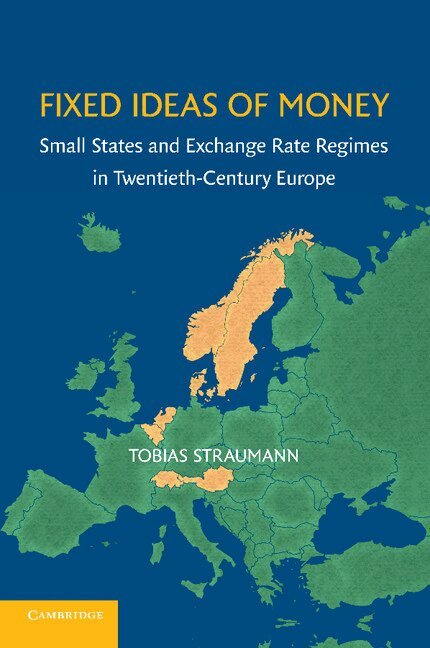
    Fixed Ideas of Money

    Small States and Exchange Rate Regimes in Twentieth-Century Europe

    AvTobias Straumann

    Häftad, Engelska, 2014

    Del i serien Studies in Macroeconomic History

    560 kr

    Beställningsvara. Skickas inom 10-15 vardagar. Fri frakt över 249 kr.

    Fler format och utgåvor

    Inbunden

    1 582 kr

    Beskrivning

    Most European countries are rather small, yet we know little about their monetary history. This book analyses for the first time the experience of seven small states (Austria, Belgium, Denmark, The Netherlands, Norway, Sweden, and Switzerland) during the last hundred years, starting with the restoration of the gold standard after World War I and ending with Sweden's rejection of the Euro in 2003. The comparative analysis shows that for the most part of the twentieth century the options of policy makers were seriously constrained by a distinct fear of floating exchange rates. Only with the crisis of the European Monetary System (EMS) in 1992-3 did the idea that a flexible exchange rate regime was suited for a small open economy gain currency. The book also analyses the differences among small states and concludes that economic structures or foreign policy orientations were far more important for the timing of regime changes than domestic institutions and policies.

    Produktinformation

    • Utgivningsdatum:2014-01-30
    • Mått:152 x 228 x 24 mm
    • Vikt:634 g
    • Format:Häftad
    • Språk:Engelska
    • Serie:Studies in Macroeconomic History
    • Antal sidor:414
    • Förlag:Cambridge University Press
    • ISBN:9781107616370

    Utforska kategorier

    • Ekonomisk historia inom Ekonomi och Ledarskap

    Mer om författaren

    Tobias Straumann is Lecturer in the History Department of the University of Zurich. He studied at the Universities of Bielefeld and Zurich and the Ecole des Hautes Etudes en Sciences Sociales in Paris. After a career in economic journalism, he was a visiting scholar at the University of California at Berkeley and lecturer at the University of Lausanne. Dr Straumann has worked in the fields of Swiss economic history and European financial and monetary history. He has published articles in the Journal of Contemporary History, the European Review of Economic History, and the Historische Zeitschrift.

    Recensioner i media

    'Tobias Straumann's excellent book breaks new ground. Informed by abundant research in archives and by the most recent theories from political economy, it provides an elegant and unified picture of the reasons why small nations in Western Europe have fixed their exchange rates and will prefer floating exchange rates.' Marc Flandreau, Graduate Institute of International Studies, Geneva

    Innehållsförteckning

    • Introduction; Part I. The Interwar Years: 1. Early divergence; 2. The return to prewar parity; 3. Fear of experiments; 4. The dissolution of the gold bloc; Part II. After Bretton Woods: 5. Fixed vs. floating; 6. Hard and soft pegs; 7. The Swiss exception; 8. Floating in the north; Conclusion.