• Fri frakt över 249 kr
  • •
  • Snabba leveranser
  • •
  • Billiga böcker
Kundservice

Du är på sajten för privatpersoner.

Företag, bibliotek eller offentlig verksamhet?

Du handlar på classic.bokus.com, där alla dina funktioner finns intakta.
Till classic.bokus.com
Bokus logotyp. Gå till startsidan.
  • Erbjudanden
  • Nyheter
  • Student
  • Topplistor
  • Barn & ungdom
  • Bokus Play
  • E-böcker
  • Pocketböcker
  • Spel & pussel

10% rabatt på allt med kod: NYSTART10 →

Sidfot

Mina sidor

    Hjälp

    • Kundservice
    • Vanliga frågor och svar
    • Frakt och leverans
    • Retur vid ångerrätt
    • Reklamera vara
    • Betalning
    • Köpvillkor
    • Allmänna villkor
    • Information om webbplatsens tillgänglighet

    Om Bokus

    • Om oss
    • Pressrum
    • För studenter
    • För företag
    • För bibliotek och offentlig verksamhet
    • För leverantörer
    • Hållbarhet

    Populärt

    • Aktuella erbjudanden
    • Presentkort
    • Studentlitteratur
    • Nya böcker
    • Topplistor
    • Signerade böcker
    • Engelska böcker

    Inspiration

    • Boktips
    • BookTok
    • Populära bokserier
    • Barnbokskaraktärer
    • Populära författare
    Logotyp för Bokus
    Följ oss på Facebook (extern länk)Följ oss på Instagram (extern länk)Följ oss på YouTube (extern länk)Följ oss på TikTok (extern länk)
    bokus @ CookiesAnpassa cookiesIntegritetspolicyKöpvillkor
    Till Citymail hemsida (extern länk)Till Budbee hemsida (extern länk)Till Postnord hemsida (extern länk)Till Schenker hemsida (extern länk)Till Early Bird hemsida (extern länk)Till Walleys hemsida (extern länk)
    1. Ekonomi och Ledarskap
    2. Nationalekonomi
    3. Ekonomisk historia

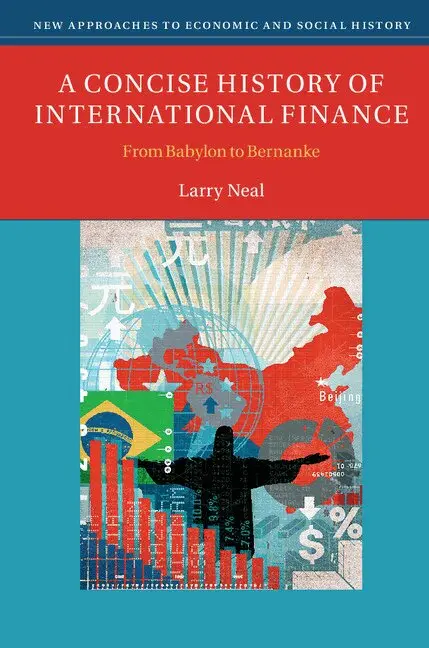
    A Concise History of International Finance

    From Babylon to Bernanke

    AvLarry Neal

    Häftad, Engelska, 2015

    Del i serien New Approaches to Economic and Social History

    364 kr

    Beställningsvara. Skickas inom 10-15 vardagar. Fri frakt över 249 kr.

    Fler format och utgåvor

    Inbunden

    1 278 kr

    Beskrivning

    Ever since the financial crisis of 2008, doubts have been raised about the future of capitalism. In this broad-ranging survey of financial capitalism from antiquity to the present, Larry Neal reveals the ways in which the financial innovations throughout history have increased trade and prosperity as well as improving standards of living. These innovations have, however, all too often led to financial crises as a result of the failure of effective coordination among banks, capital markets and governments. The book examines this key interrelationship between financial innovation, government regulation and financial crises across three thousand years, showing through past successes and failures the key factors that underpin any successful recovery and sustain economic growth. The result is both an essential introduction to financial capitalism and also a series of workable solutions that will help both to preserve the gains we have already achieved and to mitigate the dangers of future crises.

    Produktinformation

    • Utgivningsdatum:2015-10-22
    • Mått:153 x 229 x 17 mm
    • Vikt:586 g
    • Format:Häftad
    • Språk:Engelska
    • Serie:New Approaches to Economic and Social History
    • Antal sidor:376
    • Förlag:Cambridge University Press
    • ISBN:9781107621213

    Utforska kategorier

    • Ekonomisk historia inom Ekonomi och Ledarskap

    Mer om författaren

    Larry Neal is Emeritus Professor of Economics at the University of Illinois, Urbana-Champaign and Research Associate of the National Bureau of Economic Research, and was Visiting Professor at the London School of Economics and Political Science from 2006 to 2014. Specialising in financial history and European economies, he is author of The Rise of Financial Capitalism: International Capital Markets in the Age of Reason (Cambridge, 1991). His recent work includes editing the two Cambridge History of Capitalism volumes - The Rise of Capitalism: From Ancient Origins to 1848 and The Spread of Capitalism: From 1848 to the Present (Cambridge, 2014), and authoring 'I Am Not Master of Events': The Speculations of John Law and Lord Londonderry in the Mississippi and South Sea Bubbles (2012). For many years he was editor of the journal Explorations in Economic History, which now awards an annual prize in his name for the best article published each year. He is past President of the Economic History Association and the Business History Conference and was the Founding Director of the European Union Center at the University of Illinois in 1998, which awards an annual prize in his name for an outstanding book on the European Union. He has been the recipient of fellowships from the Alexander von Humboldt Stiftung (1982), when he visited the University of Paderborn in Germany, as well as the John Simon Guggenheim Foundation and the Fulbright Commission (1996–7), when he visited the London School of Economics and Political Science. He was a visiting professor at the California Institute of Technology in 1998, and the University of California, Los Angeles in 2008, and was named one of the first ten Fellows of the Cliometric Society in 2010.

    Recensioner i media

    'This is the most impressive, most comprehensive, and most up-to-date single volume history of finance there is. Its central argument about the beneficial effects of financial innovation - along with the many cautionary tales of how and why things go sour, of the consequences of adequate mechanisms for ensuring commitment and responsibility - make it at once a classic, whose influence will endure a long time.' Harold James, author of The End of Globalization: Lessons from the Great Depression

    Innehållsförteckning

    • 1. Introduction; 2. Distant beginnings: the first 3,000 years; 3. The Italians invent modern finance; 4. The rise of international financial capitalism: the seventeenth century; 5. The 'big bang' of financial capitalism: financing and refinancing the Mississippi and South Sea Companies, 1688–1720; 6. The rise and spread of financial capitalism, 1720–89; 7. Financial innovations during the 'birth of the modern', 1789–1830: a tale of three revolutions; 8. British recovery and attempts to imitate in the US, France and Germany, 1825–50; 9. Financial globalization takes off: the spread of sterling and the rise of the gold standard, 1848–79; 10. The first global financial market and the classical gold standard, 1880–1914; 11. The Thirty Years War and the disruption of international finance, 1914–44; 12. The Bretton Woods era and the re-emergence of global finance, 1945–73; 13. From turmoil to the 'Great Moderation', 1973–2007; 14. The sub-prime crisis and the aftermath, 2007–14; References; Index.