• Fri frakt över 249 kr
  • •
  • Snabba leveranser
  • •
  • Billiga böcker
Kundservice

Du är på sajten för privatpersoner.

Företag, bibliotek eller offentlig verksamhet?

Du handlar på classic.bokus.com, där alla dina funktioner finns intakta.
Till classic.bokus.com
Bokus logotyp. Gå till startsidan.
  • Erbjudanden
  • Student
  • Topplistor
  • Barn & ungdom
  • Bokus Play
  • E-böcker
  • Ljudböcker
  • Pocketböcker
  • Spel och pussel

Skapa nya rutiner – hälsoböcker upp till 50% →

Sidfot

Mina sidor

    Hjälp

    • Kundservice
    • Vanliga frågor och svar
    • Frakt och leverans
    • Retur vid ångerrätt
    • Reklamera vara
    • Betalning
    • Köpvillkor
    • Allmänna villkor
    • Information om webbplatsens tillgänglighet

    Om Bokus

    • Om oss
    • Pressrum
    • För studenter
    • För företag
    • För bibliotek och offentlig verksamhet
    • För leverantörer
    • Hållbarhet

    Populärt

    • Aktuella erbjudanden
    • Presentkort
    • Studentlitteratur
    • Nya böcker
    • Topplistor
    • Signerade böcker
    • Engelska böcker

    Inspiration

    • Boktips
    • BookTok
    • Barnbokskaraktärer
    • Populära författare
    Logotyp för Bokus
    Följ oss på Facebook (extern länk)Följ oss på Instagram (extern länk)Följ oss på YouTube (extern länk)Följ oss på TikTok (extern länk)
    bokus @ CookiesAnpassa cookiesIntegritetspolicyKöpvillkor
    Till Citymail hemsida (extern länk)Till Budbee hemsida (extern länk)Till Postnord hemsida (extern länk)Till Schenker hemsida (extern länk)Till Early Bird hemsida (extern länk)Till Walleys hemsida (extern länk)
    1. Samhälle och politik
    2. Sociologi och antropologi
    3. Sociologi

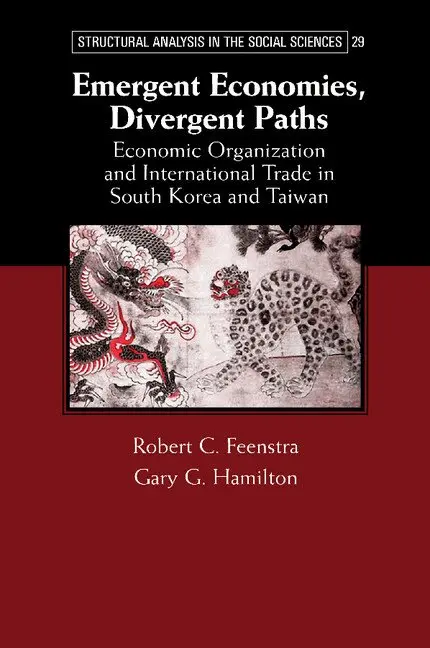
    Emergent Economies, Divergent Paths

    Economic Organization and International Trade in South Korea and Taiwan

    AvRobert C. Feenstra,Gary G. Hamilton

    Häftad, Engelska, 2014

    624 kr

    Beställningsvara. Skickas inom 7-10 vardagar. Fri frakt över 249 kr.

    Fler format och utgåvor

    Inbunden

    1 228 kr

    Beskrivning

    The economies of South Korea and Taiwan in the second half of the twentieth century are to scholars of economic development what the economy of Britain in the late eighteenth and early nineteeth centuries is to economic historians. This book, first published in 2006, is a collaboration between a leading trade economist and a leading economic sociologist specializing in East Asia, and offers an explanation of the development paths of post-World War II Korea and Taiwan. The ambitions of the authors go beyond this, however. They use these cases to reshape the way economists, sociologists, and political scientists will think about economic organization in the future. They offer nothing less than a theory of, and extended evidence for, how capitalist economies become organized. One of the principal empirical findings is that a primary cause for the industrialization of East Asia is the retail revolution in the United States and the demand-responsiveness of Asian manufacturers.

    Produktinformation

    • Utgivningsdatum:2014-03-27
    • Mått:152 x 229 x 24 mm
    • Vikt:630 g
    • Format:Häftad
    • Språk:Engelska
    • Antal sidor:476
    • Förlag:Cambridge University Press
    • ISBN:9781107634510

    Utforska kategorier

    • Sociologi inom Samhälle och politik

    Innehållsförteckning

    • Acknowledgments; Introduction; Part I. Business Groups and Economic Organization: 1. The problem of economic organization; 2. Interpreting business groups in South Korea and Taiwan; 3. A model of business groups: the interaction of authority and market power in the context of competitive economic activity; 4. Economic organization in South Korea and Taiwan: a first test of the model; Part II. Emergence and Divergence of the Economies: 5. The origins of capitalist economic organization; 6. The rise of intermediary demand: a reassessment of the 'Asian miracle'; 7. Global matching, demand responsiveness, and the emergence of divergent economies; 8. Trade performance of South Korea and Taiwan: a second test of the model; Conclusions; Appendix A. Mathematical model of business groups; Appendix B. Examples of differential pricing practices of Korean groups; Appendix C. Hypothesis tests of the model; Appendix D. The role of debt in the Korean financial crisis, 1997; References; Index.