• Fri frakt över 249 kr
  • •
  • Snabba leveranser
  • •
  • Billiga böcker
Kundservice

Du är på sajten för privatpersoner.

Företag, bibliotek eller offentlig verksamhet?

Du handlar på classic.bokus.com, där alla dina funktioner finns intakta.
Till classic.bokus.com
Bokus logotyp. Gå till startsidan.
  • Erbjudanden
  • Nyheter
  • Student
  • Topplistor
  • Barn & ungdom
  • Bokus Play
  • E-böcker
  • Pocketböcker
  • Spel & pussel

10% rabatt på allt med kod: NYSTART10 →

Sidfot

Mina sidor

    Hjälp

    • Kundservice
    • Vanliga frågor och svar
    • Frakt och leverans
    • Retur vid ångerrätt
    • Reklamera vara
    • Betalning
    • Köpvillkor
    • Allmänna villkor
    • Information om webbplatsens tillgänglighet

    Om Bokus

    • Om oss
    • Pressrum
    • För studenter
    • För företag
    • För bibliotek och offentlig verksamhet
    • För leverantörer
    • Hållbarhet

    Populärt

    • Aktuella erbjudanden
    • Presentkort
    • Studentlitteratur
    • Nya böcker
    • Topplistor
    • Signerade böcker
    • Engelska böcker

    Inspiration

    • Boktips
    • BookTok
    • Populära bokserier
    • Barnbokskaraktärer
    • Populära författare
    Logotyp för Bokus
    Följ oss på Facebook (extern länk)Följ oss på Instagram (extern länk)Följ oss på YouTube (extern länk)Följ oss på TikTok (extern länk)
    bokus @ CookiesAnpassa cookiesIntegritetspolicyKöpvillkor
    Till Citymail hemsida (extern länk)Till Budbee hemsida (extern länk)Till Postnord hemsida (extern länk)Till Schenker hemsida (extern länk)Till Early Bird hemsida (extern länk)Till Walleys hemsida (extern länk)
    1. Historia och arkeologi
    2. Historia
    3. Forntidens historia

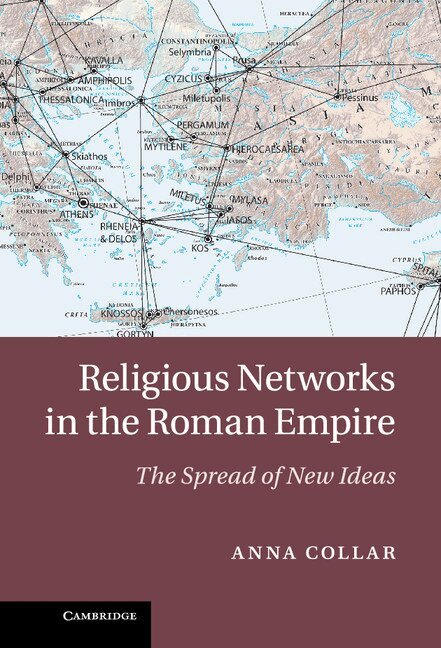
    Religious Networks in the Roman Empire

    The Spread of New Ideas

    AvAnna Collar

    Häftad, Engelska, 2017

    643 kr

    Beställningsvara. Skickas inom 10-15 vardagar. Fri frakt över 249 kr.

    Fler format och utgåvor

    Inbunden

    1 281 kr

    Beskrivning

    The first three centuries AD saw the spread of new religious ideas through the Roman Empire, crossing a vast and diverse geographical, social and cultural space. In this innovative study, Anna Collar explores both how this happened and why. Drawing on research in the sociology and anthropology of religion, physics and computer science, Collar explores the relationship between social networks and religious transmission to explore why some religious movements succeed, while others, seemingly equally successful at a certain time, ultimately fail. Using extensive epigraphic data, Collar provides new interpretations of the diffusion of ideas across the social networks of the Jewish Diaspora and the cults of Jupiter Dolichenus and Theos Hypsistos, and in turn offers important reappraisals of the spread of religious innovations in the Roman Empire. This study will be a valuable resource for students and scholars of ancient history, archaeology, ancient religion and network theory.

    Produktinformation

    • Utgivningsdatum:2017-11-30
    • Mått:153 x 230 x 18 mm
    • Vikt:500 g
    • Format:Häftad
    • Språk:Engelska
    • Antal sidor:336
    • Förlag:Cambridge University Press
    • ISBN:9781107655041

    Utforska kategorier

    • Forntidens historia inom Historia och arkeologi

    Mer om författaren

    Anna Collar is a Fellow of the McDonald Institute of Archaeological Research at the University of Cambridge and has published articles in the Mediterranean Historical Review, Asia Minor Studien, Iuppiter Dolichenus (Habelt), and Network Analysis and Archaeology.

    Recensioner i media

    'Particularly engaging.' History Today

    Innehållsförteckning

    • Introduction; 1. The network approach; 2. Networks and religion in the Roman world; 3. Jupiter Dolichenus: military networks on the edges of empire; 4. The Jewish Diaspora in the West: the rabbinic reforms, ethnicity and the (re?)activation of Jewish identity; 5. Theos Hypsistos: God-fearers, the rabbinic reforms, the fiscus Judaicus and the redefinition of the Jewish-gentile relationship; 6. Religion and social networks in archaeology and ancient history: conclusions.