• Fri frakt över 249 kr
  • •
  • Snabba leveranser
  • •
  • Billiga böcker
Kundservice

Du är på sajten för privatpersoner.

Företag, bibliotek eller offentlig verksamhet?

Du handlar på classic.bokus.com, där alla dina funktioner finns intakta.
Till classic.bokus.com
Bokus logotyp. Gå till startsidan.
  • Erbjudanden
  • Nyheter
  • Student
  • Topplistor
  • Barn & ungdom
  • Bokus Play
  • E-böcker
  • Pocketböcker
  • Spel & pussel

Må bättre, för mindre! Upp till 50% rabatt på hälsoböcker

Sidfot

Mina sidor

    Hjälp

    • Kundservice
    • Vanliga frågor och svar
    • Frakt och leverans
    • Retur vid ångerrätt
    • Reklamera vara
    • Betalning
    • Köpvillkor
    • Allmänna villkor
    • Information om webbplatsens tillgänglighet

    Om Bokus

    • Om oss
    • Pressrum
    • För studenter
    • För företag
    • För bibliotek och offentlig verksamhet
    • För leverantörer
    • Hållbarhet

    Populärt

    • Aktuella erbjudanden
    • Presentkort
    • Studentlitteratur
    • Nya böcker
    • Topplistor
    • Signerade böcker
    • Engelska böcker

    Inspiration

    • Boktips
    • BookTok
    • Populära bokserier
    • Barnbokskaraktärer
    • Populära författare
    Logotyp för Bokus
    Följ oss på Facebook (extern länk)Följ oss på Instagram (extern länk)Följ oss på YouTube (extern länk)Följ oss på TikTok (extern länk)
    bokus @ CookiesAnpassa cookiesIntegritetspolicyKöpvillkor
    Till Citymail hemsida (extern länk)Till Budbee hemsida (extern länk)Till Postnord hemsida (extern länk)Till Schenker hemsida (extern länk)Till Early Bird hemsida (extern länk)Till Walleys hemsida (extern länk)
    1. Skönlitteratur
    2. Litteraturvetenskap
    3. Litteraturvetenskap

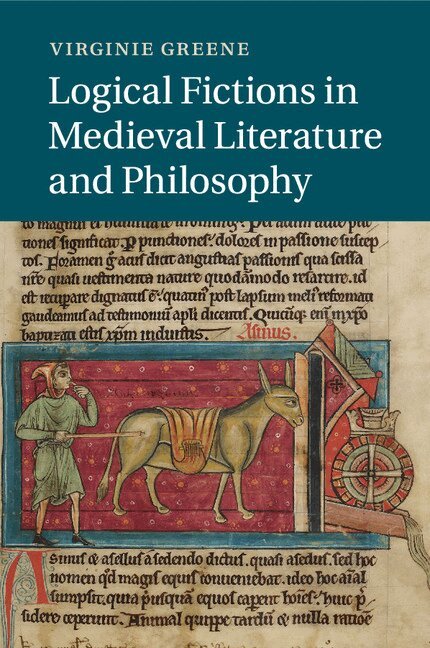
    Logical Fictions in Medieval Literature and Philosophy

    AvVirginie Greene

    Häftad, Engelska, 2017

    Del 93 i serien Cambridge Studies in Medieval Literature

    533 kr

    Beställningsvara. Skickas inom 10-15 vardagar. Fri frakt över 249 kr.

    Fler format och utgåvor

    Inbunden

    1 539 kr

    Beskrivning

    In the twelfth and thirteenth centuries, new ways of storytelling and inventing fictions appeared in the French-speaking areas of Europe. This new art still influences our global culture of fiction. Virginie Greene explores the relationship between fiction and the development of neo-Aristotelian logic during this period through a close examination of seminal literary and philosophical texts by major medieval authors, such as Anselm of Canterbury, Abélard, and Chrétien de Troyes. This study of Old French logical fictions encourages a broader theoretical reflection about fiction as a universal human trait and a defining element of the history of Western philosophy and literature. Additional close readings of classical Greek philosophers Plato and Aristotle, and modern analytic philosophy including the work of Bertrand Russell and Rudolf Carnap, demonstrate peculiar traits of Western rationalism and expose its ambivalent relationship to fiction.

    Produktinformation

    • Utgivningsdatum:2017-03-23
    • Mått:152 x 230 x 16 mm
    • Vikt:450 g
    • Format:Häftad
    • Språk:Engelska
    • Serie:Cambridge Studies in Medieval Literature
    • Antal sidor:308
    • Förlag:Cambridge University Press
    • ISBN:9781107660175

    Utforska kategorier

    • Litteraturvetenskap inom Skönlitteratur

    Mer om författaren

    Virginie Greene is Professor of French in the Department of Romance Languages and Literatures at Harvard University, Massachusetts. She is author of Cent vues de John Harvard (2011), co-author of Thinking Through Chrétien de Troyes (2011), translator of Le débat sur le Roman de la Rose (2006), and editor of The Medieval Author in French Medieval Literature (2006).

    Innehållsförteckning

    • Introduction; Part I. Logical Fables: 1. Abélard's donkey: the nonexistent particular; 2. The literate animal: naming and reference; 3. The fox and the unicorn: naming and existence; Part II. Figures of Contradiction: 4. The opponent; 5. The fool who says no to God; 6. The man who says no to reason; Part III. Fathers, Sons, and Friends: 7. Aristotle or the founding son; 8. Abélard or the fatherless son; 9. The dialectics of friendship; Conclusion; Bibliography.