• Fri frakt över 249 kr
  • •
  • Snabba leveranser
  • •
  • Billiga böcker
Kundservice

Du är på sajten för privatpersoner.

Företag, bibliotek eller offentlig verksamhet?

Du handlar på classic.bokus.com, där alla dina funktioner finns intakta.
Till classic.bokus.com
Bokus logotyp. Gå till startsidan.
  • Erbjudanden
  • Nyheter
  • Student
  • Topplistor
  • Barn & ungdom
  • Bokus Play
  • E-böcker
  • Pocketböcker
  • Spel & pussel

Må bättre, för mindre! Upp till 50% rabatt på hälsoböcker

Sidfot

Mina sidor

    Hjälp

    • Kundservice
    • Vanliga frågor och svar
    • Frakt och leverans
    • Retur vid ångerrätt
    • Reklamera vara
    • Betalning
    • Köpvillkor
    • Allmänna villkor
    • Information om webbplatsens tillgänglighet

    Om Bokus

    • Om oss
    • Pressrum
    • För studenter
    • För företag
    • För bibliotek och offentlig verksamhet
    • För leverantörer
    • Hållbarhet

    Populärt

    • Aktuella erbjudanden
    • Presentkort
    • Studentlitteratur
    • Nya böcker
    • Topplistor
    • Signerade böcker
    • Engelska böcker

    Inspiration

    • Boktips
    • BookTok
    • Populära bokserier
    • Barnbokskaraktärer
    • Populära författare
    Logotyp för Bokus
    Följ oss på Facebook (extern länk)Följ oss på Instagram (extern länk)Följ oss på YouTube (extern länk)Följ oss på TikTok (extern länk)
    bokus @ CookiesAnpassa cookiesIntegritetspolicyKöpvillkor
    Till Citymail hemsida (extern länk)Till Budbee hemsida (extern länk)Till Postnord hemsida (extern länk)Till Schenker hemsida (extern länk)Till Early Bird hemsida (extern länk)Till Walleys hemsida (extern länk)
    1. Juridik
    2. Särskilda rättsområden

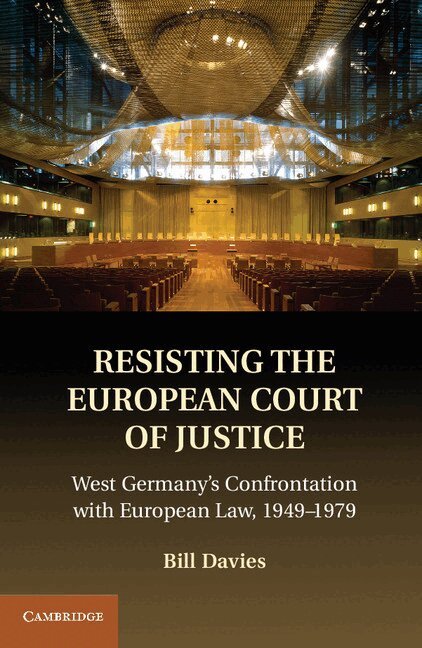
    Resisting the European Court of Justice

    West Germany's Confrontation with European Law, 1949-1979

    AvBill Davies

    Häftad, Engelska, 2014

    463 kr

    Beställningsvara. Skickas inom 10-15 vardagar. Fri frakt över 249 kr.

    Fler format och utgåvor

    Inbunden

    1 302 kr

    Beskrivning

    The European Union's (EU) powerful legal framework drives the process of European integration. The Court of Justice (ECJ) has established a uniquely effective supranational legal order, beyond the original wording of the Treaty of Rome and transforming our traditional understanding of international law. This work investigates how these fundamental transformations in the European legal system were received in one of the most important member states, Germany. On the one hand, Germany has been highly supportive of political and economic integration; yet on the other, a fundamental pillar of the post-war German identity was the integrity of its constitutional order. How did a state whose constitution was so essential to its self-understanding subscribe to the constitutional practice of EU law? How did a country who could not say 'no' to Europe become the member state most reluctant to accept the new power of the ECJ?

    Produktinformation

    • Utgivningsdatum:2014-03-06
    • Mått:152 x 229 x 14 mm
    • Vikt:360 g
    • Format:Häftad
    • Språk:Engelska
    • Antal sidor:270
    • Förlag:Cambridge University Press
    • ISBN:9781107685352

    Utforska kategorier

    • Särskilda rättsområden inom Juridik

    Mer om författaren

    Bill Davies is a legal historian focusing on the development of a constitutional practice of law in the European Union. He holds a PhD from King's College, London and currently works as an Assistant Professor in Justice, Law and Society in the School of Public Affairs at the American University, Washington DC. He has published on the German role in the formation of the European legal system in the Journal of European Integration History and the Contemporary European History Journal.

    Recensioner i media

    'This book furnishes important historical evidence to back the theory that the development of fundamental rights protection in the European Union has been strongly influenced by national constitutional debates. … In fact, European law never has been one-way traffic, nor should it be.' Peter J. Cullen, International Affairs

    Innehållsförteckning

    • 1. Between sovereignty and integration: West Germany, European integration, and the constitutionalization of European law; 2. Conditional acceptance or accepted condition? West German legal academia and the constitutionalization of European law, 1949–79; 3. National vs. supranational: West German public opinion towards the constitutionalization of European law, 1949–79; 4. Competition and competencies: the West German government's response to the constitutionalization of European law, 1949–79; 5. Dealing with the fallout: German and European responses to the Solange decision; 6. Legal integration in Europe, the US, and beyond.