• Fri frakt över 249 kr
  • •
  • Snabba leveranser
  • •
  • Billiga böcker
Kundservice

Du är på sajten för privatpersoner.

Företag, bibliotek eller offentlig verksamhet?

Du handlar på classic.bokus.com, där alla dina funktioner finns intakta.
Till classic.bokus.com
Bokus logotyp. Gå till startsidan.
  • Erbjudanden
  • Nyheter
  • Student
  • Topplistor
  • Barn & ungdom
  • Bokus Play
  • E-böcker
  • Pocketböcker
  • Spel & pussel

10% rabatt på allt med kod: NYSTART10 →

Sidfot

Mina sidor

    Hjälp

    • Kundservice
    • Vanliga frågor och svar
    • Frakt och leverans
    • Retur vid ångerrätt
    • Reklamera vara
    • Betalning
    • Köpvillkor
    • Allmänna villkor
    • Information om webbplatsens tillgänglighet

    Om Bokus

    • Om oss
    • Pressrum
    • För studenter
    • För företag
    • För bibliotek och offentlig verksamhet
    • För leverantörer
    • Hållbarhet

    Populärt

    • Aktuella erbjudanden
    • Presentkort
    • Studentlitteratur
    • Nya böcker
    • Topplistor
    • Signerade böcker
    • Engelska böcker

    Inspiration

    • Boktips
    • BookTok
    • Populära bokserier
    • Barnbokskaraktärer
    • Populära författare
    Logotyp för Bokus
    Följ oss på Facebook (extern länk)Följ oss på Instagram (extern länk)Följ oss på YouTube (extern länk)Följ oss på TikTok (extern länk)
    bokus @ CookiesAnpassa cookiesIntegritetspolicyKöpvillkor
    Till Citymail hemsida (extern länk)Till Budbee hemsida (extern länk)Till Postnord hemsida (extern länk)Till Schenker hemsida (extern länk)Till Early Bird hemsida (extern länk)Till Walleys hemsida (extern länk)
    1. Naturvetenskap och teknik
    2. Matematik och naturvetenskap
    3. Naturvetenskap:allmänt
    4. Naturvetenskapens filosofi

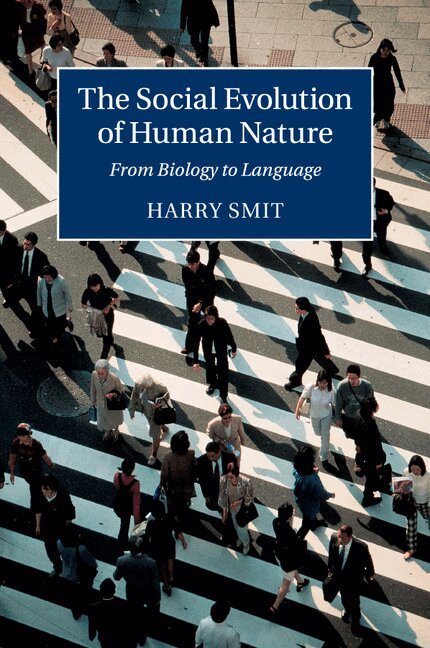
    The Social Evolution of Human Nature

    From Biology to Language

    AvHarry Smit

    Häftad, Engelska, 2017

    463 kr

    Beställningsvara. Skickas inom 10-15 vardagar. Fri frakt över 249 kr.

    Fler format och utgåvor

    Inbunden

    1 268 kr

    Beskrivning

    This book sheds new light on the problem of how the human mind evolved. Harry Smit argues that current studies of this problem misguidedly try to solve it by using variants of the Cartesian conception of the mind, and shows that combining the Aristotelian conception with Darwin's theory provides us with far more interesting answers. He discusses the core problem of how we can understand language evolution in terms of inclusive fitness theory, and investigates how scientific and conceptual insights can be integrated into one explanatory framework, which he contrasts with the alternative Cartesian-derived framework. He then explores the differences between these explanatory frameworks with reference to co-operation and conflict at different levels of biological organization, the evolution of communicative behaviour, the human mind, language, and moral behaviour. His book will interest advanced students and scholars in a range of subjects including philosophy, biology and psychology.

    Produktinformation

    • Utgivningsdatum:2017-02-02
    • Mått:152 x 229 x 13 mm
    • Vikt:330 g
    • Format:Häftad
    • Språk:Engelska
    • Antal sidor:240
    • Förlag:Cambridge University Press
    • ISBN:9781107697553

    Utforska kategorier

    • Naturvetenskapens filosofi inom Naturvetenskap och teknik

    Mer om författaren

    Harry Smit is Assistant Professor in the Department of Cognitive Neuroscience at Universiteit Maastricht, The Netherlands.

    Recensioner i media

    'Smit's book displays high levels of expertise in the fields of biology and evolutionary theory. It is a treasure trove of interesting examples and fascinating case studies. Furthermore, the application of IFT to issues of language evolution and human nature is no doubt a contribution to both fields.' Ryan M. Nefdt, The Philosophical Quarterly

    Innehållsförteckning

    • 1. The major evolutionary transitions and Homo loquens; 2. The conceptual foundation of human nature; 3. Inclusive fitness theory and genomic imprinting; 4. Evolution, teleology, and the argument from design; 5. Dualism, monism and evolutionary psychology; 6. Weismann, Wittgenstein and the homunculus fallacy; 7. Language evolution: doing things with words versus translating thought into language; 8. Moral behaviour: a conceptual elaboration of Darwin's ideas; 9. Epilogue.