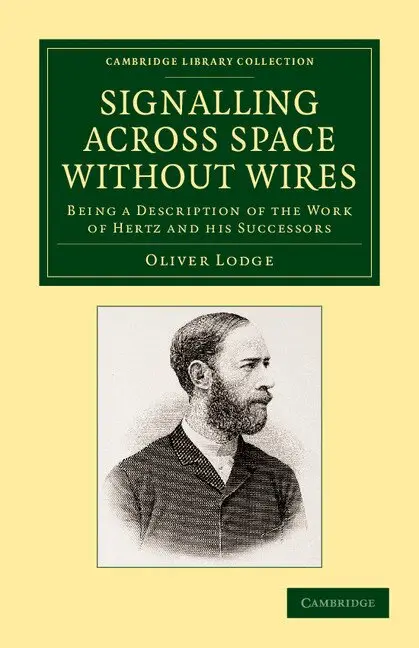
Häftad, Engelska, 2013
Signalling across Space without Wires
Being a Description of the Work of Hertz and his Successors
Av Oliver Lodge
Del i serien Cambridge Library Collection - Technology
406 kr
Beställningsvara. Skickas inom 7-10 vardagar. Fri frakt över 249 kr.
Fler format och utgåvor
Beskrivning
The early 1890s saw the development of wireless telegraphy. Although the behaviour of radio waves had been predicted by James Clerk Maxwell, the production of a working coherer occupied some of the greatest practical physicists of the time. A giant in the field was Heinrich Hertz (1857-94), who was among the first to discover that radio waves could travel independently of wires. When Hertz died, his work was continued and soon led to the development of the first wireless radios. This book, published in 1900, is the third edition of Sir Oliver Lodge's popular explanation of Hertz's work. Including the Royal Institution lecture that Lodge (1851-1940) gave in 1894, along with detailed diagrams, it covers the basic principles of radio waves and some of the theory surrounding telegraphic technology. Also included in this reissue is Lodge's 1924 lecture on electrical precipitation, discussing the scintillating possibility of altering atmospheric conditions through the use of electrical charges.
Produktinformation
- Utgivningsdatum: 2013-03-28
- Mått: 140 x 216 x 11 mm
- Vikt: 250 g
- Format: Häftad
- Språk: Engelska
- Serie: Cambridge Library Collection - Technology
- Antal sidor: 190
- Förlag: Cambridge University Press
- ISBN: 9781108052122
Utforska kategorier
Recensioner i media
Select Guide Rating
Betyg & recensioner
0 recensioner
Inga recensioner tillgängliga.