• Fri frakt över 249 kr
  • •
  • Snabba leveranser
  • •
  • Billiga böcker
Kundservice

Du är på sajten för privatpersoner.

Företag, bibliotek eller offentlig verksamhet?

Du handlar på classic.bokus.com, där alla dina funktioner finns intakta.
Till classic.bokus.com
Bokus logotyp. Gå till startsidan.
  • Erbjudanden
  • Nyheter
  • Student
  • Topplistor
  • Barn & ungdom
  • Bokus Play
  • E-böcker
  • Pocketböcker
  • Spel & pussel

10% rabatt på allt med kod: NYSTART10 →

Sidfot

Mina sidor

    Hjälp

    • Kundservice
    • Vanliga frågor och svar
    • Frakt och leverans
    • Retur vid ångerrätt
    • Reklamera vara
    • Betalning
    • Köpvillkor
    • Allmänna villkor
    • Information om webbplatsens tillgänglighet

    Om Bokus

    • Om oss
    • Pressrum
    • För studenter
    • För företag
    • För bibliotek och offentlig verksamhet
    • För leverantörer
    • Hållbarhet

    Populärt

    • Aktuella erbjudanden
    • Presentkort
    • Studentlitteratur
    • Nya böcker
    • Topplistor
    • Signerade böcker
    • Engelska böcker

    Inspiration

    • Boktips
    • BookTok
    • Populära bokserier
    • Barnbokskaraktärer
    • Populära författare
    Logotyp för Bokus
    Följ oss på Facebook (extern länk)Följ oss på Instagram (extern länk)Följ oss på YouTube (extern länk)Följ oss på TikTok (extern länk)
    bokus @ CookiesAnpassa cookiesIntegritetspolicyKöpvillkor
    Till Citymail hemsida (extern länk)Till Budbee hemsida (extern länk)Till Postnord hemsida (extern länk)Till Schenker hemsida (extern länk)Till Early Bird hemsida (extern länk)Till Walleys hemsida (extern länk)
    1. Medicin
    2. Medicinska studiehandledningar och referensmaterial

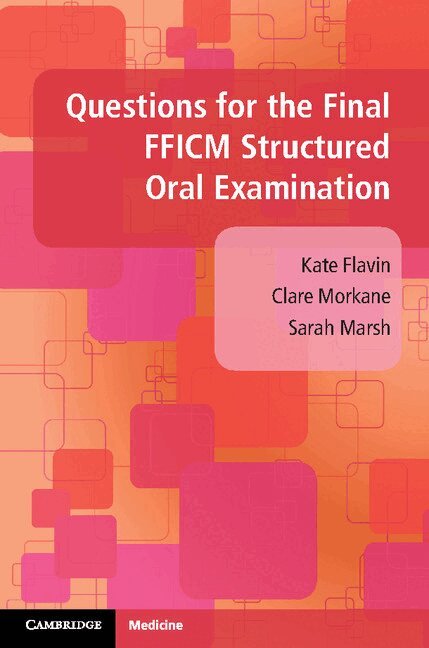
    Questions for the Final FFICM Structured Oral Examination

    AvKate Flavin,Clare Morkane

    Häftad, Engelska, 2018

    697 kr

    Beställningsvara. Skickas inom 10-15 vardagar. Fri frakt över 249 kr.

    Fler format och utgåvor

    Häftad

    Kommande

    Beskrivning

    This is the first book developed specifically for the Final FFICM structured oral examination. It is written by two senior trainees who have recently passed the exam and is edited by a consultant intensivist with a special interest in education. The book is designed in the style of the SOE, and provides model answers which include summaries of the relevant evidence to guide trainees in their preparation for the exam. The 91 topics and questions therein are drawn from previous exam sittings, and are expanded further to ensure each topic is covered in detail. This text is a valuable revision aid to those studying for the Final FFICM, and will also prove useful to trainees revising for the Final FRCA, as it covers popular ICM topics that often come up in the anaesthetic fellowship exams.

    Produktinformation

    • Utgivningsdatum:2018-03-08
    • Mått:162 x 235 x 26 mm
    • Vikt:931 g
    • Format:Häftad
    • Språk:Engelska
    • Antal sidor:556
    • Förlag:Cambridge University Press
    • ISBN:9781108401425

    Utforska kategorier

    • Medicinska studiehandledningar och referensmaterial inom Medicin
    • Olycksfalls- och akutmedicin inom Medicin
    • Smärta och smärtbehandling inom Medicin

    Mer om författaren

    Kate Flavin is an advanced trainee in Anaesthetics and Intensive Care Medicine in London. She has taken the MRCP, FRCA and FFICM and passed all components at the first attempt. Her experience as a senior trainee coupled with having recently sat the Final FFICM gives her a unique insight into the best approach to revision and what is required to achieve a pass. Clare Morkane is a dual Anaesthetic and Intensive Care Medicine registrar in London. Having recently undertaken the FFICM exams, she has a sound grasp of the syllabus and a real understanding of what it takes to pass. Sarah Marsh is a consultant in Anaesthesia and Intensive Care Medicine at Harrogate District Hospital, having obtained a Joint CCT in both disciplines in 2012. She has been involved in post-graduate education following the successful completion of the FRCA final exam in 2008, and is now the Course Director for the Faculty of Intensive Care Medicine's exam preparatory course and the Deputy National Lead for e-ICM.

    Innehållsförteckning

    • 1. Abdominal aortic aneurysm; 2. Abdominal compartment syndrome; 3. Acute ischaemic stroke; 4. Acute kidney injury and renal replacement therapy; 5. Acute liver failure and paracetamol overdose; 6. Acute respiratory distress syndrome; 7. Adrenal insufficiency in the ICU; 8. Amniotic fluid embolism; 9. Anaphylaxis; 10. Antibiotic therapy; 11. Antimicrobial resistance; 12. Aortic dissection; 13. Arrhythmias; 14. Asthma; 15. Bronchopleural fistulae; 16. Burns; 17. Calcium; 18. Cardiac output monitoring; 19. Cardiogenic shock; 20. Care of the heart-beating organ donor; 21. Chronic liver disease in the ICU; 22. Chronic obstructive pulmonary disease; 23. Colloids; 24. Critical incidents in the ICU; 25. Delirium; 26. Diabetic emergencies; 27. Diagnosing brainstem death; 28. Diarrhoea; 29. Disorders of consciousness; 30. Donation after circulatory death; 31. Drowning; 32. Encephalitis; 33. Fire in the ICU; 34. Fungal infection and antifungal therapy; 35. Guillian-Barré syndrome; 36. Haematological malignancy on the ICU; 37. Haemoglobinopathies, coagulopathies and thrombophilia on the ICU; 38. Haemolytic uraemic syndrome and thrombotic thrombocytopenic purpura; 39. High-risk surgical patient; 40. HIV in the ICU; 41. Hypertension; 42. Hyperthermia; 43. Hyponatraemia; 44. Hypothermia; 45. ICU-acquired weakness; 46. Infective endocarditis; 47. Inflammatory bowel disease and ICU; 48. Influenza; 49. Interstitial lung disease and critical care; 50. Intracerebral haemorrhage; 51. Magnesium; 52. Major incidents; 53. Malaria; 54. Mental capacity and deprivation of liberty; 55. Myasthenia gravis; 56. Necrotising fasciitis; 57. Non-invasive ventilation; 58. Nosocomial infection and ventilator-associated pneumonia; 59. Novel anticoagulants; 60. Nutrition in the ICU; 61. Percutaneous tracheostomy; 62. Pharmacokinetics in the critically ill patient; 63. Phosphate; 64. Plasmapheresis; 65. Pleural effusions; 66. Potassium; 67. Pre-eclampsia and HELLP; 68. Pseudo-obstruction and Ileus; 69. Puerperal sepsis; 70. Pulmonary haemorrhage and haemoptysis; 71. Pulmonary hypertension; 72. Rehabilitation following critical illness; 73. Rhabdomyolysis; 74. Right heart failure; 75. Scoring systems; 76. Sedation; 77. Sepsis; 78. Severe acute pancreatitis; 79. Spinal cord injury; 80. Subarachnoid haemorrhage; 81. Tetanus; 82. Thyroid emergencies; 83. Toxicology and overdose; 84. Transfusion; 85. Trauma; 86. Traumatic brain injury; 87. Tuberculosis; 88. Venous thromboembolism, heparin and heparin-induced thrombocytopenia; 89. Viral infection and antiviral therapy; 90. Weaning from mechanical ventilation; 91. Withdrawal of treatment and end-of-life care on the ICU.