• Fri frakt över 249 kr
  • •
  • Snabba leveranser
  • •
  • Billiga böcker
Kundservice

Du är på sajten för privatpersoner.

Företag, bibliotek eller offentlig verksamhet?

Du handlar på classic.bokus.com, där alla dina funktioner finns intakta.
Till classic.bokus.com
Bokus logotyp. Gå till startsidan.
  • Erbjudanden
  • Nyheter
  • Student
  • Topplistor
  • Barn & ungdom
  • Bokus Play
  • E-böcker
  • Pocketböcker
  • Spel & pussel

10% rabatt på allt med kod: NYSTART10 →

Sidfot

Mina sidor

    Hjälp

    • Kundservice
    • Vanliga frågor och svar
    • Frakt och leverans
    • Retur vid ångerrätt
    • Reklamera vara
    • Betalning
    • Köpvillkor
    • Allmänna villkor
    • Information om webbplatsens tillgänglighet

    Om Bokus

    • Om oss
    • Pressrum
    • För studenter
    • För företag
    • För bibliotek och offentlig verksamhet
    • För leverantörer
    • Hållbarhet

    Populärt

    • Aktuella erbjudanden
    • Presentkort
    • Studentlitteratur
    • Nya böcker
    • Topplistor
    • Signerade böcker
    • Engelska böcker

    Inspiration

    • Boktips
    • BookTok
    • Populära bokserier
    • Barnbokskaraktärer
    • Populära författare
    Logotyp för Bokus
    Följ oss på Facebook (extern länk)Följ oss på Instagram (extern länk)Följ oss på YouTube (extern länk)Följ oss på TikTok (extern länk)
    bokus @ CookiesAnpassa cookiesIntegritetspolicyKöpvillkor
    Till Citymail hemsida (extern länk)Till Budbee hemsida (extern länk)Till Postnord hemsida (extern länk)Till Schenker hemsida (extern länk)Till Early Bird hemsida (extern länk)Till Walleys hemsida (extern länk)
    1. Samhälle och politik
    2. Politik och statsskick
    3. Statsvetenskap och politisk teori

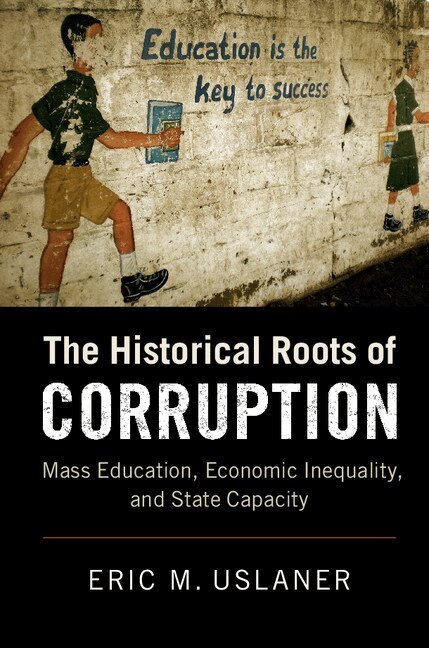
    The Historical Roots of Corruption

    Mass Education, Economic Inequality, and State Capacity

    AvEric M. Uslaner

    Häftad, Engelska, 2017

    328 kr

    Beställningsvara. Skickas inom 10-15 vardagar. Fri frakt över 249 kr.

    Fler format och utgåvor

    Inbunden

    906 kr

    Beskrivning

    Why does corruption persist over long periods of time? Why is it so difficult to eliminate? Suggesting that corruption is deeply rooted in the underlying social and historical political structures of a country, Uslaner observes that there is a powerful statistical relationship between levels of mass education in 1870 and corruption levels in 2010 across 78 countries. He argues that an early introduction of universal education is shown to be linked to levels of economic equality and to efforts to increase state capacity. Societies with more equal education gave citizens more opportunities and power for opposing corruption, whilst the need for increased state capacity was a strong motivation for the introduction of universal education in many countries. Evidence for this argument is presented from statistical models, case studies from Northern and Southern Europe, Asia, Africa, Latin America, the United States, Canada, Australia, and New Zealand, as well as a discussions of how some countries escaped the 'trap' of corruption.

    Produktinformation

    • Utgivningsdatum:2017-10-12
    • Mått:152 x 228 x 12 mm
    • Vikt:200 g
    • Format:Häftad
    • Språk:Engelska
    • Antal sidor:216
    • Förlag:Cambridge University Press
    • ISBN:9781108403900

    Utforska kategorier

    • Statsvetenskap och politisk teori inom Samhälle och politik

    Mer om författaren

    Eric M. Uslaner is Professor of Government and Politics at the University of Maryland, College Park. He is the author of nine books, including The Moral Foundations of Trust (Cambridge, 2002), Corruption, Inequality, and the Rule of Law (Cambridge, 2010), and Segregation and Mistrust (Cambridge, 2012).

    Recensioner i media

    'In advancing his pioneering writing on corruption, Eric M. Uslaner shows how legacies matter, especially the bequests of education.  Combining a comparative historical analysis of schooling at all levels in the late nineteenth century with an appraisal of today's levels of corruption, his innovative book elegantly identifies state and market mechanisms that connect then to now, and pinpoints pathways out of historical traps.' Ira I. Katznelson, Ruggles Professor of Political Science and History, Columbia University

    Innehållsförteckning

    • 1. The theoretical framework; 2. The quantitative evidence; 3. Education in the developed countries (Northern and Southern Europe); 4. Education outside the developed countries: Africa, Latin America, Asia; 5. Education in the Anglo-American countries; 6. Is path dependence forever: how some countries reduced corruption.