• Fri frakt över 249 kr
  • •
  • Snabba leveranser
  • •
  • Billiga böcker
Kundservice

Du är på sajten för privatpersoner.

Företag, bibliotek eller offentlig verksamhet?

Du handlar på classic.bokus.com, där alla dina funktioner finns intakta.
Till classic.bokus.com
Bokus logotyp. Gå till startsidan.
  • Erbjudanden
  • Nyheter
  • Student
  • Topplistor
  • Barn & ungdom
  • Bokus Play
  • E-böcker
  • Pocketböcker
  • Spel & pussel

10% rabatt på allt med kod NYSTART10 →

Sidfot

Mina sidor

    Hjälp

    • Kundservice
    • Vanliga frågor och svar
    • Frakt och leverans
    • Retur vid ångerrätt
    • Reklamera vara
    • Betalning
    • Köpvillkor
    • Allmänna villkor
    • Information om webbplatsens tillgänglighet

    Om Bokus

    • Om oss
    • Pressrum
    • För studenter
    • För företag
    • För bibliotek och offentlig verksamhet
    • För leverantörer
    • Hållbarhet

    Populärt

    • Aktuella erbjudanden
    • Presentkort
    • Studentlitteratur
    • Nya böcker
    • Topplistor
    • Signerade böcker
    • Engelska böcker

    Inspiration

    • Boktips
    • BookTok
    • Populära bokserier
    • Barnbokskaraktärer
    • Populära författare
    Logotyp för Bokus
    Följ oss på Facebook (extern länk)Följ oss på Instagram (extern länk)Följ oss på YouTube (extern länk)Följ oss på TikTok (extern länk)
    bokus @ CookiesAnpassa cookiesIntegritetspolicyKöpvillkor
    Till Citymail hemsida (extern länk)Till Budbee hemsida (extern länk)Till Postnord hemsida (extern länk)Till Schenker hemsida (extern länk)Till Early Bird hemsida (extern länk)Till Walleys hemsida (extern länk)
    1. Språk och ordböcker
    2. Språkvetenskap och lingvistik

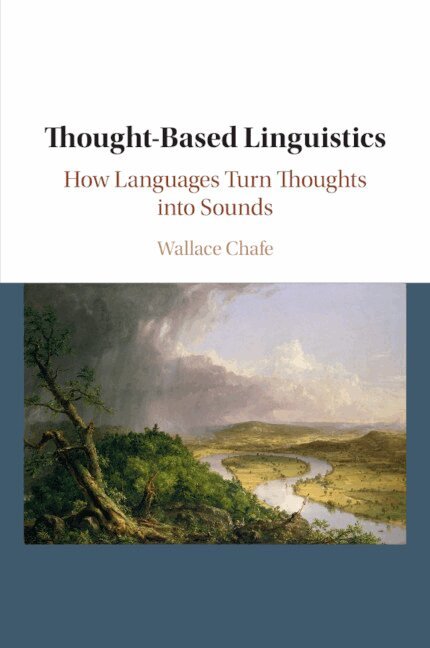
    Thought-based Linguistics

    How Languages Turn Thoughts into Sounds

    AvWallace Chafe

    Inbunden, Engelska, 2018

    1 513 kr

    Beställningsvara. Skickas inom 10-15 vardagar. Fri frakt över 249 kr.

    Fler format och utgåvor

    Häftad

    477 kr

    Beskrivning

    The extent to which language is inseparable from thought has long been a major subject of debate across linguistics, psychology, philosophy and other disciplines. In this study, Wallace Chafe presents a thought-based theory of language that goes beyond traditional views that semantics, syntax, and sounds are sufficient to account for language design. Language begins with thoughts in the mind of a speaker and ends by affecting thoughts in the mind of a listener. This obvious observation is seldom incorporated in descriptions of language design for two major reasons. First, the role of thought is usually usurped by semantics. But semantic structures are imposed on thought by languages and differ from one language to another. Second, thought does not lend itself to familiar methods of linguistic analysis. Chafe suggests ways of describing thoughts, traces the path languages follow from thoughts to sounds, and explores ways in which thoughts are oriented in time, memory, imagination, reality, and emotions.

    Produktinformation

    • Utgivningsdatum:2018-04-19
    • Mått:158 x 235 x 15 mm
    • Vikt:480 g
    • Format:Inbunden
    • Språk:Engelska
    • Antal sidor:210
    • Förlag:Cambridge University Press
    • ISBN:9781108421171

    Utforska kategorier

    • Språkvetenskap och lingvistik inom Språk och ordböcker

    Mer om författaren

    Wallace Chafe is Professor Emeritus and Research Professor at the University of California, Santa Barbara. His research has focused in part on the Seneca language in New York and the Caddo language in Oklahoma. He has investigated differences between speaking and writing; the functions of prosody in spoken language; the emotion underlying laughter and humor, ways in which language can be beautiful; and relations between language and thought.

    Innehållsförteckning

    • Prologue; Part I. Preliminaries: 1. Background; 2. Ground rules; Part II. Thoughts and their Properties: 3. The priority of thoughts; 4. The path from a thought to a sound; 5. How thoughts are structured; 6. How thoughts are experienced; 7. How thoughts are shared; 8. How thoughts flow through time; Part III. Verbalization Illustrated: 9. From a thought to a sound in English; 10. From a thought to a sound in a polysynthetic language; Part IV. Related Issues: 11. The translation paradox; 12. Repeated verbalizations of the same thought; 13. Rethinking Whorf; 14. Lessons from literature; Part V. Common Ways of Orienting Thoughts: 15. Small numbers and subitizing; 16. Thoughts and gender; 17. Time, tense, memory, and imagination; 18. Relating ideas to reality; Part VI. The Emotional Component of Thoughts: 19. Emotional involvement in a conversation; 20. The feeling of nonseriousness; 21. How language can be beautiful; Epilogue; Index.