• Fri frakt över 249 kr
  • •
  • Snabba leveranser
  • •
  • Billiga böcker
Kundservice

Du är på sajten för privatpersoner.

Företag, bibliotek eller offentlig verksamhet?

Du handlar på classic.bokus.com, där alla dina funktioner finns intakta.
Till classic.bokus.com
Bokus logotyp. Gå till startsidan.
  • Erbjudanden
  • Student
  • Topplistor
  • Barn & ungdom
  • Bokus Play
  • E-böcker
  • Ljudböcker
  • Pocketböcker
  • Spel och pussel

Pocketfynda! Hundratals böcker för 49 kr/st →

Sidfot

Mina sidor

    Hjälp

    • Kundservice
    • Vanliga frågor och svar
    • Frakt och leverans
    • Retur vid ångerrätt
    • Reklamera vara
    • Betalning
    • Köpvillkor
    • Allmänna villkor
    • Information om webbplatsens tillgänglighet

    Om Bokus

    • Om oss
    • Pressrum
    • För studenter
    • För företag
    • För bibliotek och offentlig verksamhet
    • För leverantörer
    • Hållbarhet

    Populärt

    • Aktuella erbjudanden
    • Presentkort
    • Studentlitteratur
    • Nya böcker
    • Topplistor
    • Signerade böcker
    • Engelska böcker

    Inspiration

    • Boktips
    • BookTok
    • Barnbokskaraktärer
    • Populära författare
    Logotyp för Bokus
    Följ oss på Facebook (extern länk)Följ oss på Instagram (extern länk)Följ oss på YouTube (extern länk)Följ oss på TikTok (extern länk)
    bokus @ CookiesAnpassa cookiesIntegritetspolicyKöpvillkor
    Till Citymail hemsida (extern länk)Till Budbee hemsida (extern länk)Till Postnord hemsida (extern länk)Till Schenker hemsida (extern länk)Till Early Bird hemsida (extern länk)Till Walleys hemsida (extern länk)
    1. Historia och arkeologi
    2. Historia
    3. Amerikas historia

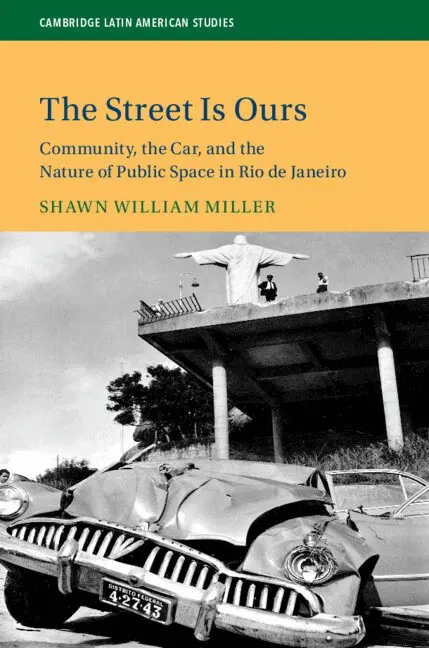
    The Street Is Ours

    Community, the Car, and the Nature of Public Space in Rio de Janeiro

    AvShawn William Miller

    Inbunden, Engelska, 2018

    Del 111 i serien Cambridge Latin American Studies

    1 540 kr

    Beställningsvara. Skickas inom 7-10 vardagar. Fri frakt över 249 kr.

    Fler format och utgåvor

    Häftad

    560 kr

    Beskrivning

    The streets of Rio de Janeiro have long been characterized as exuberant and exotic places for social commerce, political expression, and the production and dissemination of culture. The Street is Ours examines the changing uses and meanings of Rio de Janeiro's streets and argues that the automobile, by literally occupying much of the street's space and by introducing death and injury on a new scale, significantly transformed the public commons. Once viewed as a natural resource and a place of equitable access, deep meaning, and diverse functions, the street has changed into a space of exclusion that prioritizes automotive movement. Taking an environmental approach, Shawn William Miller surveys the costs and failures of this spatial transformation and demonstrates how Rio's citizens have resisted the automobile's intrusions and, in some cases, even reversed the long trend of closing the street against its potential utilities.

    Produktinformation

    • Utgivningsdatum:2018-08-02
    • Mått:157 x 235 x 24 mm
    • Vikt:660 g
    • Format:Inbunden
    • Språk:Engelska
    • Serie:Cambridge Latin American Studies
    • Antal sidor:362
    • Förlag:Cambridge University Press
    • ISBN:9781108426978

    Utforska kategorier

    • Amerikas historia inom Historia och arkeologi

    Mer om författaren

    Shawn William Miller is an Associate Professor in the Department of History at Brigham Young University. He is an environmental historian and the author of An Environmental History of Latin America (Cambridge, 2007).

    Recensioner i media

    'With touches of the finest conventions of writing about Brazilian cities and their denizens, this is a study of the streets of downtown Rio de Janeiro as experienced by people, animals, and machines. Alongside his history of street paving and street beautification, Miller describes the 'invention' of pedestrian and motorist. Attentive to the entwined histories of danger and thrill in the Marvelous City, The Street is Ours is a fascinating examination of the most commonplace of all urban settings - the street - as a contested, lively public good often turned over to, but never fully dominated by, the private needs of the automobile.' Daryle Williams, co-editor of The Rio de Janeiro Reader: History, Culture, Politics

    Innehållsförteckning

    • Introduction: a common space to enjoy – Paquetá Island; 1. Systems circulatory before the wheel – Ouvidor Street; 2. The street's apotheosis – Central Avenue; 3. Putting the car in carnival – Rio Branco Avenue; 4. A blunt instrument – Misericórdia Square; 5. Automotive law and the promises of safety – Assembly Street; 6. Buyers and regrets – Praça Onze (Square Eleven); 7. Automotive flow vs. automotive storage – Castelo Hill; Conclusion: revolutions at the end of the street – Brasilia.