• Fri frakt över 249 kr
  • •
  • Snabba leveranser
  • •
  • Billiga böcker
Kundservice

Du är på sajten för privatpersoner.

Företag, bibliotek eller offentlig verksamhet?

Du handlar på classic.bokus.com, där alla dina funktioner finns intakta.
Till classic.bokus.com
Bokus logotyp. Gå till startsidan.
  • Erbjudanden
  • Nyheter
  • Student
  • Topplistor
  • Barn & ungdom
  • Bokus Play
  • E-böcker
  • Pocketböcker
  • Spel & pussel

10% rabatt på allt med kod NYSTART10 →

Sidfot

Mina sidor

    Hjälp

    • Kundservice
    • Vanliga frågor och svar
    • Frakt och leverans
    • Retur vid ångerrätt
    • Reklamera vara
    • Betalning
    • Köpvillkor
    • Allmänna villkor
    • Information om webbplatsens tillgänglighet

    Om Bokus

    • Om oss
    • Pressrum
    • För studenter
    • För företag
    • För bibliotek och offentlig verksamhet
    • För leverantörer
    • Hållbarhet

    Populärt

    • Aktuella erbjudanden
    • Presentkort
    • Studentlitteratur
    • Nya böcker
    • Topplistor
    • Signerade böcker
    • Engelska böcker

    Inspiration

    • Boktips
    • BookTok
    • Populära bokserier
    • Barnbokskaraktärer
    • Populära författare
    Logotyp för Bokus
    Följ oss på Facebook (extern länk)Följ oss på Instagram (extern länk)Följ oss på YouTube (extern länk)Följ oss på TikTok (extern länk)
    bokus @ CookiesAnpassa cookiesIntegritetspolicyKöpvillkor
    Till Citymail hemsida (extern länk)Till Budbee hemsida (extern länk)Till Postnord hemsida (extern länk)Till Schenker hemsida (extern länk)Till Early Bird hemsida (extern länk)Till Walleys hemsida (extern länk)
    1. Historia och arkeologi
    2. Historia
    3. Militärhistoria

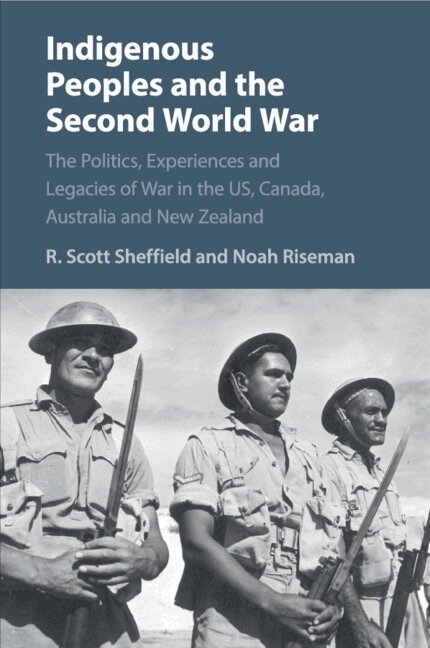
    Indigenous Peoples and the Second World War

    The Politics, Experiences and Legacies of War in the US, Canada, Australia and New Zealand

    AvR. Scott Sheffield,Noah Riseman

    Häftad, Engelska, 2020

    560 kr

    Beställningsvara. Skickas inom 10-15 vardagar. Fri frakt över 249 kr.

    Fler format och utgåvor

    Inbunden

    1 582 kr

    Beskrivning

    During the Second World War, Indigenous people in the United States, Australia, New Zealand and Canada mobilised en masse to support the war effort, despite withstanding centuries of colonialism. Their roles ranged from ordinary soldiers fighting on distant shores, to soldiers capturing Japanese prisoners on their own territory, to women working in munitions plants on the home front. R. Scott Sheffield and Noah Riseman examine Indigenous experiences of the Second World War across these four settler societies. Informed by theories of settler colonialism, martial race theory and military sociology, they show how Indigenous people and their communities both shaped and were shaped by the Second World War. Particular attention is paid to the policies in place before, during and after the war, highlighting the ways that Indigenous people negotiated their own roles within the war effort at home and abroad.

    Produktinformation

    • Utgivningsdatum:2020-05-07
    • Mått:150 x 230 x 20 mm
    • Vikt:540 g
    • Format:Häftad
    • Språk:Engelska
    • Antal sidor:366
    • Förlag:Cambridge University Press
    • ISBN:9781108440745

    Utforska kategorier

    • Militärhistoria inom Historia och arkeologi

    Mer om författaren

    R. Scott Sheffield is Associate Professor of History at the University of the Fraser Valley. He is the author of The Red Man's on the Warpath: The Image of the 'Indian' and the Second World War (2004). Noah Riseman is Associate Professor of History at the Australian Catholic University. His first book, Defending Whose Country?: Indigenous Soldiers in the Pacific War (2012), was shortlisted for the 2013 Chief Minister's Northern Territory History Award.

    Recensioner i media

    'A good read for the serious scholar.' Albert A. Nofi, The NYMAS Review

    Innehållsförteckning

    • Introduction; Part I. Context: 1. Indigenous peoples and settler colonialism to 1900; 2. Indigenous peoples and settler militaries, 1900–1945; Part II. The War Years, 1939–1945: 3. Engagement: Indigenous voluntary military service; 4. Experiences of military life; 5. Mobilising indigeneity: indigenous knowledge, language, and culture in the war effort; 6. Home front experiences; 7. Contesting engagement: conscription and the limits of Indigenous collaboration; Part III. Post-War Reform: 8. Homecomings: transition to peace, veterans' return, and access to veterans' benefits; 9. Rehabilitating assimilation: post-war reconstruction and Indigenous policy reform; Conclusion.