• Fri frakt över 249 kr
  • •
  • Snabba leveranser
  • •
  • Billiga böcker
Kundservice

Du är på sajten för privatpersoner.

Företag, bibliotek eller offentlig verksamhet?

Du handlar på classic.bokus.com, där alla dina funktioner finns intakta.
Till classic.bokus.com
Bokus logotyp. Gå till startsidan.
  • Erbjudanden
  • Nyheter
  • Student
  • Topplistor
  • Barn & ungdom
  • Bokus Play
  • E-böcker
  • Pocketböcker
  • Spel & pussel

10% rabatt på allt med kod NYSTART10 →

Sidfot

Mina sidor

    Hjälp

    • Kundservice
    • Vanliga frågor och svar
    • Frakt och leverans
    • Retur vid ångerrätt
    • Reklamera vara
    • Betalning
    • Köpvillkor
    • Allmänna villkor
    • Information om webbplatsens tillgänglighet

    Om Bokus

    • Om oss
    • Pressrum
    • För studenter
    • För företag
    • För bibliotek och offentlig verksamhet
    • För leverantörer
    • Hållbarhet

    Populärt

    • Aktuella erbjudanden
    • Presentkort
    • Studentlitteratur
    • Nya böcker
    • Topplistor
    • Signerade böcker
    • Engelska böcker

    Inspiration

    • Boktips
    • BookTok
    • Populära bokserier
    • Barnbokskaraktärer
    • Populära författare
    Logotyp för Bokus
    Följ oss på Facebook (extern länk)Följ oss på Instagram (extern länk)Följ oss på YouTube (extern länk)Följ oss på TikTok (extern länk)
    bokus @ CookiesAnpassa cookiesIntegritetspolicyKöpvillkor
    Till Citymail hemsida (extern länk)Till Budbee hemsida (extern länk)Till Postnord hemsida (extern länk)Till Schenker hemsida (extern länk)Till Early Bird hemsida (extern länk)Till Walleys hemsida (extern länk)
    1. Ekonomi och Ledarskap
    2. Industrier och branscher
    3. Servicesektorn

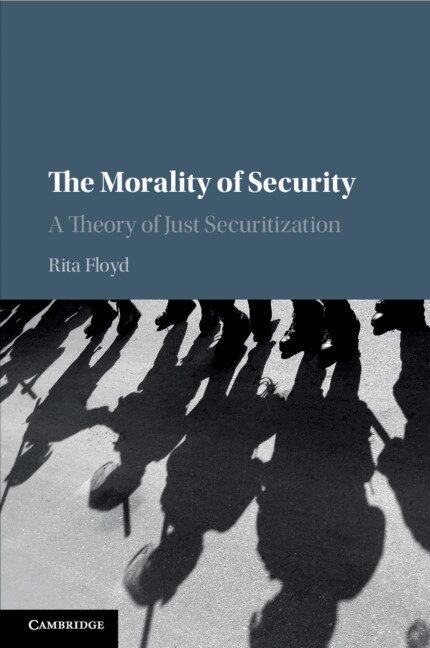
    The Morality of Security

    A Theory of Just Securitization

    AvRita Floyd

    Häftad, Engelska, 2021

    477 kr

    Beställningsvara. Skickas inom 10-15 vardagar. Fri frakt över 249 kr.

    Fler format och utgåvor

    Inbunden

    1 281 kr

    Beskrivning

    When is it permissible to move an issue out of normal politics and treat it as a security issue? How should the security measures be conducted? When and how should the securitization be reversed? Floyd offers answers to these questions by combining security studies' influential securitization theory with philosophy's long-standing just war tradition, creating a major new approach to the ethics of security: 'Just Securitization Theory'. Of interest to anyone concerned with ethics and security, Floyd's innovative approach enables scholars to normatively evaluate past and present securitizations, equips practitioners to make informed judgements on what they ought to do in relevant situations, and empowers the public to hold relevant actors accountable for how they view security.

    Produktinformation

    • Utgivningsdatum:2021-09-30
    • Mått:152 x 229 x 14 mm
    • Vikt:353 g
    • Format:Häftad
    • Språk:Engelska
    • Antal sidor:260
    • Förlag:Cambridge University Press
    • ISBN:9781108452960

    Utforska kategorier

    • Servicesektorn inom Ekonomi och Ledarskap

    Mer om författaren

    Rita Floyd is Lecturer in Conflict and Security at the Department of Political Science and International Studies, University of Birmingham. Her books include Security and the Environment: Securitisation Theory and US Environmental Security Policy (Cambridge, 2010) and her articles have appeared in journals including the Review of International Studies, Security Dialogue, and the Journal of International Relations and Development, amongst others.

    Recensioner i media

    'As security increasingly pervades contemporary societies, so the ethics of securitization have become pressing questions. Rita Floyd's finely crafted study provides a wide-ranging appraisal of the issues at stake and a challenging framework for addressing them. Taking on some of the most important issues in contemporary political life, The Morality of Security is sure to inform and provoke debate for years to come.' Michael C. Williams, University of Ottawa

    Innehållsförteckning

    • Introduction; Just securitization: raison d'être and feasibility; Just securitization theory: basic ideas; Research questions and suggested criteria of just securitization and just desecuritization; Overview of all chapters; 1. Ethics and the study of security; 1.1. Introduction; 1.2. Security: a two-fold distinction; 1.3. The ethics of security as a state of being; 1.4. The ethics of security as a set of social and political practices; 1.5. Conclusion; 2. Framework: the meaning of securitization and the method of JST; 2.1. Introduction; 2.2. The meaning of securitization in Just Securitization Theory; 2.3. Method; 2.4 Conclusion; 3. Just initiation of securitization: just reason; 3.1. Introduction; 3.2. The just reason; 3.3. Threat categories; 3.4. Agent-intended threats; 3.5. Agent-lacking threats; 3.6. Agent-caused threats; 3.7. Future objective existential threats; 3.8. Conclusion; 4. Just initiation of securitization: just referent object; 4.1. Introduction; 4.2. The just referent object; 4.3. Human needs as a measure of human well-being; 4.4. Needs satisfaction, scale and moral justification; 4.5. Political and social orders; 4.6. Ecosystems and non-human species; 4.7. Human beings; 4.8. Conclusion; 5. Just initiation of securitization: right intention, macro-proportionality and reasonable chance of success; 5.1. Introduction; 5.2. Sincerity of intention; 5.3. Macro-proportionality; 5.4. Reasonable chance of success; 5.5. Omissions: Legitimate authority and last resort; 5.6. Conclusion; 6. Just conduct in securitization; 6.1. Introduction; 6.2. Targeted security measures; 6.3. Least harmful option; 6.4. Just conduct of executors of securitization; 6.5. Moral exemptions to just conduct in securitization; 6.6. Moral culpability and individual agents in unjust securitization; 6.7. Conclusion; 7. Just termination of securitization; 7.1. Introduction; 7.2. What is the meaning of desecuritization in Just Securitization Theory?; 7.3. Does just desecuritization need to follow from just securitization?; 7.4. Who can desecuritize?; 7.5. Who is required to desecuritize?; 7.6. Timing; 7.7. Action; 7.8. Long-term aim; 7.9. Conclusion.