• Fri frakt över 249 kr
  • •
  • Snabba leveranser
  • •
  • Billiga böcker
Kundservice

Du är på sajten för privatpersoner.

Företag, bibliotek eller offentlig verksamhet?

Du handlar på classic.bokus.com, där alla dina funktioner finns intakta.
Till classic.bokus.com
Bokus logotyp. Gå till startsidan.
  • Erbjudanden
  • Nyheter
  • Student
  • Topplistor
  • Barn & ungdom
  • Bokus Play
  • E-böcker
  • Pocketböcker
  • Spel & pussel

10% rabatt på allt med kod NYSTART10 →

Sidfot

Mina sidor

    Hjälp

    • Kundservice
    • Vanliga frågor och svar
    • Frakt och leverans
    • Retur vid ångerrätt
    • Reklamera vara
    • Betalning
    • Köpvillkor
    • Allmänna villkor
    • Information om webbplatsens tillgänglighet

    Om Bokus

    • Om oss
    • Pressrum
    • För studenter
    • För företag
    • För bibliotek och offentlig verksamhet
    • För leverantörer
    • Hållbarhet

    Populärt

    • Aktuella erbjudanden
    • Presentkort
    • Studentlitteratur
    • Nya böcker
    • Topplistor
    • Signerade böcker
    • Engelska böcker

    Inspiration

    • Boktips
    • BookTok
    • Populära bokserier
    • Barnbokskaraktärer
    • Populära författare
    Logotyp för Bokus
    Följ oss på Facebook (extern länk)Följ oss på Instagram (extern länk)Följ oss på YouTube (extern länk)Följ oss på TikTok (extern länk)
    bokus @ CookiesAnpassa cookiesIntegritetspolicyKöpvillkor
    Till Citymail hemsida (extern länk)Till Budbee hemsida (extern länk)Till Postnord hemsida (extern länk)Till Schenker hemsida (extern länk)Till Early Bird hemsida (extern länk)Till Walleys hemsida (extern länk)
    1. Språk och ordböcker
    2. Språkundervisning och språkinlärning

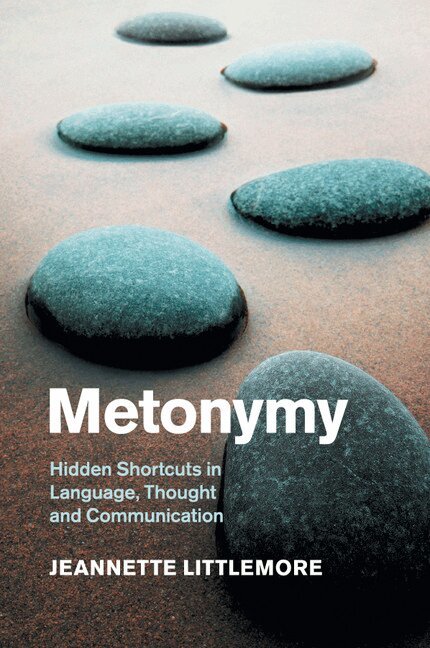
    Metonymy

    Hidden Shortcuts in Language, Thought and Communication

    AvJeannette Littlemore

    Häftad, Engelska, 2018

    Del i serien Cambridge Studies in Cognitive Linguistics

    477 kr

    Beställningsvara. Skickas inom 10-15 vardagar. Fri frakt över 249 kr.

    Fler format och utgåvor

    Inbunden

    1 513 kr

    Beskrivning

    'Metonymy' is a type of figurative language used in everyday conversation, a form of shorthand that allows us to use our shared knowledge to communicate with fewer words than we would otherwise need. 'I'll pencil you in' and 'let me give you a hand' are both examples of metonymic language. Metonymy serves a wide range of communicative functions, such as textual cohesion, humour, irony, euphemism and hyperbole - all of which play a key role in the development of language and discourse communities. Using authentic data throughout, this book shows how metonymy operates, not just in language, but also in gesture, sign language, art, music, film and advertising. It explores the role of metonymy in cross-cultural communication, along with the challenges it presents to language learners and translators. Ideal for researchers and students in linguistics and literature, as well as teachers and general readers interested in the art of communication.

    Produktinformation

    • Utgivningsdatum:2018-03-15
    • Mått:152 x 229 x 13 mm
    • Vikt:327 g
    • Format:Häftad
    • Språk:Engelska
    • Serie:Cambridge Studies in Cognitive Linguistics
    • Antal sidor:240
    • Förlag:Cambridge University Press
    • ISBN:9781108454162

    Utforska kategorier

    • Språkundervisning och språkinlärning inom Språk och ordböcker

    Mer om författaren

    Jeannette Littlemore is a Reader in Applied Linguistics and Head of the Department of English Language and Applied Linguistics at the University of Birmingham.

    Recensioner i media

    'Jeannette Littlemore's book exposes the role of metonymy in all fields of life, from everyday language to the arts. A comprehensive, insightful, and engaging treatment of a fundamental cognitive mechanism.' Frank Boers, Victoria University of Wellington

    Innehållsförteckning

    • Introduction; 1. 'What those boys need is a good handbagging'. What is metonymy?; 2. 'He coughed and spluttered a lot and sneezed his lunch all over the place'. Types of metonymy and their behaviour in real-world data; 3. 'He's only bowing to his passport'. Theoretical models of metonymy: uses and drawbacks; 4. ''BBC', her mother would have said'. What do people use metonymy for?; 5. 'But what can we expect, after all, of a man who wears silk underpants?'. Playful, evaluative and creative functions of metonymy; 6. 'The Government of Britain is sort of there'. How can we identify 'metonymy'?; 7. 'I found Robbie Williams in the lounge'. How is metonymy processed in the mind?; 8. 'He started as nobody from Austria'. Cross-linguistic and cross-cultural variation in metonymy: implications for language learning and translation; 9. 'These huts did absolutely unbelievable work'. What do we now know about metonymy?