• Fri frakt över 249 kr
  • •
  • Snabba leveranser
  • •
  • Billiga böcker
Kundservice

Du är på sajten för privatpersoner.

Företag, bibliotek eller offentlig verksamhet?

Du handlar på classic.bokus.com, där alla dina funktioner finns intakta.
Till classic.bokus.com
Bokus logotyp. Gå till startsidan.
  • Erbjudanden
  • Nyheter
  • Student
  • Topplistor
  • Barn & ungdom
  • Bokus Play
  • E-böcker
  • Pocketböcker
  • Spel & pussel

10% rabatt på allt med kod NYSTART10 →

Sidfot

Mina sidor

    Hjälp

    • Kundservice
    • Vanliga frågor och svar
    • Frakt och leverans
    • Retur vid ångerrätt
    • Reklamera vara
    • Betalning
    • Köpvillkor
    • Allmänna villkor
    • Information om webbplatsens tillgänglighet

    Om Bokus

    • Om oss
    • Pressrum
    • För studenter
    • För företag
    • För bibliotek och offentlig verksamhet
    • För leverantörer
    • Hållbarhet

    Populärt

    • Aktuella erbjudanden
    • Presentkort
    • Studentlitteratur
    • Nya böcker
    • Topplistor
    • Signerade böcker
    • Engelska böcker

    Inspiration

    • Boktips
    • BookTok
    • Populära bokserier
    • Barnbokskaraktärer
    • Populära författare
    Logotyp för Bokus
    Följ oss på Facebook (extern länk)Följ oss på Instagram (extern länk)Följ oss på YouTube (extern länk)Följ oss på TikTok (extern länk)
    bokus @ CookiesAnpassa cookiesIntegritetspolicyKöpvillkor
    Till Citymail hemsida (extern länk)Till Budbee hemsida (extern länk)Till Postnord hemsida (extern länk)Till Schenker hemsida (extern länk)Till Early Bird hemsida (extern länk)Till Walleys hemsida (extern länk)
    1. Ekonomi och Ledarskap
    2. Nationalekonomi
    3. Ekonomisk historia

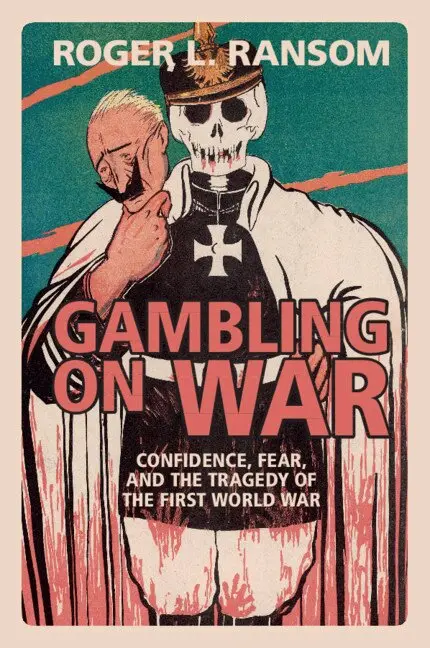
    Gambling on War

    Confidence, Fear, and the Tragedy of the First World War

    AvRoger L. Ransom

    Häftad, Engelska, 2018

    364 kr

    Beställningsvara. Skickas inom 10-15 vardagar. Fri frakt över 249 kr.

    Fler format och utgåvor

    E-bok

    439 kr

    E-bok

    439 kr

    Inbunden

    Tillf. slut

    Beskrivning

    The First World War left a legacy of chaos that is still with us a century later. Why did European leaders resort to war and why did they not end it sooner? Roger L. Ransom sheds new light on this enduring puzzle by employing insights from prospect theory and notions of risk and uncertainty. He reveals how the interplay of confidence, fear, and a propensity to gamble encouraged aggressive behavior by leaders who pursued risky military strategies in hopes of winning the war. The result was a series of military disasters and a war of attrition which gradually exhausted the belligerents without producing any hope of ending the war. Ultimately, he shows that the outcome of the war rested as much on the ability of the Allied powers to muster their superior economic resources to continue the fight as it did on success on the battlefield.

    Produktinformation

    • Utgivningsdatum:2018-06-28
    • Mått:153 x 228 x 17 mm
    • Vikt:570 g
    • Format:Häftad
    • Språk:Engelska
    • Antal sidor:346
    • Förlag:Cambridge University Press
    • ISBN:9781108454353

    Utforska kategorier

    • Ekonomisk historia inom Ekonomi och Ledarskap

    Mer om författaren

    Roger L. Ransom is Distinguished Professor of History and Economics, Emeritus at the University of California, Riverside. He is best known for his work with Richard Sutch on the American Civil War and his many publications include the books One Kind of Freedom (co-authored with Richard Sutch Cambridge, 2001), Conflict and Compromise (Cambridge, 1990) and The Confederate States of America: What Might Have Been (2005). He was the president of the Economic History Association in 2005, and was awarded a Guggenheim Fellowship, and the distinguished teaching award from the University of California, Riverside. He also won the Arthur H. Cole Prize from the Economic History Association and the Clio Can Award from the Cliometric Society.

    Recensioner i media

    'World War I became a tragedy when victory became an end in itself rather than a means of achieving some prewar objective. In his lucid and insightful Gambling on War, Roger L. Ransom draws on history and economics to explain why that happened, why World War I upended the world's institutions, and why its tragic effects persist even today.' Philip T. Hoffman, author of Why Did Europe Conquer the World?

    Innehållsförteckning

    • Prologue; 1. Confidence, fear, and a propensity to gamble; 2. Otto von Bismarck and the changing paradigm of war; 3. Schlieffen's gamble; 4. A war of attrition; 5. Economies at war; 6. War and revolution; 7. The last gamble; 8. The chaos of victory; Epilogue: the tragedy of a world war.