• Fri frakt över 249 kr
  • •
  • Snabba leveranser
  • •
  • Billiga böcker
Kundservice

Du är på sajten för privatpersoner.

Företag, bibliotek eller offentlig verksamhet?

Du handlar på classic.bokus.com, där alla dina funktioner finns intakta.
Till classic.bokus.com
Bokus logotyp. Gå till startsidan.
  • Erbjudanden
  • Nyheter
  • Student
  • Topplistor
  • Barn & ungdom
  • Bokus Play
  • E-böcker
  • Pocketböcker
  • Spel & pussel

10% rabatt på allt med kod NYSTART10 →

Sidfot

Mina sidor

    Hjälp

    • Kundservice
    • Vanliga frågor och svar
    • Frakt och leverans
    • Retur vid ångerrätt
    • Reklamera vara
    • Betalning
    • Köpvillkor
    • Allmänna villkor
    • Information om webbplatsens tillgänglighet

    Om Bokus

    • Om oss
    • Pressrum
    • För studenter
    • För företag
    • För bibliotek och offentlig verksamhet
    • För leverantörer
    • Hållbarhet

    Populärt

    • Aktuella erbjudanden
    • Presentkort
    • Studentlitteratur
    • Nya böcker
    • Topplistor
    • Signerade böcker
    • Engelska böcker

    Inspiration

    • Boktips
    • BookTok
    • Populära bokserier
    • Barnbokskaraktärer
    • Populära författare
    Logotyp för Bokus
    Följ oss på Facebook (extern länk)Följ oss på Instagram (extern länk)Följ oss på YouTube (extern länk)Följ oss på TikTok (extern länk)
    bokus @ CookiesAnpassa cookiesIntegritetspolicyKöpvillkor
    Till Citymail hemsida (extern länk)Till Budbee hemsida (extern länk)Till Postnord hemsida (extern länk)Till Schenker hemsida (extern länk)Till Early Bird hemsida (extern länk)Till Walleys hemsida (extern länk)
    1. Historia och arkeologi
    2. Historia
    3. Amerikas historia

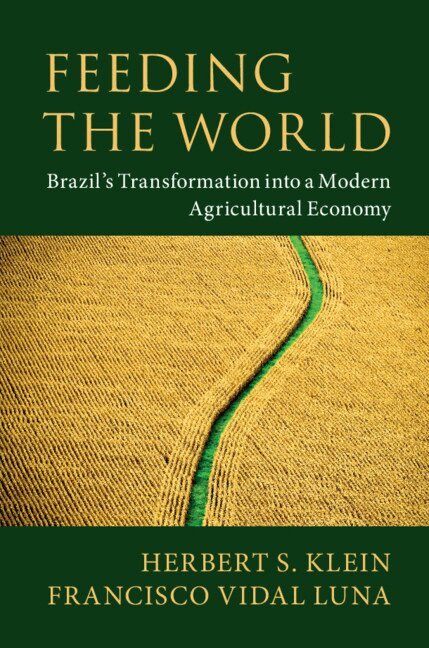
    Feeding the World

    Brazil's Transformation into a Modern Agricultural Economy

    AvHerbert S. Klein,Francisco Vidal Luna

    Häftad, Engelska, 2018

    458 kr

    Beställningsvara. Skickas inom 10-15 vardagar. Fri frakt över 249 kr.

    Fler format och utgåvor

    Inbunden

    1 444 kr

    Beskrivning

    Feeding the World chronicles the rise of Brazil as a world agricultural powerhouse during the second half of the twentieth century. Tracing the history of Brazilian agricultural development, Herbert S. Klein and Francisco Vidal Luna focus specifically on how Brazil came to be the largest net food exporter in the world. Brazil was always an agricultural export country, but it was traditionally an exporter of a single crop. However, the country's agriculture underwent significant changes after 1960. Since then, Brazil has become one of the top five world producers of some 36 agricultural products and is now the world's primary exporter of such agricultural goods as orange juice, sugar, meat, corn, and soybeans. Drawing heavily on historical and economic social science research, this book not only details how Brazil became an international leader in commercial agriculture, but offers careful insight into one of the most important developments in modern world history.

    Produktinformation

    • Utgivningsdatum:2018-12-01
    • Mått:153 x 228 x 25 mm
    • Vikt:650 g
    • Format:Häftad
    • Språk:Engelska
    • Antal sidor:468
    • Förlag:Cambridge University Press
    • ISBN:9781108460972

    Utforska kategorier

    • Amerikas historia inom Historia och arkeologi

    Mer om författaren

    Herbert S. Klein is Gouverneur Morris Professor Emeritus of History at Columbia University and Research Fellow and Latin American Curator at the Hoover Institution at Stanford University, California. Francisco Vidal Luna is Professor of Economics in the Faculty of Economics and Administration (FEA) at the Universidade de São Paulo.

    Recensioner i media

    'This is a superb study about the emergence of Brazil as a global leader in the agri-business. Based on careful empirical research, Klein's and Luna's book provides a comprehensive and balanced analyses of the social-economic and environmental impacts of an extraordinary transformation that led Brazil to rank among the top-3 exporters of various grains and animal proteins. A transformation that dates back to the final quarter of the last century and is still in motion, in a country of continental scale.' Boris Fausto, Brazilian Academy of Sciences

    Innehållsförteckning

    • List of maps; List of graphs; List of tables; Introduction; 1. Antecedents; 2. The new agricultural economy post 1960; 3. Causes for the modernization of Brazilian agriculture; 4. Productivity, technology, and sustainability; 5. Regional pattern of agriculture; 6. The case of Mato Grosso; 7. Rio Grande do Sul; 8. São Paulo; 9. The Agrarian question; Conclusion; Bibliography; Index.