Francisco Vidal Luna – författare
378 kr
Skickas inom 7-10 vardagar
836 kr
Skickas inom 7-10 vardagar
342 kr
Skickas inom 7-10 vardagar
1 010 kr
Skickas inom 7-10 vardagar
1 828 kr
Skickas inom 10-15 vardagar
661 kr
Skickas inom 10-15 vardagar
1 140 kr
Skickas inom 7-10 vardagar
425 kr
Läs direkt efter köp
425 kr
Läs direkt efter köp
355 kr
Skickas inom 7-10 vardagar
1 036 kr
Skickas inom 7-10 vardagar
442 kr
Skickas inom 7-10 vardagar
442 kr
Skickas inom 7-10 vardagar
1 397 kr
Skickas inom 7-10 vardagar
1 370 kr
Skickas inom 7-10 vardagar
535 kr
Läs direkt efter köp
535 kr
Läs direkt efter köp
442 kr
Skickas inom 7-10 vardagar
540 kr
Läs direkt efter köp
535 kr
Läs direkt efter köp
540 kr
Läs direkt efter köp
535 kr
Läs direkt efter köp
905 kr
Skickas inom 5-8 vardagar
974 kr
Läs direkt efter köp
849 kr
Skickas inom 5-8 vardagar
944 kr
Läs direkt efter köp
1 417 kr
Skickas inom 10-15 vardagar
1 730 kr
Läs direkt efter köp
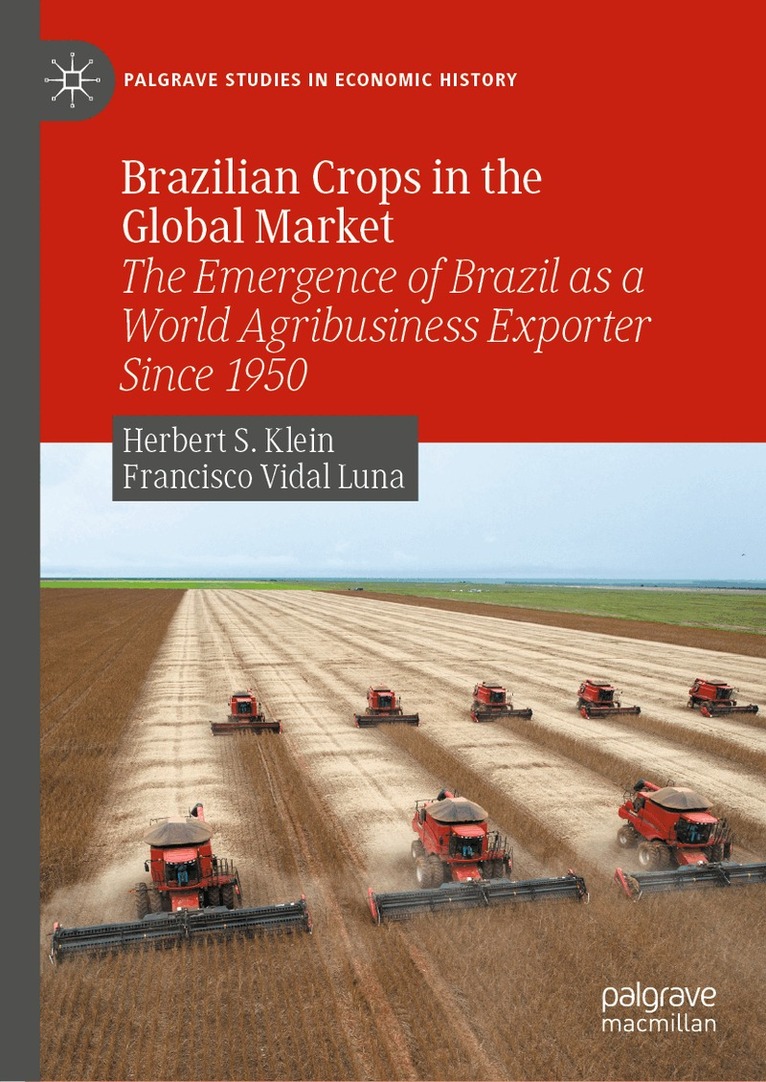
This book comprehensively examines the development of Brazilian agriculture by focusing on the crops which evolved from national products to international commodities on a massive scale. It traces the transformation of Brazil from a country with low-yield levels in 1950 to its current position as a leading world producer.
The first section of the book examines the modernization of Brazilian agriculture through a government programme which transformed traditional agriculture through subsidized credit, guaranteed prices, stock purchases, land utilization laws, modern research, new technology and major support for exports. It also explores the changing structures of agricultural production and farm ownership over time, analysing national censuses from 1920 to 2017 to illustrate the increasing efficiency of Brazil’s agricultural workers. The book then discusses the history and evolution of the major Brazilian crops in detail, starting with the newer export crops such as soybeans, maize and cotton, before focusing on the traditional sugar and coffee industries. The final section of the book examines two other major areas of agroindustry: forestry and the evolution of the pastoral industries, as well as the growth of a meat exporting sector. The authors also explore questions of sustainability in the context of today’s climate challenges, and the role of Brazilian agriculture in the world market going forward. This wide-ranging study will be of interest to a range of academics, including those working in agricultural economics, economic history, the history of Latin America and the history of agriculture more broadly.
1 417 kr
Skickas inom 10-15 vardagar
472 kr
Kommande