• Fri frakt över 249 kr
  • •
  • Snabba leveranser
  • •
  • Billiga böcker
Kundservice

Du är på sajten för privatpersoner.

Företag, bibliotek eller offentlig verksamhet?

Du handlar på classic.bokus.com, där alla dina funktioner finns intakta.
Till classic.bokus.com
Bokus logotyp. Gå till startsidan.
  • Erbjudanden
  • Nyheter
  • Student
  • Topplistor
  • Barn & ungdom
  • Bokus Play
  • E-böcker
  • Pocketböcker
  • Spel & pussel

10% rabatt på allt med kod: NYSTART10 →

Sidfot

Mina sidor

    Hjälp

    • Kundservice
    • Vanliga frågor och svar
    • Frakt och leverans
    • Retur vid ångerrätt
    • Reklamera vara
    • Betalning
    • Köpvillkor
    • Allmänna villkor
    • Information om webbplatsens tillgänglighet

    Om Bokus

    • Om oss
    • Pressrum
    • För studenter
    • För företag
    • För bibliotek och offentlig verksamhet
    • För leverantörer
    • Hållbarhet

    Populärt

    • Aktuella erbjudanden
    • Presentkort
    • Studentlitteratur
    • Nya böcker
    • Topplistor
    • Signerade böcker
    • Engelska böcker

    Inspiration

    • Boktips
    • BookTok
    • Populära bokserier
    • Barnbokskaraktärer
    • Populära författare
    Logotyp för Bokus
    Följ oss på Facebook (extern länk)Följ oss på Instagram (extern länk)Följ oss på YouTube (extern länk)Följ oss på TikTok (extern länk)
    bokus @ CookiesAnpassa cookiesIntegritetspolicyKöpvillkor
    Till Citymail hemsida (extern länk)Till Budbee hemsida (extern länk)Till Postnord hemsida (extern länk)Till Schenker hemsida (extern länk)Till Early Bird hemsida (extern länk)Till Walleys hemsida (extern länk)
    1. Filosofi och religion
    2. Filosofi
    3. Filosofiska discipliner

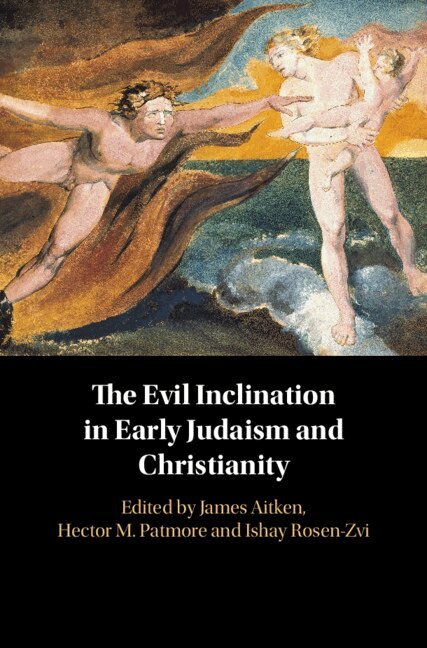
    The Evil Inclination in Early Judaism and Christianity

    AvIshay Rosen-Zvi,James Aitken

    Inbunden, Engelska, 2021

    1 174 kr

    Beställningsvara. Skickas inom 10-15 vardagar. Fri frakt över 249 kr.

    Beskrivning

    One of the central concepts in rabbinic Judaism is the notion of the Evil Inclination, which appears to be related to similar concepts in ancient Christianity and the wider late antique world. The precise origins and understanding of the idea, however, are unknown. This volume traces the development of this concept historically in Judaism and assesses its impact on emerging Christian thought concerning the origins of sin. The chapters, which cover a wide range of sources including the Bible, the Ancient Versions, Qumran, Pseudepigrapha and Apocrypha, the Targums, and rabbinic and patristic literature, advance our understanding of the intellectual exchange between Jews and Christians in classical Antiquity, as well as the intercultural exchange between these communities and the societies in which they were situated.

    Produktinformation

    • Utgivningsdatum:2021-01-21
    • Mått:160 x 235 x 30 mm
    • Vikt:730 g
    • Format:Inbunden
    • Språk:Engelska
    • Antal sidor:382
    • Förlag:Cambridge University Press
    • ISBN:9781108470827

    Utforska kategorier

    • Filosofiska discipliner inom Filosofi och religion

    Mer om författaren

    James Aitken is Reader in Hebrew and Early Jewish Studies at the Faculty of Divinity, University of Cambridge. Publications include No Stone Unturned: Greek Inscriptions and Septuagint Vocabulary (2014) and The T&T Clark Companion to the Septuagint (2015). Hector Michael Patmore is Associate Professor in the Faculty of Theology and Religious Studies at the KU Leuven. His research focuses on the development of Jewish beliefs and the translation and interpretation of the Hebrew Bible in Antiquity. Ishay Rosen-Zvi is Professor in the Department of Jewish Philosophy and Talmud at Tel-Aviv University. A scholar of rabbinic literature, he was elected to the Israel Young Academy of Sciences in 2013. He is author of several books, most recently, Goy: Israel's Multiple Others and the Birth of the Gentile (2015).

    Recensioner i media

    'This broad and erudite volume will be of value to scholars of the Dead Sea Scrolls.' Matthew Goff, Dead Sea Discoveries

    Innehållsförteckning

    • 1. Introduction James Aitken, Hector Patmore and Ishay Rosen-Zvi; 2. Reconsidering the semantics of the 'inclination' (yéṣɛr) in classical Biblical Hebrew Noam Mizrahi; 3. The 'inclination' (yēṣer) as rendered in the Septuagint James Aitken; 4. 'Fleshly spirit' and 'vessel of flesh' in 4Qinstruction and the thanksgiving hymns Benjamin Wold; 5. Theological anthropology in the enochic tradition Loren Stuckenbruck; 6. The perils of philosophical persuasion: Philo on the origin of moral evils Sharon Weisser; 7. The evil inclination (yeṣer ha-ra') in tannaitic literature: demonic desires and beyond Ishay Rosen-Zvi; 8. Conflicting intrapersonal powers in Paul's letters Daniel Schumann; 9. The 'two inclinations' and the double-minded human condition in the letter of James George van Kooten; 10. An evil inclination in early targums to the Pentateuch and Prophets? Hector Patmore; 11. Gnostic theologies of evil Timothy Pettipiece; 12. The rabbinic 'inclination' (yeṣer) and the Christian apocrypha Monika Pesthy-Simon; 13. Origen on the origin of sin Riemer Roukema; 14. Augustine on the diabolical suggestion of sin Sophie Lunn-Rockliffe; 15. Jerome and the 'inclination' (yeṣer): the evidence of the vulgate C. T. R. Hayward; 16. Rabbinic inclinations and monastic thoughts: Evagrius Ponticus' doctrine of reasoning (logismoi) and its antecedents Augustine Casiday; 17. 'Inclination' (yaṣrā) in the Syriac tradition David G. K. Taylor; 18. Evil, sin and inclination (Yeṣer) in Jewish and Christian poetic disputes between the body and soul Ophir Münz-Manor; 19. The wizard of az and the evil inclination: the Babylonian rabbinic inclination (yeṣer) in its Zoroastrian and Manichaean context Yishai Kiel; 20. The evil inclination in the targums to the writing Leeor Gottlieb.