• Fri frakt över 249 kr
  • •
  • Snabba leveranser
  • •
  • Billiga böcker
Kundservice

Du är på sajten för privatpersoner.

Företag, bibliotek eller offentlig verksamhet?

Du handlar på classic.bokus.com, där alla dina funktioner finns intakta.
Till classic.bokus.com
Bokus logotyp. Gå till startsidan.
  • Erbjudanden
  • Nyheter
  • Student
  • Topplistor
  • Barn & ungdom
  • Bokus Play
  • E-böcker
  • Pocketböcker
  • Spel & pussel

10% rabatt på allt med kod: NYSTART10 →

Sidfot

Mina sidor

    Hjälp

    • Kundservice
    • Vanliga frågor och svar
    • Frakt och leverans
    • Retur vid ångerrätt
    • Reklamera vara
    • Betalning
    • Köpvillkor
    • Allmänna villkor
    • Information om webbplatsens tillgänglighet

    Om Bokus

    • Om oss
    • Pressrum
    • För studenter
    • För företag
    • För bibliotek och offentlig verksamhet
    • För leverantörer
    • Hållbarhet

    Populärt

    • Aktuella erbjudanden
    • Presentkort
    • Studentlitteratur
    • Nya böcker
    • Topplistor
    • Signerade böcker
    • Engelska böcker

    Inspiration

    • Boktips
    • BookTok
    • Populära bokserier
    • Barnbokskaraktärer
    • Populära författare
    Logotyp för Bokus
    Följ oss på Facebook (extern länk)Följ oss på Instagram (extern länk)Följ oss på YouTube (extern länk)Följ oss på TikTok (extern länk)
    bokus @ CookiesAnpassa cookiesIntegritetspolicyKöpvillkor
    Till Citymail hemsida (extern länk)Till Budbee hemsida (extern länk)Till Postnord hemsida (extern länk)Till Schenker hemsida (extern länk)Till Early Bird hemsida (extern länk)Till Walleys hemsida (extern länk)
    1. Skönlitteratur
    2. Litteraturvetenskap

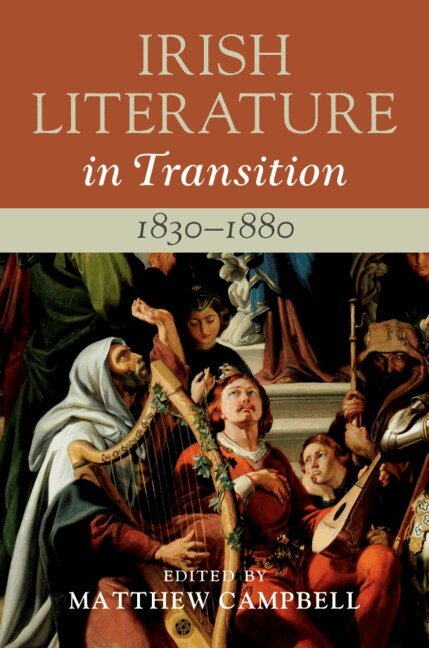
    Irish Literature in Transition, 1830-1880: Volume 3

    AvMatthew Campbell

    Inbunden, Engelska, 2020

    Del i serien Irish Literature in Transition

    1 818 kr

    Beställningsvara. Skickas inom 10-15 vardagar. Fri frakt över 249 kr.

    Beskrivning

    Ireland's experience in the nineteenth century was quite different from that of Victorian Britain. Its fictions were written in differing forms - like the gothic or historical novel - and its poetry and drama were populated with ballad and song. Its writers were by turns nationalist or unionist, anglophile or de-anglicising. If the effects of famine and emigration were catastrophic for mid-nineteenth-century Irish culture, they initiated a literary story that spread across the diaspora. Despite the decline of spoken Irish, literature continued to be published, while scholarly endeavours such as translation or the Ordnance Survey preserved much from the Gaelic past. This rich volume examines the many forms of new writing that thrived throughout this period. Utilizing a thematic and historical approach, it addresses a broad anglophone readership in Victorian literature. Essays consider the Irish authors in America and India, women's writing, and the resilience of Irish literature before the revival.

    Produktinformation

    • Utgivningsdatum:2020-03-12
    • Mått:160 x 235 x 23 mm
    • Vikt:600 g
    • Format:Inbunden
    • Språk:Engelska
    • Serie:Irish Literature in Transition
    • Antal sidor:340
    • Förlag:Cambridge University Press
    • ISBN:9781108480482

    Utforska kategorier

    • Litteraturvetenskap inom Skönlitteratur

    Mer om författaren

    Matthew Campbell is Professor of Modern Literature at the University of York. He is the author of Rhythm and Will in Victorian Poetry (1999) and Irish Poetry Under the Union (2013). He is also the editor of the Cambridge Companion to Contemporary Irish Poetry (Cambridge, 2003) and The Voice of the People; the European Folk Revival (2012).

    Recensioner i media

    '… a remarkably ambitious project, taking the temperature of Irish literature from 1730 to the present in approximately 2,400 pages.' Anthony Roche, Irish Times

    Innehållsförteckning

    • Part I. Contexts and Contents: Politics and Periodicals: 1. Victorian Ireland, 1830–1880: a transition state Matthew Campbell; 2. Satire, fiction and innovation between Dublin, Edinburgh and London Jim Kelly; 3. Young Irelanders, Fenians, Land Leaguers: Young Ireland and beyond Melissa Fegan; Part II. Ireland and the Liberal Arts and Sciences: 4. Naming the place: the Ordnance Survey and its afterlives Cóilín Parsons; 5. Political economy? The economics and sociology of famine Marguerite Corporaal; 6. Newman's Irish University Colin Barr; 7. The charms of Ireland: travel writing and tourism Glenn Hooper; Part III. From the Four Nations to the Globalising Irish: 8. England and Ireland, Tory and Whig: Thackeray, Trollope, Arnold John McCourt; 9. The Irish in the Empire: Moore, Lever, Duffy Jim Shanahan; 10. An exiled history: Mitchel to O'Leary James Quinn; 11. The writing of Irish-America Peter D. O'Neill; Part IV. The Languages of Literature: 12. Antiquarians and authentics: survival and revival in Gaelic writing Nicholas Wolf; 13. Poetry and its audiences: club, street, ballad Norman Vance; 14. Gothic, allegory, realism: the Irish 'Victorian' novel Raphael Ingelbien; 15. The rise of the woman writer Anna Pilz; 16. Dion Boucicault and the globalized Irish stage Shaun Richards; 17. The popular prints Stephanie Rains.