• Fri frakt över 249 kr
  • •
  • Snabba leveranser
  • •
  • Billiga böcker
Kundservice

Du är på sajten för privatpersoner.

Företag, bibliotek eller offentlig verksamhet?

Du handlar på classic.bokus.com, där alla dina funktioner finns intakta.
Till classic.bokus.com
Bokus logotyp. Gå till startsidan.
  • Erbjudanden
  • Nyheter
  • Student
  • Topplistor
  • Barn & ungdom
  • Bokus Play
  • E-böcker
  • Pocketböcker
  • Spel & pussel

10% rabatt på allt med kod: NYSTART10 →

Sidfot

Mina sidor

    Hjälp

    • Kundservice
    • Vanliga frågor och svar
    • Frakt och leverans
    • Retur vid ångerrätt
    • Reklamera vara
    • Betalning
    • Köpvillkor
    • Allmänna villkor
    • Information om webbplatsens tillgänglighet

    Om Bokus

    • Om oss
    • Pressrum
    • För studenter
    • För företag
    • För bibliotek och offentlig verksamhet
    • För leverantörer
    • Hållbarhet

    Populärt

    • Aktuella erbjudanden
    • Presentkort
    • Studentlitteratur
    • Nya böcker
    • Topplistor
    • Signerade böcker
    • Engelska böcker

    Inspiration

    • Boktips
    • BookTok
    • Populära bokserier
    • Barnbokskaraktärer
    • Populära författare
    Logotyp för Bokus
    Följ oss på Facebook (extern länk)Följ oss på Instagram (extern länk)Följ oss på YouTube (extern länk)Följ oss på TikTok (extern länk)
    bokus @ CookiesAnpassa cookiesIntegritetspolicyKöpvillkor
    Till Citymail hemsida (extern länk)Till Budbee hemsida (extern länk)Till Postnord hemsida (extern länk)Till Schenker hemsida (extern länk)Till Early Bird hemsida (extern länk)Till Walleys hemsida (extern länk)
    1. Ekonomi och Ledarskap
    2. Nationalekonomi
    3. Mikroekonomi

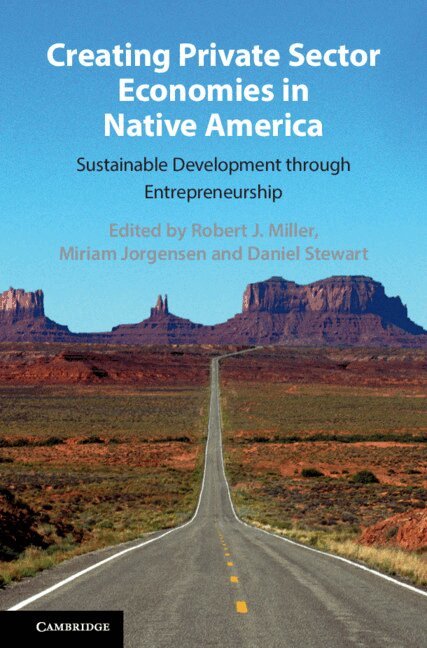
    Creating Private Sector Economies in Native America

    Sustainable Development through Entrepreneurship

    AvRobert J. Miller,Miriam Jorgensen

    Inbunden, Engelska, 2019

    1 513 kr

    Beställningsvara. Skickas inom 10-15 vardagar. Fri frakt över 249 kr.

    Beskrivning

    Native nation economies have long been dominated by public sector activities - government programs and services and tribal government-owned businesses - which do not generate the same long-term benefits for local communities that the private sector does. In this work, editors Robert Miller, Miriam Jorgensen, Daniel Stewart, and a roster of expert authors address the underdevelopment of the private sector on American Indian reservations, with the goal of sustaining and growing Native nation communities, so that Indian Country can thrive on its own terms. Chapter authors provide the language and arguments to make the case to tribal politicians, Native communities, and allies about the importance of private sector development and entrepreneurship in Indigenous economies. This book identifies and addresses key barriers to expanding the sector, provides policy guidance, and describes several successful business models - thus offering students, practitioners, and policymakers the information they need to make change.

    Produktinformation

    • Utgivningsdatum:2019-10-24
    • Mått:156 x 235 x 16 mm
    • Vikt:450 g
    • Format:Inbunden
    • Språk:Engelska
    • Antal sidor:238
    • Förlag:Cambridge University Press
    • ISBN:9781108481045

    Utforska kategorier

    • Mikroekonomi inom Ekonomi och Ledarskap
    • Rättsvetenskap inom Juridik
    • Amerikas historia inom Historia och arkeologi

    Mer om författaren

    Robert J. Miller is a Professor at the Sandra Day O'Connor College of Law, Arizona State University and the Faculty Director of the Rosette LLP American Indian Economic Development Program. He is a member of the Navajo Nation Council of Economic Advisors and the American Philosophical Society. He is also the Interim Chief Justice for the Pascua Yaqui Tribe Court of Appeals and a citizen of the Eastern Shawnee Tribe. He sits on the Grand Ronde Tribe and Northwest Inter-Tribal Courts of Appeals. He is the author of Reservation 'Capitalism': Economic Development in Indian Country (2012). Miriam Jorgensen is a Research Director of the Native Nations Institute at the University of Arizona. She is co-founder of the University of Arizona Indigenous Governance certificate program and editor of Rebuilding Native Nations: Strategies for Governance and Development (2007). Her work – in the US, Canada, and Australia – focuses on Indigenous governance and development and has addressed issues as wide-ranging as welfare policy, policing and justice systems, natural resources, cultural stewardship, land ownership, enterprise management, financial education, and entrepreneurship. Dan Stewart is a Professor of Entrepreneurship and Director of the Hogan Entrepreneurial Leadership Program at Gonzaga University. He is an enrolled member of the Spokane Tribe of Indians and the co-editor of American Indian Business: Principles and Practices (2017). In addition to his academic work, Dan is president of Dardan Enterprises, a diversified commercial construction firm.

    Innehållsförteckning

    • Introduction Miriam Jorgensen; Part I. The Setting: 1. Private sector economic development in Indian Country Robert J. Miller; 2. Opportunities to diversify: reservation workplaces and job numbers compared to nearby county areas Randall Akee, Elton Mykerezi and Richard M. Todd; Part II. Policy Barriers and Policy Needs: 3. The challenges of American Indian land tenure and the vastness of entrepreneurial potential Jessica A. Shoemaker; 4. Right-sizing use rights: Navajo land, bureaucracy, and home Ezra Rosser; 5. Access to credit in Indian Country: the promise of secured transaction systems in creating strong economies Patrice Kunesh and Benjamin Horowitz; 6. Retooling Indian Country for economic resurgence: reflections from a native CDFI practitioner David Castillo; Part III. Learning from Business Scholars: 7. Becoming an entrepreneur: essentials for any environment Mark C. Maletz; 8. Prototype, validate, pivot, repeat: a short, short course in entrepreneurship Daniel Stewart; 9. Mapping the sustainable development goals to Indian nations Carla F. Fredericks; 10. Supply chain management and Native American entrepreneurs Stephanie L. Black and Deanna M. Kennedy; Part IV. From Learning to Doing: Examples of Entrepreneurship in Indian Country: 11. Native American food sovereignty and youth entrepreneurship Raymond Foxworth, Krystal Langholz and A-dae Romero-Briones; 12. Indigenous arts ecology – a new investment model for Indian Country Lori Lea Pourier.