• Fri frakt över 249 kr
  • •
  • Snabba leveranser
  • •
  • Billiga böcker
Kundservice

Du är på sajten för privatpersoner.

Företag, bibliotek eller offentlig verksamhet?

Du handlar på classic.bokus.com, där alla dina funktioner finns intakta.
Till classic.bokus.com
Bokus logotyp. Gå till startsidan.
  • Erbjudanden
  • Student
  • Topplistor
  • Barn & ungdom
  • Bokus Play
  • E-böcker
  • Ljudböcker
  • Pocketböcker
  • Spel och pussel

Pocketfynda! Hundratals böcker för 49 kr/st →

Sidfot

Mina sidor

    Hjälp

    • Kundservice
    • Vanliga frågor och svar
    • Frakt och leverans
    • Retur vid ångerrätt
    • Reklamera vara
    • Betalning
    • Köpvillkor
    • Allmänna villkor
    • Information om webbplatsens tillgänglighet

    Om Bokus

    • Om oss
    • Pressrum
    • För studenter
    • För företag
    • För bibliotek och offentlig verksamhet
    • För leverantörer
    • Hållbarhet

    Populärt

    • Aktuella erbjudanden
    • Presentkort
    • Studentlitteratur
    • Nya böcker
    • Topplistor
    • Signerade böcker
    • Engelska böcker

    Inspiration

    • Boktips
    • BookTok
    • Barnbokskaraktärer
    • Populära författare
    Logotyp för Bokus
    Följ oss på Facebook (extern länk)Följ oss på Instagram (extern länk)Följ oss på YouTube (extern länk)Följ oss på TikTok (extern länk)
    bokus @ CookiesAnpassa cookiesIntegritetspolicyKöpvillkor
    Till Citymail hemsida (extern länk)Till Budbee hemsida (extern länk)Till Postnord hemsida (extern länk)Till Schenker hemsida (extern länk)Till Early Bird hemsida (extern länk)Till Walleys hemsida (extern länk)
    1. Skönlitteratur
    2. Litteraturvetenskap
    3. Litteraturteori

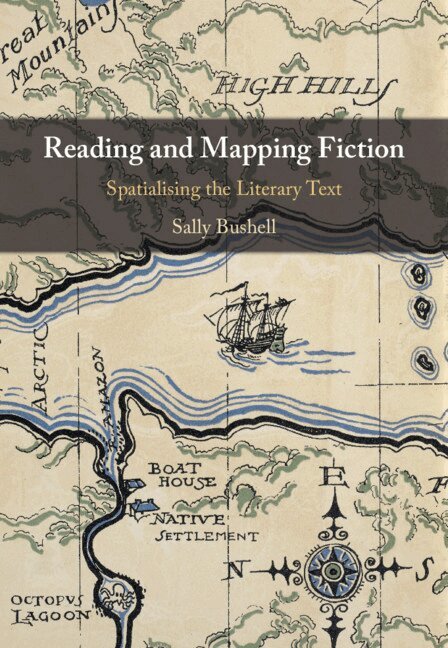
    Reading and Mapping Fiction

    Spatialising the Literary Text

    AvSally Bushell

    Inbunden, Engelska, 2020

    1 535 kr

    Beställningsvara. Skickas inom 7-10 vardagar. Fri frakt över 249 kr.

    Fler format och utgåvor

    E-bok

    1 797 kr

    E-bok

    1 802 kr

    Beskrivning

    Do we map as we read? How central to our experience of literature is the way in which we spatialise and visualise a fictional world? Reading and Mapping Fiction offers a fresh approach to the interpretation of literary space and place centred upon the emergence of a fictional map alongside the text in the late nineteenth and early twentieth centuries. Bringing together a range of new and emerging theories, including cognitive mapping and critical cartography, Bushell compellingly argues that this activity, whatever it is called - mapping, diagramming, visualising, spatialising - is a vital and intrinsic part of how we experience literature, and of what makes it so powerful. Drawing on both the theory and history of literature and cartography, this richly illustrated study opens up understanding of spatial meaning and interpretation in new ways that are relevant to both more traditional academic scholarship and to newly emerging digital practices.

    Produktinformation

    • Utgivningsdatum:2020-07-02
    • Mått:175 x 250 x 22 mm
    • Vikt:840 g
    • Format:Inbunden
    • Språk:Engelska
    • Antal sidor:350
    • Förlag:Cambridge University Press
    • ISBN:9781108487450

    Utforska kategorier

    • Litteraturteori inom Skönlitteratur

    Mer om författaren

    Sally Bushell is Professor of Romantic and Victorian Literature in the Department of English Literature and Creative Writing, Lancaster University. She is interested in mapping texts in a range of ways (across process; empirically; digitally). She is also principal investigator on the Arts and Humanities Research Council (AHRC)-funded literary mapping project Chronotopic Cartographies.

    Recensioner i media

    '… the author crafts a revelatory hermeneutic tool for exploring the virtues of literature by innovatively blending aspects of cognition, cartography, and criticism. Bushell focuses on the 18th and 19th centuries - including reflections on genres and individuals, but her thinking extends into the digital age.' H. I. Einsohn, Choice

    Innehållsförteckning

    • 1. A shifting relationship: from literary geography to critical literary mapping; 2. Historicising the fictional map; 3. Doubleness and silence in adventure and spy fiction; 4. Mapping murder; 5. Playspace: spatialising children's fiction; 6. Mapping worlds: Tolkien's cartographic imagination; 7. Fearing the map: representational priorities and referential assumptions; 8. Reading as mapping, or, what cannot be visualised.