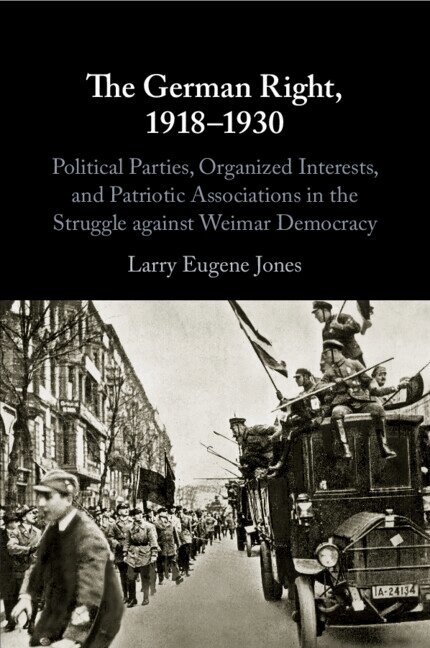
Häftad, Engelska, 2021
The German Right, 1918-1930
Political Parties, Organized Interests, and Patriotic Associations in the Struggle against Weimar Democracy
574 kr
Beställningsvara. Skickas inom 5-8 vardagar. Fri frakt över 249 kr.
Fler format och utgåvor
Beskrivning
Produktinformation
- Utgivningsdatum: 2021-12-23
- Mått: 152 x 229 x 34 mm
- Vikt: 867 g
- Format: Häftad
- Språk: Engelska
- Antal sidor: 658
- Förlag: Cambridge University Press
- ISBN: 9781108713863
Utforska kategorier
Mer om författaren
Larry Eugene Jones is Professor Emeritus in the Department of History at Canisius College in Buffalo, New York, where he has taught since 1968. His previous publications include the award-winning German Liberalism and the Dissolution of the Weimar Party System, 1918–1933 (1988) and Hitler versus Hindenburg: The 1932 Presidential Elections and the End of the Weimar Republic (2015).
Recensioner i media
'This excellent study of the German National People's Party and the conservative Protestant milieu asks why German conservatism failed to adapt to Weimar democracy after 1919. By tracing the right over the long term, Jones deepens our understanding of its inability to provide what Nazism offered, the emotional commitment to national unity.' Shelley Baranowski, Distinguished Professor Emerita, University of Akron, Ohio
Betyg & recensioner
0 recensioner
Inga recensioner tillgängliga.