• Fri frakt över 249 kr
  • •
  • Snabba leveranser
  • •
  • Billiga böcker
Kundservice

Du är på sajten för privatpersoner.

Företag, bibliotek eller offentlig verksamhet?

Du handlar på classic.bokus.com, där alla dina funktioner finns intakta.
Till classic.bokus.com
Bokus logotyp. Gå till startsidan.
  • Erbjudanden
  • Nyheter
  • Student
  • Topplistor
  • Barn & ungdom
  • Bokus Play
  • E-böcker
  • Pocketböcker
  • Spel & pussel

10% rabatt på allt med kod NYSTART10 →

Sidfot

Mina sidor

    Hjälp

    • Kundservice
    • Vanliga frågor och svar
    • Frakt och leverans
    • Retur vid ångerrätt
    • Reklamera vara
    • Betalning
    • Köpvillkor
    • Allmänna villkor
    • Information om webbplatsens tillgänglighet

    Om Bokus

    • Om oss
    • Pressrum
    • För studenter
    • För företag
    • För bibliotek och offentlig verksamhet
    • För leverantörer
    • Hållbarhet

    Populärt

    • Aktuella erbjudanden
    • Presentkort
    • Studentlitteratur
    • Nya böcker
    • Topplistor
    • Signerade böcker
    • Engelska böcker

    Inspiration

    • Boktips
    • BookTok
    • Populära bokserier
    • Barnbokskaraktärer
    • Populära författare
    Logotyp för Bokus
    Följ oss på Facebook (extern länk)Följ oss på Instagram (extern länk)Följ oss på YouTube (extern länk)Följ oss på TikTok (extern länk)
    bokus @ CookiesAnpassa cookiesIntegritetspolicyKöpvillkor
    Till Citymail hemsida (extern länk)Till Budbee hemsida (extern länk)Till Postnord hemsida (extern länk)Till Schenker hemsida (extern länk)Till Early Bird hemsida (extern länk)Till Walleys hemsida (extern länk)
    1. Juridik
    2. Internationell rätt

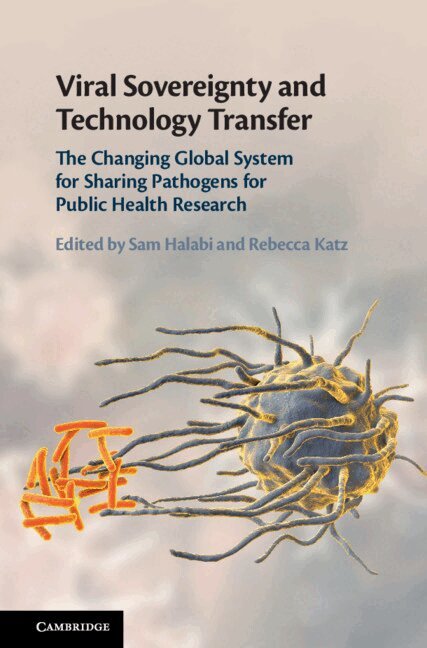
    Viral Sovereignty and Technology Transfer

    The Changing Global System for Sharing Pathogens for Public Health Research

    AvSam F. Halabi,Rebecca Katz

    Häftad, Engelska, 2022

    315 kr

    Beställningsvara. Skickas inom 10-15 vardagar. Fri frakt över 249 kr.

    Beskrivning

    In the global infectious-disease research community, there has long been uncertainty about the conditions under which biological resources may be studied or transferred out of countries. This work examines the reasons for that uncertainty and shows how global biomedical research has been shaped by international disputes over access to biological resources. Bringing together government leaders, World Health Organization officials, and experts in virology, wildlife biology, clinical ethics, technology transfer, and international law, the book identifies the critical problems - and implications of these problems - posed by negotiating for access and sharing benefits, and proposes solutions to ensure that biomedical advances are not threatened by global politics. Written in accessible, non-technical language, this work should be read by anyone who sees global health and biomedical research as a priority for international lawmakers.

    Produktinformation

    • Utgivningsdatum:2022-07-07
    • Mått:152 x 229 x 14 mm
    • Vikt:350 g
    • Format:Häftad
    • Språk:Engelska
    • Antal sidor:236
    • Förlag:Cambridge University Press
    • ISBN:9781108723503

    Utforska kategorier

    • Internationell rätt inom Juridik
    • Bolagsrätt inom Juridik
    • Patenträtt inom Juridik

    Mer om författaren

    Sam Halabi is the Manley O. Hudson Professor of Law at the University of Missouri. He is also a Scholar at the O'Neill Institute for National and Global Health Law and affiliated faculty at the Center for Global Health Science and Security at Georgetown University. His previous books include Global Management of Infectious Disease after Ebola, Intellectual Property and the New International Economic Order, and Food and Drug Regulation in an Era of Globalized Markets. He is also the co-chair (with Gian Luca Burci) of the Ethical, Legal, and Social Implications Committee of the Global Virome Project. Professor Halabi was the 1999 First Place Prize recipient of the Elie Wiesel Foundation for Humanity Essay in Ethics prize. Dr. Rebecca Katz is a Professor and Director of the Center for Global Health Science and Security at Georgetown University. Prior to coming to Georgetown, she spent ten years at The George Washington University as faculty in the Milken Institute School of Public Health. Her research is focused on global health security, public health preparedness and health diplomacy. Since 2007, much of her work has been on the domestic and global implementation of the International Health Regulations. From 2004-2019, Dr. Katz was also a consultant to the Department of State, working on issues related to the Biological Weapons Convention, pandemic influenza and disease surveillance.

    Recensioner i media

    'Viral Sovereignty and Technology Transfer is a comprehensive and essential volume analyzing how the sharing of pathogens and associated data has dramatically changed in the last 25 years. The contributors are global leaders in diplomacy, epidemiology, ethics, law, medicine, public health, security studies, technology transfer, and veterinary medicine. This robust interdisciplinary group identify where the risks to global public health are greatest as sharing becomes slower and more fraught with proprietary claims, and what solutions show the most promise to ensure the world is prepared for infectious disease and other health emergencies. Viral sovereignty may seem like a technical problem, but it has enormous consequences for global preparedness. This book should be read not only by experts in the management of health threats, but also by every person who is concerned about the future of global health security.' Lawrence O. Gostin, World Health Organization Collaborating Center on National & Global Health Law

    Innehållsförteckning

    • Introduction: Viral Sovereignty, Technology Transfer, and the Changing Global System for Sharing Pathogens for Public Health Research Sam Halabi and Rebecca Katz; Part I. The Geopolitical, Historical, and Scientific Context: 1. The History of Accessing and Sharing Human Pathogens for Public Health Research Michelle Rourke; 2. Attitudes towards transfers of human research samples across borders: A multi-country perspective Ben Krohmal; 3. The Scope of Global Infectious Disease Research: Field Capture, Quarantine, and Sample Transfer to Detect Emerging Pathogen Threats Brian Bird; Part II. Health Security, Research Ethics, and Human Rights Implications; 4. The Ethics of Conducting Genomic Research in Low-Resource Settings Hayley K. Sullivan and Benjamin E. Berkman ; 5. The Ethics of Human Pathogen Research during Public Health Emergencies in Low- and Middle Income Countries: Lessons from Latin America and the Caribbean Sam Halabi; 6. Biosecurity, Biosafety and the Management of Dangerous Pathogens for Public Health Research Joshua Teperowski Monrad and Rebecca Katz; 7. Human Rights Implications of Pathogen Sharing and Technology Transfer Alexandra Phelan; Part III. Solutions; Standard Material Transfer Agreements, Repositories, and Specialized International Instruments: 8. Material Transfer Agreements and the Regulation of the Collaborative Environment Sherry Brett-Major; 9. Sharing of Biological Samples during Public Health Emergencies: Challenges and Opportunities for National and International Action Maria Julia Marinissen, Ruvani Chandrasekera, John Simpson, Theodore Kuschak, and Lauren Barna; 10. Facilitating Material Transfer Agreements from a Practitioner's Perspective Michael Mowatt and Mukul Ranjan; 11. The Pandemic Influenza Preparedness Framework as an Access and Benefit Sharing Mechanism Anne Huvos, Steven A. Solomon and Claudia Nannini; Conclusion Gian Luca Burci.