• Fri frakt över 249 kr
  • •
  • Snabba leveranser
  • •
  • Billiga böcker
Kundservice

Du är på sajten för privatpersoner.

Företag, bibliotek eller offentlig verksamhet?

Du handlar på classic.bokus.com, där alla dina funktioner finns intakta.
Till classic.bokus.com
Bokus logotyp. Gå till startsidan.
  • Erbjudanden
  • Nyheter
  • Student
  • Topplistor
  • Barn & ungdom
  • Bokus Play
  • E-böcker
  • Pocketböcker
  • Spel & pussel

10% rabatt på allt med kod: NYSTART10 →

Sidfot

Mina sidor

    Hjälp

    • Kundservice
    • Vanliga frågor och svar
    • Frakt och leverans
    • Retur vid ångerrätt
    • Reklamera vara
    • Betalning
    • Köpvillkor
    • Allmänna villkor
    • Information om webbplatsens tillgänglighet

    Om Bokus

    • Om oss
    • Pressrum
    • För studenter
    • För företag
    • För bibliotek och offentlig verksamhet
    • För leverantörer
    • Hållbarhet

    Populärt

    • Aktuella erbjudanden
    • Presentkort
    • Studentlitteratur
    • Nya böcker
    • Topplistor
    • Signerade böcker
    • Engelska böcker

    Inspiration

    • Boktips
    • BookTok
    • Populära bokserier
    • Barnbokskaraktärer
    • Populära författare
    Logotyp för Bokus
    Följ oss på Facebook (extern länk)Följ oss på Instagram (extern länk)Följ oss på YouTube (extern länk)Följ oss på TikTok (extern länk)
    bokus @ CookiesAnpassa cookiesIntegritetspolicyKöpvillkor
    Till Citymail hemsida (extern länk)Till Budbee hemsida (extern länk)Till Postnord hemsida (extern länk)Till Schenker hemsida (extern länk)Till Early Bird hemsida (extern länk)Till Walleys hemsida (extern länk)
    1. Juridik
    2. Särskilda rättsområden
    3. Socialrätt och hälso- och sjukvårdsrätt
    4. Hälso- och sjukvårdsrätt

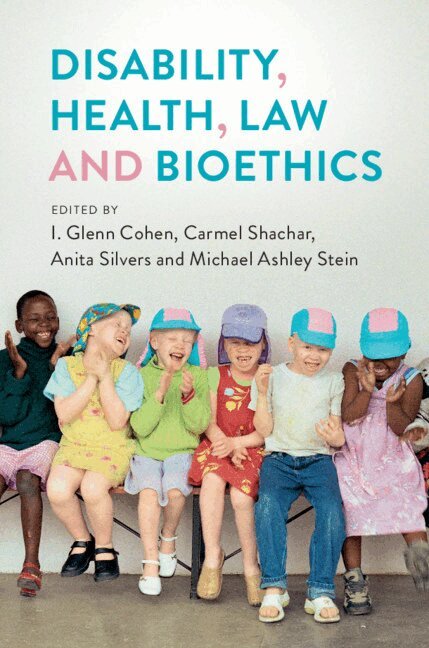
    Disability, Health, Law, and Bioethics

    AvI. Glenn Cohen,Carmel Shachar

    Häftad, Engelska, 2020

    585 kr

    Beställningsvara. Skickas inom 10-15 vardagar. Fri frakt över 249 kr.

    Beskrivning

    Historically and across societies people with disabilities have been stigmatized and excluded from social opportunities on a variety of culturally specific grounds. In this collection, the authors explore the impact that the philosophical framing of disability can have on public policy questions, in the clinic, in the courtroom, and elsewhere. They examine the implications of this understanding for legal and policy approaches to disability, strategies for allocating and accessing health care, the implementation of the Americans with Disabilities Act, health care rights, and other legal tools designed to address discrimination. This volume should be read by anyone seeking a balanced view of disability and an understanding of the connection between the framing of disability and policies that have a real-world impact on individuals.

    Produktinformation

    • Utgivningsdatum:2020-04-23
    • Mått:152 x 228 x 16 mm
    • Vikt:450 g
    • Format:Häftad
    • Språk:Engelska
    • Antal sidor:312
    • Förlag:Cambridge University Press
    • ISBN:9781108725408

    Utforska kategorier

    • Hälso- och sjukvårdsrätt inom Juridik

    Mer om författaren

    I. Glenn Cohen is Professor of Law at Harvard Law School and the Faculty Director of the Petrie-Flom Center for Health Law Policy, Biotechnology, and Bioethics. He is one of the world's leading experts on the intersection of bioethics and the law, as well as health law. Glenn has written over 100 articles in venues such as the New England Journal of Medicine, the Journal of the American Medical Association, Nature, and the Harvard Law Review. Cohen is also the author, editor, or co-editor of twelve books. Carmel Shachar is the Executive Director of the Petrie-Flom Center for Health Law Policy, Biotechnology, and Bioethics at Harvard Law School. Carmel's scholarship focuses on law and health policy, with a focus on the regulation of value-based health care, the impact of the opioid epidemic, and anti-discrimination law and policy. She is also a lecturer on law at Harvard Law School, where she co-teaches a course on Health Care Rights in the Twenty-First Century. Anita Silvers, Professor of Philosophy and Health Equity Institute Affiliate, taught at San Francisco State University for over fifty years. During that time, she was a leader in the fight against barriers keeping students with disabilities out of California higher education system. Along with publishing more than 150 book chapters and articles, Anita received an appointment to the National Endowment for the Humanities National Council and made significant contributions to the field of philosophy and disability. Michael Ashley Stein is the Executive Director of the Harvard Law School Project on Disability, and a Visiting Professor at Harvard Law School since 2005. One of the world's leading experts on disability law and policy, he participated in the drafting of the United Nations Convention on the Rights of Persons with Disabilities; works globally with disabled peoples' organizations; consults with governments; advises United Nations bodies and national human rights institutions; and has brought landmark disability rights litigation. His path-breaking scholarship has been published by leading journals and academic presses.

    Recensioner i media

    'As we confront the implications of wide-ranging biomedical changes, issues of disability and of difference keep reappearing, like sharp rocks in roiling seas. This volume offers an invaluable breadth and depth of insight into those issues, highlighting how complex and varied they are, both in principle and in practice.' Henry T. Greely, Deane F. and Kate Edelman Johnson Professor of Law, Director, Center for Law and the Biosciences, Stanford University

    Innehållsförteckning

    • Introduction Carmel Shachar, I. Glenn Cohen and Michael Ashley Stein; Preface Tom Shakespeare; Part I. Disability: Definitions and Theories: Introduction I. Glenn Cohen; 1. Disability, health, and normal function Elizabeth Barnes; 2. Healthcare as eugenics Ani B. Satz; 3. Epistemic injustice, disability stigma, and public health law Daniel Goldberg; Part II. Disability in the Beginning and the End of Life: Introduction I. Glenn Cohen; 4. Abortion, the disabilities of pregnancy, and the dignity of risk Mary Anne Case; 5. The Down Syndrome Information Act and 'mere difference': redefining the scope of prenatal testing conversations? Marie-Eve Lemoine and Vardit Ravitsky; 6. Dementia, disability, and advance directives: defensible legal standards for dementia care Rebecca Dresser; Part III. Disability in the Clinical Setting: Introduction Carmel Shachar; 7. Expressing respect for people with disabilities in medical practice Adam Cureton; 8. Disabled bodies and good organs Emily Largent; 9. Humanizing clinical care for patients with disabilities Omar Sultan Haque and Michael Ashley Stein; 10. Chronic pain as a challenge for disability theory and policy Caroline J. Huang and David Wasserman; Part IV. Equality, Expertise, and Access: Introduction Michael Ashley Stein; 11. Making 'meaningful access' meaningful: equitable healthcare for divisive times Leslie Francis and Anita Silvers; 12. The privacy problem in disability antidiscrimination law Jasmine E. Harris; 13. Sexual agency as a rights-based imperative for persons with intellectual disabilities Matthew S. Smith, Tara Allison and Michael Ashley Stein; Part V. Disability, Intersectionality, and Social Movements: Introduction Carmel Shachar; 14. Destigmatizing disability in the law of immigration admissions Medha D. Makhlouf; 15. The normative bases of medical civil rights Craig Konnoth; 16. Judicial representation: speaking for others from the bench Wendy Salkin; Part VI. Quantifying Disability: Introduction William P. Alford; 17. Can we universally accommodate mental health and should we?: a systematic review of the evidence and ethical analysis Nathaniel Z. Counts, C. Taylor Poor, Julie Erickson, Thomas Hart and Kelly A. Davis; 18. Algorithmic disability discrimination Mason Marks; 19. The pathways approach to priority setting: considering quality of life while being fair to individuals with disabilities Govind Persad; 20. Measuring health-state utility via cured patients Nir Eyal.