• Fri frakt över 249 kr
  • •
  • Snabba leveranser
  • •
  • Billiga böcker
Kundservice

Du är på sajten för privatpersoner.

Företag, bibliotek eller offentlig verksamhet?

Du handlar på classic.bokus.com, där alla dina funktioner finns intakta.
Till classic.bokus.com
Bokus logotyp. Gå till startsidan.
  • Erbjudanden
  • Nyheter
  • Student
  • Topplistor
  • Barn & ungdom
  • Bokus Play
  • E-böcker
  • Pocketböcker
  • Spel & pussel

10% rabatt på allt med kod: NYSTART10 →

Sidfot

Mina sidor

    Hjälp

    • Kundservice
    • Vanliga frågor och svar
    • Frakt och leverans
    • Retur vid ångerrätt
    • Reklamera vara
    • Betalning
    • Köpvillkor
    • Allmänna villkor
    • Information om webbplatsens tillgänglighet

    Om Bokus

    • Om oss
    • Pressrum
    • För studenter
    • För företag
    • För bibliotek och offentlig verksamhet
    • För leverantörer
    • Hållbarhet

    Populärt

    • Aktuella erbjudanden
    • Presentkort
    • Studentlitteratur
    • Nya böcker
    • Topplistor
    • Signerade böcker
    • Engelska böcker

    Inspiration

    • Boktips
    • BookTok
    • Populära bokserier
    • Barnbokskaraktärer
    • Populära författare
    Logotyp för Bokus
    Följ oss på Facebook (extern länk)Följ oss på Instagram (extern länk)Följ oss på YouTube (extern länk)Följ oss på TikTok (extern länk)
    bokus @ CookiesAnpassa cookiesIntegritetspolicyKöpvillkor
    Till Citymail hemsida (extern länk)Till Budbee hemsida (extern länk)Till Postnord hemsida (extern länk)Till Schenker hemsida (extern länk)Till Early Bird hemsida (extern länk)Till Walleys hemsida (extern länk)
    1. Historia och arkeologi
    2. Historia
    3. Amerikas historia

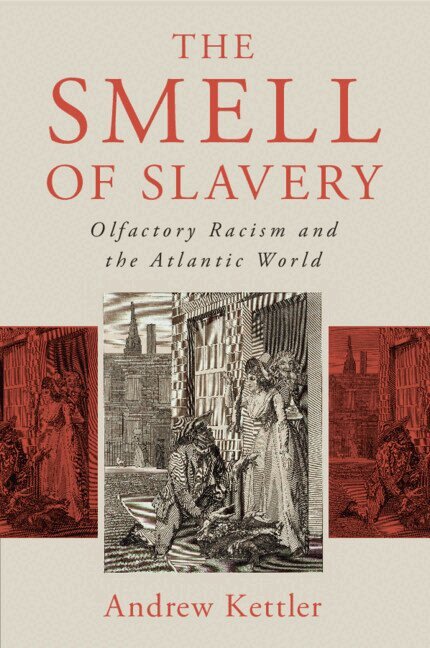
    The Smell of Slavery

    Olfactory Racism and the Atlantic World

    AvAndrew Kettler

    Häftad, Engelska, 2022

    271 kr

    Beställningsvara. Skickas inom 10-15 vardagar. Fri frakt över 249 kr.

    Fler format och utgåvor

    Inbunden

    509 kr

    Beskrivning

    In the Atlantic World, different groups were aromatically classified in opposition to other ethnic, gendered, and class assemblies due to an economic necessity that needed certain bodies to be defined as excremental, which culminated in the creation of a progressive tautology that linked Africa and waste through a conceptual hendiadys born of capitalist licentiousness. The African subject was defined as a scented object, appropriated as filthy to create levels of ownership through discourse that marked African peoples as unable to access spaces of Western modernity. Embodied cultural knowledge was potent enough to alter the biological function of the five senses to create a European olfactory consciousness made to sense the African other as foul. Fascinating, informative, and deeply researched, The Smell of Slavery exposes that concerns with pungency within the Western self were emitted outward upon the freshly dug outhouse of the mass slave grave called the Atlantic World.

    Produktinformation

    • Utgivningsdatum:2022-12-08
    • Mått:152 x 229 x 15 mm
    • Vikt:423 g
    • Format:Häftad
    • Språk:Engelska
    • Antal sidor:258
    • Förlag:Cambridge University Press
    • ISBN:9781108796385

    Utforska kategorier

    • Amerikas historia inom Historia och arkeologi

    Mer om författaren

    Andrew Kettler is an Ahmanson-Getty Fellow at the UCLA Center for 17th- and 18th-Century Studies at the William Andrews Clark Memorial Library.

    Recensioner i media

    'The Smell of Slavery makes important and original contributions to both the history of the senses and studies of racism and resistance in the Atlantic World. Kettler sheds further light on the embodied dimensions of slavery, convincingly tracing across centuries the role of smell in the construction of a racist system of dehumanization, commodification, and segregation, while illuminating the contrasting smellscapes of the oppressed.' Céline Carayon, Salisbury University and author of Eloquence Embodied: Nonverbal Communication among French and Indigenous Peoples in the Americas

    Innehållsförteckning

    • Introduction. Pecunia non olet; 1. The primal scene: ethnographic wonder and aromatic discourse; 2. Triangle trading on the pungency of race; 3. Ephemeral Africa: essentialized odors and the slave ship; 4. 'The sweet scent of vengeance': olfactory resistance in the Atlantic world; Conclusion. Race, nose, truth.