• Fri frakt över 249 kr
  • •
  • Snabba leveranser
  • •
  • Billiga böcker
Kundservice

Du är på sajten för privatpersoner.

Företag, bibliotek eller offentlig verksamhet?

Du handlar på classic.bokus.com, där alla dina funktioner finns intakta.
Till classic.bokus.com
Bokus logotyp. Gå till startsidan.
  • Erbjudanden
  • Nyheter
  • Student
  • Topplistor
  • Barn & ungdom
  • Bokus Play
  • E-böcker
  • Pocketböcker
  • Spel & pussel

10% studentrabatt med kod TERM26

Sidfot

Mina sidor

    Hjälp

    • Kundservice
    • Vanliga frågor och svar
    • Frakt och leverans
    • Retur vid ångerrätt
    • Reklamera vara
    • Betalning
    • Köpvillkor
    • Allmänna villkor
    • Information om webbplatsens tillgänglighet

    Om Bokus

    • Om oss
    • Pressrum
    • För studenter
    • För företag
    • För bibliotek och offentlig verksamhet
    • För leverantörer
    • Hållbarhet

    Populärt

    • Aktuella erbjudanden
    • Presentkort
    • Studentlitteratur
    • Nya böcker
    • Topplistor
    • Signerade böcker
    • Engelska böcker

    Inspiration

    • Boktips
    • BookTok
    • Populära bokserier
    • Barnbokskaraktärer
    • Populära författare
    Logotyp för Bokus
    Följ oss på Facebook (extern länk)Följ oss på Instagram (extern länk)Följ oss på YouTube (extern länk)Följ oss på TikTok (extern länk)
    bokus @ CookiesAnpassa cookiesIntegritetspolicyKöpvillkor
    Till Citymail hemsida (extern länk)Till Budbee hemsida (extern länk)Till Postnord hemsida (extern länk)Till Schenker hemsida (extern länk)Till Early Bird hemsida (extern länk)Till Walleys hemsida (extern länk)
    1. Historia och arkeologi
    2. Historia
    3. Asiens historia

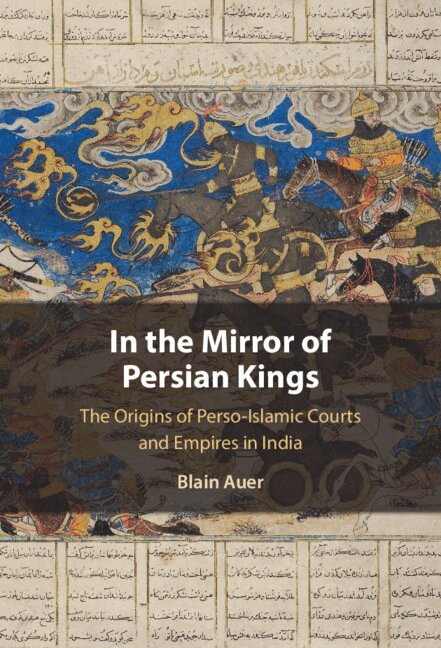
    In the Mirror of Persian Kings

    The Origins of Perso-Islamic Courts and Empires in India

    AvBlain Auer

    Inbunden, Engelska, 2021

    1 140 kr

    Beställningsvara. Skickas inom 10-15 vardagar. Fri frakt över 249 kr.

    Fler format och utgåvor

    E-bok

    342 kr

    E-bok

    342 kr

    Häftad

    297 kr

    Beskrivning

    For a period of nearly eight hundred years, Perso-Islamic kingship was the source for the dominant social and cultural paradigms organising Indian political life. In the medieval world of South Asia, Persian kingship took the form of a hybridized and adaptive political expression. The Persian king embodied the values of justice, military heroics, and honor, ideals valorized historically and transculturally, yet the influence of the pre-Islamic Persian past and Persian forms of kingship has not yet been fully recognised. In this book, Blain Auer demonstrates how Persian kingship was a transcultural phenomenon. Describing the contributions made by kings, poets, historians, political and moral philosophers, he reveals how and why the image of the Persian king played such a prominent role in the political history of Islamicate societies, in general, and in India, in particular. By tracing the historical thread of this influence from Samanid, Ghaznavid, and Ghurid empires, Auer demonstrates how that legacy had an impact on the establishment of Delhi as a capital of Muslim rulers who made claims to a broad symbolic and ideological inheritance from the Persian kings of legend.

    Produktinformation

    • Utgivningsdatum:2021-05-06
    • Mått:230 x 150 x 20 mm
    • Vikt:510 g
    • Format:Inbunden
    • Språk:Engelska
    • Antal sidor:254
    • Förlag:Cambridge University Press
    • ISBN:9781108832311

    Utforska kategorier

    • Asiens historia inom Historia och arkeologi

    Mer om författaren

    Blain Auer is Professor of South Asian Studies at the University of Lausanne. He is the author of Symbols of Authority in Medieval Islam: History, Religion and Muslim Legitimacy in the Delhi Sultanate (2012), co-editor of Encountering Buddhism and Islam in Medieval Central and South Asia (2019) and serves as Editor for the journals Marginalia, Études asiatiques, and the book series Perspectives on Islamicate South Asia.

    Recensioner i media

    'If James Mill dismissed the Delhi Sultanate as “a government, moulded and conducted agreeably to the properties of Persian civilization, instead of a government moulded and conducted agreeably to the properties of Hindu civilization” Blain Auer shows the opposite. He argues that Muslim chroniclers of India self-consciously connected their reigning patrons to pre-Islamic Iranian kings precisely because this model provided a more universal ideal of governance that was far more suited to the diverse subject population of the subcontinent. Auer should be commended for elucidating this theme in a monograph-length study.' Ali Anooshahr, University of California, Davis

    Innehållsförteckning

    • Preface; 1. The History of Persian Kingship and Persianization in South Asia; 2. Kings in History: Persian Royal Genealogies and Muslim Rulers; 3. Warrior King: Slaying Demons, Hunting Beasts, and War; 4. Theory and Application of Persianate Political Ethics in India; 5. The Pen, the Sword, and the Vizier; Conclusion.