• Fri frakt över 249 kr
  • •
  • Snabba leveranser
  • •
  • Billiga böcker
Kundservice

Du är på sajten för privatpersoner.

Företag, bibliotek eller offentlig verksamhet?

Du handlar på classic.bokus.com, där alla dina funktioner finns intakta.
Till classic.bokus.com
Bokus logotyp. Gå till startsidan.
  • Erbjudanden
  • Nyheter
  • Student
  • Topplistor
  • Barn & ungdom
  • Bokus Play
  • E-böcker
  • Pocketböcker
  • Spel & pussel

10% rabatt på allt med kod: NYSTART10 →

Sidfot

Mina sidor

    Hjälp

    • Kundservice
    • Vanliga frågor och svar
    • Frakt och leverans
    • Retur vid ångerrätt
    • Reklamera vara
    • Betalning
    • Köpvillkor
    • Allmänna villkor
    • Information om webbplatsens tillgänglighet

    Om Bokus

    • Om oss
    • Pressrum
    • För studenter
    • För företag
    • För bibliotek och offentlig verksamhet
    • För leverantörer
    • Hållbarhet

    Populärt

    • Aktuella erbjudanden
    • Presentkort
    • Studentlitteratur
    • Nya böcker
    • Topplistor
    • Signerade böcker
    • Engelska böcker

    Inspiration

    • Boktips
    • BookTok
    • Populära bokserier
    • Barnbokskaraktärer
    • Populära författare
    Logotyp för Bokus
    Följ oss på Facebook (extern länk)Följ oss på Instagram (extern länk)Följ oss på YouTube (extern länk)Följ oss på TikTok (extern länk)
    bokus @ CookiesAnpassa cookiesIntegritetspolicyKöpvillkor
    Till Citymail hemsida (extern länk)Till Budbee hemsida (extern länk)Till Postnord hemsida (extern länk)Till Schenker hemsida (extern länk)Till Early Bird hemsida (extern länk)Till Walleys hemsida (extern länk)
    1. Kultur
    2. Arkitektur
    3. Arkitekturhistoria

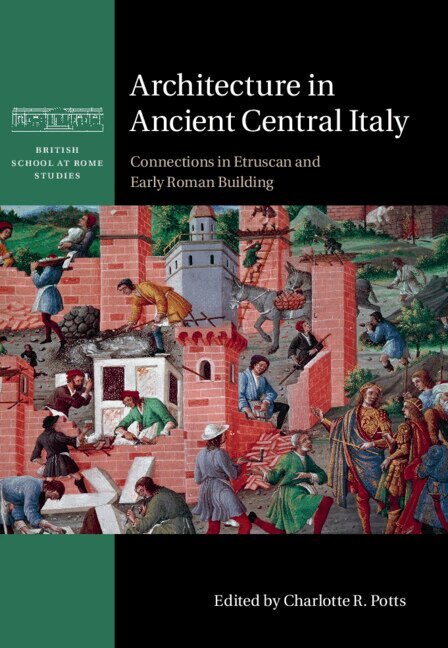
    Architecture in Ancient Central Italy

    Connections in Etruscan and Early Roman Building

    AvCharlotte R. Potts

    Inbunden, Engelska, 2022

    Del i serien British School at Rome Studies

    1 140 kr

    Beställningsvara. Skickas inom 10-15 vardagar. Fri frakt över 249 kr.

    Beskrivning

    Architecture in Ancient Central Italy takes studies of individual elements and sites as a starting point to reconstruct a much larger picture of architecture in western central Italy as an industry, and to position the result in space (in the Mediterranean world and beyond) and time (from the second millennium BC to Late Antiquity). This volume demonstrates that buildings in pre-Roman Italy have close connections with Bronze Age and Roman architecture, with practices in local and distant societies, and with the natural world and the cosmos. It also argues that buildings serve as windows into the minds and lives of those who made and used them, revealing the concerns and character of communities in early Etruria, Rome, and Latium. Architecture consequently emerges as a valuable historical source, and moreover a part of life that shaped society as much as reflected it.

    Produktinformation

    • Utgivningsdatum:2022-04-07
    • Mått:174 x 251 x 17 mm
    • Vikt:549 g
    • Format:Inbunden
    • Språk:Engelska
    • Serie:British School at Rome Studies
    • Antal sidor:224
    • Förlag:Cambridge University Press
    • ISBN:9781108845281

    Utforska kategorier

    • Arkitekturhistoria inom Kultur

    Mer om författaren

    Charlotte R. Potts is Sybille Haynes Associate Professor in Etruscan and Italic Archaeology and Art at the University of Oxford and Woolley Fellow and Tutor in Archaeology at Somerville College. She is also the author of Religious Architecture in Latium and Etruria, c.900-500 BC (2015), and has published multiple articles and chapters on Etruscan and Roman archaeology.

    Innehållsförteckning

    • 1. Introduction: building connections Charlotte R. Potts; 2. The silent roofing revolution: the Etruscan Tie-beam Truss Jean MacIntosh Turfa; 3. Architectural terracottas of central Italy within their wider Mediterranean context Nancy A. Winter; 4. The connective evidence for early Roman urbanism: terracottas and architectural accretion John Hopkins; 5. Connecting foundations and roofs: the Satricum sacellum and the S. Omobono sanctuary Patricia S. Lulof and Loes Opgenhaffen; 6. Architectural choices in Etruscan sacred areas: Tarquinia in its Mediterranean setting Giovanna Bagnasco Gianni; 7. Connections in death: Etruscan tomb architecture, c.800-400 BC Stephan Steingräber.