• Fri frakt över 249 kr
  • •
  • Snabba leveranser
  • •
  • Billiga böcker
Kundservice

Du är på sajten för privatpersoner.

Företag, bibliotek eller offentlig verksamhet?

Du handlar på classic.bokus.com, där alla dina funktioner finns intakta.
Till classic.bokus.com
Bokus logotyp. Gå till startsidan.
  • Erbjudanden
  • Nyheter
  • Student
  • Topplistor
  • Barn & ungdom
  • Bokus Play
  • E-böcker
  • Pocketböcker
  • Spel & pussel

10% rabatt på allt med kod: NYSTART10 →

Sidfot

Mina sidor

    Hjälp

    • Kundservice
    • Vanliga frågor och svar
    • Frakt och leverans
    • Retur vid ångerrätt
    • Reklamera vara
    • Betalning
    • Köpvillkor
    • Allmänna villkor
    • Information om webbplatsens tillgänglighet

    Om Bokus

    • Om oss
    • Pressrum
    • För studenter
    • För företag
    • För bibliotek och offentlig verksamhet
    • För leverantörer
    • Hållbarhet

    Populärt

    • Aktuella erbjudanden
    • Presentkort
    • Studentlitteratur
    • Nya böcker
    • Topplistor
    • Signerade böcker
    • Engelska böcker

    Inspiration

    • Boktips
    • BookTok
    • Populära bokserier
    • Barnbokskaraktärer
    • Populära författare
    Logotyp för Bokus
    Följ oss på Facebook (extern länk)Följ oss på Instagram (extern länk)Följ oss på YouTube (extern länk)Följ oss på TikTok (extern länk)
    bokus @ CookiesAnpassa cookiesIntegritetspolicyKöpvillkor
    Till Citymail hemsida (extern länk)Till Budbee hemsida (extern länk)Till Postnord hemsida (extern länk)Till Schenker hemsida (extern länk)Till Early Bird hemsida (extern länk)Till Walleys hemsida (extern länk)
    1. Medicin
    2. Medicin: icke kliniska discipliner
    3. Reproduktionsmedicin

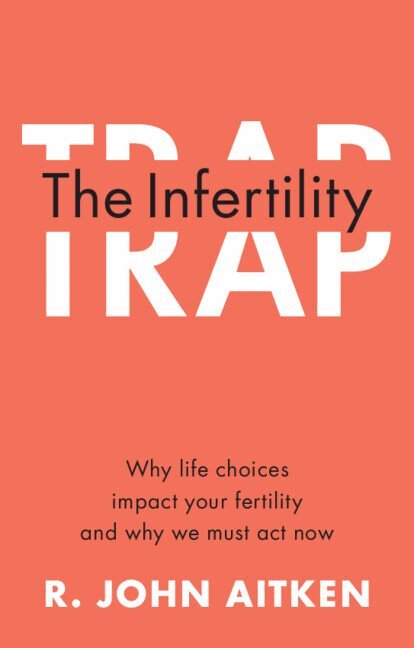
    The Infertility Trap

    Why Life Choices Impact your Fertility and Why We Must Act Now

    AvR. John Aitken

    Häftad, Engelska, 2022

    179 kr

    Beställningsvara. Skickas inom 10-15 vardagar. Fri frakt över 249 kr.

    Beskrivning

    A potential crisis in human fertility is brewing. As societies become more affluent, they experience changes that have a dramatic impact on reproduction. As average family sizes fall, the selection pressure for high-fertility genes decreases; exacerbated by the IVF industry which allows infertility-linked genes to pass into the next generation. Male fertility rates are low, for many reasons including genetics and exposure to environmental toxins. So, a perfect storm of factors is contriving to drive fertility rates down at unprecedented rates. If we do not recognize the reality of our situation and react accordingly, an uncontrollable decline in population numbers is likely, which we'll be unable to reverse. This book will address, in a unique and multi-faceted way, how the consequences of modern life affects fertility, so that we can consider behavioural, social, medical and environmental changes which could reduce the severity of what is about to come.

    Produktinformation

    • Utgivningsdatum:2022-05-05
    • Mått:137 x 215 x 20 mm
    • Vikt:440 g
    • Format:Häftad
    • Språk:Engelska
    • Antal sidor:352
    • Förlag:Cambridge University Press
    • ISBN:9781108940818

    Utforska kategorier

    • Reproduktionsmedicin inom Medicin
    • Gynekologi och obstetrik inom Medicin

    Mer om författaren

    John Aitken is the highest ranked expert on sperm biology and fertilization in the world (Expertscape). In 2019 the Australian magazine named him as Australia's leading reproductive biologist while a recent ranking of the world's leading scientists by Stanford University ranked him in the top 5 in Obstetrics and Reproductive Medicine. He has won several major awards in reproductive science including the Carl G Hartman Award from the Society for the Study of Reproduction (USA) and the Distinguished Andrologist Award from the American Society of Andrology. In 2012 he was named as NSW Scientist -of-the-Year.

    Recensioner i media

    'A thoughtful and forward-looking, expertly written analysis of human fertility projected into the future. This book not only analyses medical or environmental reasons and causes of human infertility but also educational, demographic and economic developments, and puts them into perspective. With this, the book points out the consequences of declining human fertility as well as possible solutions. A must read, not only for fertility specialists.' Ralf R. Henkel, LogixX Pharma Ltd., Theale, Berkshire, UK and Department of Metabolism, Digestion and Reproduction, Imperial College London, London, UK

    Innehållsförteckning

    • Foreword; Chapter 1; 1.1. Prologue; 1.2. Summary; 1.3. References; Chapter 2; 2.1. A journey into the demographic heart of the matter; 2.2. The shape of world population growth; 2.3. The emergence of infertility; 2.4. Longevity, population momentum and migration; 2.4.1. Longevity; 2.4.2. Longevity, affluence and infant mortality; 2.4.3. GDP and Health: mixed blessings; 2.4.4. Population momentum; 2.4.5. The key role played by migration; 2.4.6. Can China and India save us?; 2.4.7. Can Africa save us?; 2.5. Forecasting an uncertain future; 2.6. Summary; 2.7. References; Chapter 3; 3.1. Female fertility: hostage to affluence, age and the search for self-fulfilment; 3.1.1. The ascent of affluence; 3.1.2. Affluence, infertility and the Malthusian paradox; 3.2. The demographic transition; 3.3. Socio-educational factors and fertility; 3.3.1. Educational drivers for female infertility; 3.3.2. Female education and marriage; 3.4. The intersection of education and reproductive biology; 3.4.1. The fundamental biology of female reproduction; 3.4.2. Age of Menarche; 3.4.3. The reproductive years – over before you know it; 3.5. How the immaturity of human infants shapes our reproduction; 3.6. Reproduction and the care of our offspring; 3.6.1. What is the point of granny and grandad?; 3.7. Marriage – virtue or vestige; 3.8. Importance of adequate sex education; 3.8.1. Why have my eggs forsaken me?'; 3.9. Chromosomal abnormalities and female infertility; 3.10. The IVF industry and maternal age; 3.11. Are there any solutions to age dependent female infertility?; 3.11.1. Oocyte donation; 3.11.2. Oocyte freezing; 3.12. Socio-political issues; 3.12.1. Why would women wed?; 3.12.2. A role for pro-natalist Government policies?; 3.13. Summary; 3.14. References; Chapter 4; 4.1. What is happening to the human male?; 4.2. Testicular cancer; 4.3. Cancer and Opulence; 4.4. Other defects of the male reproductive tract; 4.5. The vexed question of declining sperm counts; 4.6. Possible causes of declining sperm counts; 4.7. Environmental pollution and semen quality; 4.8. Falling testosterone levels and semen quality; 4.9. Summary; 4.10. References; Chapter 5; 5.1. The miracle of conception; 5.1.1. The human spermatozoon; 5.1.2. The timing of insemination; 5.1.3. The ripening of spermatozoa in the female tract; 5.1.4. The complexity of fertilisation; 5.2. Summary; 5.3. References; Chapter 6; 6.1. Why are men infertile?; 6.1.1. Hamsters and human sperm function; 6.2. Oxidative stress and the infertile male; 6.2.1. Reactive oxygen species; 6.2.2. Thaddeus Mann and oxidative stress; 6.2.3. Oxidative stress and DNA damage; 6.2.4. Oxidative DNA damage and mutations on the offspring; 6.3. Genetic causes of male infertility; 6.3.1. Y-chromosome deletion; 6.3.2. Other genetic causes; 6.4. Summary; 6.5. References; Chapter 7; 7.1. The Janus faces of IVF; 7.1.1. Steptoe, Edwards and Purdy: the development of IVF; 7.1.2. ICSI and Male Infertility; 7.1.3. The rise of ICSI; 7.2. Consequences of ART when conducted at scale; 7.3. Negative impacts on IVF on the mutational load carried by children; 7.4. Impact of assisted conception on fertility; 7.5. Summary; 7.6. References; Chapter 8; 8.1. The gathering storm; 8.2. The infertility trap; 8.2.1. Demographic factors; 8.2.2. Social factors; 8.2.3. Economic factors; 8.2.4. Environmental factors; 8.2.5. Evolutionary factors; 8.3. Summary; 8.4. References; Chapter 9; 9.1. How do we escape the trap?; 9.2. Sex Education; 9.3. Remove reproductive toxicants; 9.4. Counter oxidative stress; 9.5. Elevate the status of reproductive toxicology; 9.6. Find ways of working with the IVF industry; 9.7. Engineer social change; 9.8. Summary; 9.9. References; Acknowledgements; Index.