• Fri frakt över 249 kr
  • •
  • Snabba leveranser
  • •
  • Billiga böcker
Kundservice

Du är på sajten för privatpersoner.

Företag, bibliotek eller offentlig verksamhet?

Du handlar på classic.bokus.com, där alla dina funktioner finns intakta.
Till classic.bokus.com
Bokus logotyp. Gå till startsidan.
  • Erbjudanden
  • Nyheter
  • Student
  • Topplistor
  • Barn & ungdom
  • Bokus Play
  • E-böcker
  • Pocketböcker
  • Spel & pussel

10% rabatt på allt med kod NYSTART10 →

Sidfot

Mina sidor

    Hjälp

    • Kundservice
    • Vanliga frågor och svar
    • Frakt och leverans
    • Retur vid ångerrätt
    • Reklamera vara
    • Betalning
    • Köpvillkor
    • Allmänna villkor
    • Information om webbplatsens tillgänglighet

    Om Bokus

    • Om oss
    • Pressrum
    • För studenter
    • För företag
    • För bibliotek och offentlig verksamhet
    • För leverantörer
    • Hållbarhet

    Populärt

    • Aktuella erbjudanden
    • Presentkort
    • Studentlitteratur
    • Nya böcker
    • Topplistor
    • Signerade böcker
    • Engelska böcker

    Inspiration

    • Boktips
    • BookTok
    • Populära bokserier
    • Barnbokskaraktärer
    • Populära författare
    Logotyp för Bokus
    Följ oss på Facebook (extern länk)Följ oss på Instagram (extern länk)Följ oss på YouTube (extern länk)Följ oss på TikTok (extern länk)
    bokus @ CookiesAnpassa cookiesIntegritetspolicyKöpvillkor
    Till Citymail hemsida (extern länk)Till Budbee hemsida (extern länk)Till Postnord hemsida (extern länk)Till Schenker hemsida (extern länk)Till Early Bird hemsida (extern länk)Till Walleys hemsida (extern länk)
    1. Skönlitteratur
    2. Litteraturvetenskap
    3. Litteraturteori

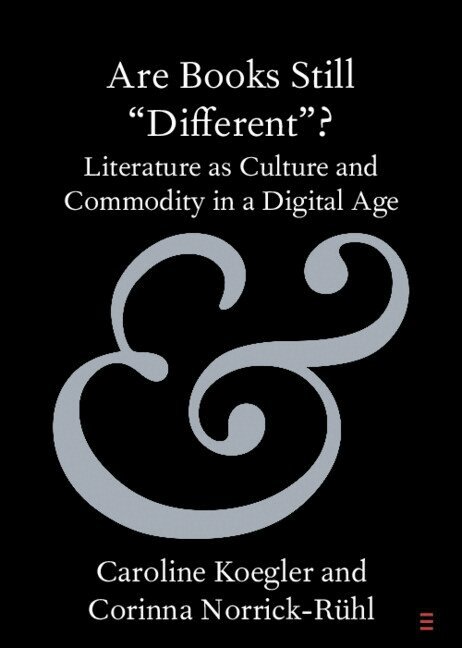
    Are Books Still 'Different'?

    Literature as Culture and Commodity in a Digital Age

    AvCaroline Koegler,Corinna Norrick-Rühl

    Häftad, Engelska, 2023

    Del i serien Elements in Publishing and Book Culture

    215 kr

    Beställningsvara. Skickas inom 10-15 vardagar. Fri frakt över 249 kr.

    Beskrivning

    The famous 1962 precedent at the Restrictive Practices Court of the United Kingdom, 'Books are different,' is still the reasoning behind many cultural policies around the world, building on longstanding assumptions surrounding 'the book'. As this suggests, the 'difference' of the book as a unique form of cultural (rather than economic) production has acquired a powerful status. But are books still different? In (somewhat provocatively) asking this question from a network-oriented and interdisciplinary perspective (book studies/literary studies), this Element inquires into the notion of 'difference' in relation to books. Challenging common notions of 'bibliodiversity,' it reconsiders the lack of diversity in the publishing industry. It also engages with the diversifying potentials of the digital literary sphere, offering a case study of Bernardine Evaristo's industry activities and activism, the Element concludes with thoughts on bookishness, affect and networked practice. This title is also available as Open Access on Cambridge Core.

    Produktinformation

    • Utgivningsdatum:2023-02-23
    • Mått:126 x 177 x 7 mm
    • Vikt:120 g
    • Format:Häftad
    • Språk:Engelska
    • Serie:Elements in Publishing and Book Culture
    • Antal sidor:114
    • Förlag:Cambridge University Press
    • ISBN:9781108987127

    Utforska kategorier

    • Litteraturteori inom Skönlitteratur
    • Media och underhållning inom Ekonomi och Ledarskap

    Recensioner i media

    'A profound reflection on the changing nature of books in a globalized and digitalized context that can help us delve deeper into the glocal contexts of a market that, in any case, is still in a phase of reinvention and reconceptualization.' Daniel Escandell Montiel, Escola de Llibreria

    Innehållsförteckning

    • 1. Introduction: (Re-)thinking 'Difference'; 2. What's the 'Difference'? 'Difference' as Discourse, Policy and Brand/ing; 3. Are Books Still Different? 'Difference' in a Digital Age; 4. Marketing 'Difference' in a Network of Networks: Bernardine Evaristo; 5. Conclusion: the book as affect and the novel as network.