• Fri frakt över 249 kr
  • •
  • Snabba leveranser
  • •
  • Billiga böcker
Kundservice

Du är på sajten för privatpersoner.

Företag, bibliotek eller offentlig verksamhet?

Du handlar på classic.bokus.com, där alla dina funktioner finns intakta.
Till classic.bokus.com
Bokus logotyp. Gå till startsidan.
  • Erbjudanden
  • Nyheter
  • Student
  • Topplistor
  • Barn & ungdom
  • Bokus Play
  • E-böcker
  • Pocketböcker
  • Spel & pussel

10% rabatt på allt med kod: NYSTART10 →

Sidfot

Mina sidor

    Hjälp

    • Kundservice
    • Vanliga frågor och svar
    • Frakt och leverans
    • Retur vid ångerrätt
    • Reklamera vara
    • Betalning
    • Köpvillkor
    • Allmänna villkor
    • Information om webbplatsens tillgänglighet

    Om Bokus

    • Om oss
    • Pressrum
    • För studenter
    • För företag
    • För bibliotek och offentlig verksamhet
    • För leverantörer
    • Hållbarhet

    Populärt

    • Aktuella erbjudanden
    • Presentkort
    • Studentlitteratur
    • Nya böcker
    • Topplistor
    • Signerade böcker
    • Engelska böcker

    Inspiration

    • Boktips
    • BookTok
    • Populära bokserier
    • Barnbokskaraktärer
    • Populära författare
    Logotyp för Bokus
    Följ oss på Facebook (extern länk)Följ oss på Instagram (extern länk)Följ oss på YouTube (extern länk)Följ oss på TikTok (extern länk)
    bokus @ CookiesAnpassa cookiesIntegritetspolicyKöpvillkor
    Till Citymail hemsida (extern länk)Till Budbee hemsida (extern länk)Till Postnord hemsida (extern länk)Till Schenker hemsida (extern länk)Till Early Bird hemsida (extern länk)Till Walleys hemsida (extern länk)
    1. Ekonomi och Ledarskap
    2. Företagsekonomi
    3. Redovisning och finansiering

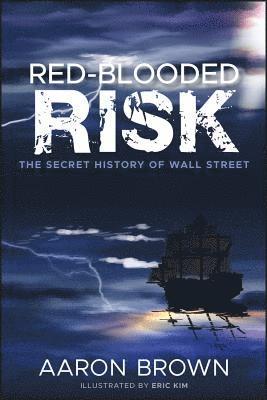
    Red-Blooded Risk

    The Secret History of Wall Street

    AvAaron Brown

    Inbunden, Engelska, 2011

    280 kr

    Beställningsvara. Skickas inom 5-8 vardagar. Fri frakt över 249 kr.

    Fler format och utgåvor

    E-bok

    342 kr

    E-bok

    343 kr

    Beskrivning

    An innovative guide that identifies what distinguishes the best financial risk takers from the rest From 1987 to 1992, a small group of Wall Street quants invented an entirely new way of managing risk to maximize success: risk management for risk-takers. This is the secret that lets tiny quantitative edges create hedge fund billionaires, and defines the powerful modern global derivatives economy. The same practical techniques are still used today by risk-takers in finance as well as many other fields. Red-Blooded Risk examines this approach and offers valuable advice for the calculated risk-takers who need precise quantitative guidance that will help separate them from the rest of the pack.While most commentators say that the last financial crisis proved it's time to follow risk-minimizing techniques, they're wrong. The only way to succeed at anything is to manage true risk, which includes the chance of loss. Red-Blooded Risk presents specific, actionable strategies that will allow you to be a practical risk-taker in even the most dynamic markets. Contains a secret history of Wall Street, the parts all the other books leave outIncludes an intellectually rigorous narrative addressing what it takes to really make it in any risky activity, on or off Wall StreetAddresses essential issues ranging from the way you think about chance to economics, politics, finance, and lifeWritten by Aaron Brown, one of the most calculated and successful risk takers in the world of finance, who was an active participant in the creation of modern risk management and had a front-row seat to the last meltdownWritten in an engaging but rigorous style, with no equationsContains illustrations and graphic narrative by renowned manga artist Eric KimThere are people who disapprove of every risk before the fact, but never stop anyone from doing anything dangerous because they want to take credit for any success. The recent financial crisis has swelled their ranks, but in learning how to break free of these people, you'll discover how taking on the right risk can open the door to the most profitable opportunities.

    Produktinformation

    • Utgivningsdatum:2011-11-11
    • Mått:160 x 230 x 38 mm
    • Vikt:1 043 g
    • Format:Inbunden
    • Språk:Engelska
    • Antal sidor:432
    • Förlag:John Wiley & Sons Inc
    • ISBN:9781118043868

    Utforska kategorier

    • Redovisning och finansiering inom Ekonomi och Ledarskap

    Mer om författaren

    AARON BROWN is risk manager at AQR Capital Management and the author of The Poker Face of Wall Street (Wiley), selected one of the ten best books of 2006 by BusinessWeek, and A World of Chance with Reuven and Gabrielle Brenner. In his thirty-year Wall Street career, he has been a trader, portfolio manager, head of mortgage securities, and risk manager for institutions including Citigroup and Morgan Stanley. He also served a stint as a finance professor and was among the top poker players in the world during the 1970s and 1980s. He holds degrees in applied mathematics from Harvard and in finance and statistics from the University of Chicago.

    Recensioner i media

    "Wickedly original, one of the most fascinating accounts I have ever seen. A rollicking and highly opinionated read." (Risk Professional, October 2011) “No one who reads Red-Blooded Risk: The Secret History of Wall Street will ever again regard risk management as a necessary but unproductive appendage of the financial industry. Other authors have chronicled how quantitative finance influenced investment management, but Aaron Brown has made a compelling case for a far more profound economic impact. . . If Red-Blooded Risk: The Secret History of Wall Street dealt with nothing more than the inadequacy of models used in highly important activities, it would represent a valuable contribution to financial economics. Brown’s book, however, covers a great deal more than econometric malpractice. Probably no other book offers as much insight into the process with so little resort to mathematical notation. Especially valuable are Brown’s discussions of middle-office risk management and value at risk, comparatively recent innovations that are essential to understanding modern financial institutions. Readers of Red-Blooded Risk should be prepared to have many of their assumptions challenged. Red-Blooded Risk is one of the most original and thought-provoking books reviewed in these pages in the past 20 years. No one who reads it will ever again regard risk management as a necessary but unproductive appendage of the financial industry. Other authors have chronicled how quantitative finance influenced investment management, but Aaron Brown has made a compelling case for a far more profound economic impact.”—Martin S. Fridson, CFA Institute Publications Book Reviews “Red-Blooded Risk mixes risk history and philosophy nimbly and provides a perspective that can be both refreshing and challenging (often on the same page). While the book is not without weaknesses, it is also brimming with original perspectives and controversial opinions. Those who work in risk management or quantitative finance will enjoy Brown’s story-telling and expert perspectives, even if they do not share his views, while non-quants will find his insights and confessions to be a useful glimpse into the psyche and ethos of an influential group of early quantitative risk takers.—Roger M. Stein, Research and Academic Relations, Moody’s Corporation, as reviewed in Quantitative Finance (August 6, 2012)

    Innehållsförteckning

    • Acknowledgments xiChapter 1 What This Book Is and Why You Should Read It 1Risk, Danger, and Opportunity 2Red- Blooded Risk Management 4Risk and Life 7Play and Money 9Frequentism 11Rationality 13Bets 15Exponentials and Culture 18Payoff 20Chapter 2 Red Blood and Blue Blood 23Chapter 3 Pascal’s Wager and the Seven Principles of Risk Management 29Principle I: Risk Duality 32Principle II: Valuable Boundary 33Principle III: Risk Ignition 35Principle IV: Money 38Outside the VaR Boundary 40Principle V: Evolution 45Principle VI: Superposition 48Principle VII: Game Theory 49Chapter 4 The Secret History of Wall Street: 1654– 1982 57Pascal and Fermat 58Poker 61Advantage Gamblers 62Sports Betting 63Quants to Wall Street 66Finance People 68Real Finance 69Chapter 5 When Harry Met Kelly 73Kelly 74Harry 76Commodity Futures 79If Harry Knew Kelly 84Investment Growth Theory 88eRaider.com 92MPT Out in the World 96Chapter 6 Exponentials, Vampires, Zombies, and Tulips 101Types of Growth 102The Negative Side 105Tulips 106Tulip Propaganda 108Quantitative Tulip Modeling 111Money 112Chapter 7 Money 117Chapter 8 The Story of Money: The Past 125Property, Exchange, and Money 126Paleonomics 128Transition 131What Money Does 134Risk 135Government and Paper 138Paper versus Metal 1421776 and All That 145Andrew Dexter 147A Short Digression into Politics and Religion 150Chapter 9 The Secret History of Wall Street: 1983– 1987 155Efficient Markets 157Anomalies 159The Price Is Right Not! 161Efficiency versus Equilibrium 162Beating the Market 165Paths 170Sharpe Ratios and Wealth 1741987 177Chapter 10 The Story of Money: The Future 179Farmers and Millers 180Money, New and Improved 183A General Theory of Money 185Value and Money 189Numeraire 191Clearinghouses 196Cash 197Derivative Money 200The End of Paper 203Chapter 11 Cold Blood 207Chapter 12 What Does a Risk Manager Do?—Inside VaR 213Professional Standards 213Front Office 215Trading Risk 217Quants on the Job 218Middle Office 222Back Office 225Middle Office Again 227Looking Backward 228Risk Control 230Beyond Profit and Loss 232Numbers 234The Banks of the Charles 236Waste 238The Banks of the Potomac 241The Summer of My Discontent 245Validation 247Chapter 13 VaR of the Jungle 251Chapter 14 The Secret History of Wall Street: 1988– 1992 255Smile 256Back to the Dissertation 258Three Paths 262An Unexpected Twist 265Surprise! 267Computing VaR 271Chapter 15 Hot Blood and Thin Blood 277Chapter 16 What Does a Risk Manager Do?— Outside VaR 283Stress Tests 283Trans-VaR Scenarios 287Black Holes 289Why Risk Managers Failed to Prevent the Financial Crisis 290Managing Risk 296Unspeakable Truth Number One: Risk Managers Should Make Sure Firms Fail 299Unspeakable Truth Number Two: There’s Good Stuff beyond the VaR Limit 305Unspeakable Truth Number Three: Risk Managers Create Risk 309Chapter 17 The Story of Risk 313Chapter 18 Frequency versus Degree of Belief 323Statistical Games 324Thorp, Black, Scholes, and Merton 329Change of Numeraire 333Polling 336The Quant Revolution 341Chapter 19 The Secret History of Wall Street: 1993– 2007 345Where Did the Money Come From? 348Where Did They Put the Money? 359Where Did the Money Go? 364Chapter 20 The Secret History of Wall Street: The 2007 Crisis and Beyond 369Postmortem 379A Risk Management Curriculum 387One Hundred Useful Books 393About the Author 401About the Illustrator 403Index 405

    Betyg & recensioner

    5/5