• Fri frakt över 249 kr
  • •
  • Snabba leveranser
  • •
  • Billiga böcker
Kundservice

Du är på sajten för privatpersoner.

Företag, bibliotek eller offentlig verksamhet?

Du handlar på classic.bokus.com, där alla dina funktioner finns intakta.
Till classic.bokus.com
Bokus logotyp. Gå till startsidan.
  • Erbjudanden
  • Nyheter
  • Student
  • Topplistor
  • Barn & ungdom
  • Bokus Play
  • E-böcker
  • Pocketböcker
  • Spel & pussel

10% rabatt på allt med kod: NYSTART10 →

Sidfot

Mina sidor

    Hjälp

    • Kundservice
    • Vanliga frågor och svar
    • Frakt och leverans
    • Retur vid ångerrätt
    • Reklamera vara
    • Betalning
    • Köpvillkor
    • Allmänna villkor
    • Information om webbplatsens tillgänglighet

    Om Bokus

    • Om oss
    • Pressrum
    • För studenter
    • För företag
    • För bibliotek och offentlig verksamhet
    • För leverantörer
    • Hållbarhet

    Populärt

    • Aktuella erbjudanden
    • Presentkort
    • Studentlitteratur
    • Nya böcker
    • Topplistor
    • Signerade böcker
    • Engelska böcker

    Inspiration

    • Boktips
    • BookTok
    • Populära bokserier
    • Barnbokskaraktärer
    • Populära författare
    Logotyp för Bokus
    Följ oss på Facebook (extern länk)Följ oss på Instagram (extern länk)Följ oss på YouTube (extern länk)Följ oss på TikTok (extern länk)
    bokus @ CookiesAnpassa cookiesIntegritetspolicyKöpvillkor
    Till Citymail hemsida (extern länk)Till Budbee hemsida (extern länk)Till Postnord hemsida (extern länk)Till Schenker hemsida (extern länk)Till Early Bird hemsida (extern länk)Till Walleys hemsida (extern länk)
    1. Naturvetenskap och teknik
    2. Geovetenskap
    3. Miljövetenskap och miljöpolitik

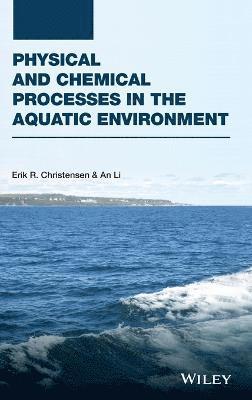
    Physical and Chemical Processes in the Aquatic Environment

    AvErik R. Christensen,An Li

    Inbunden, Engelska, 2014

    1 347 kr

    Beställningsvara. Skickas inom 5-8 vardagar. Fri frakt över 249 kr.

    Beskrivning

    Physical and Chemical Processes in the Aquatic EnvironmentThere is need in environmental research for a book on fresh waters including rivers and lakes. Compared with other books on the topic, this book has a unique outline in that it follows pollution from sources to impact. Included in the text is the treatment of various tracers, ranging from pathogens to stable isotopes of elements and providing a comprehensive discussion which is lacking in many other books on pollution control of natural waters. Geophysical processes are discussed emphasizing mixing of water, interaction between water and the atmosphere, and sedimentation processes. Important geochemistry processes occurring in natural waters are described as are the processes specific to nutrients, organic pollutants, metals, and pathogens in subsequent chapters. Each of these chapters includes an introduction on the selected groups, followed by the physicochemical properties which are the most relevant to their behavior in natural waters, and the theories and models to describe their speciation, transport and transformation. The book also includes the most up to date information including a discussion on emerging pollutants such as brominated and phosphate flame retardants, perflurochemicals, and pharmaceutical and personal care products. Due to its importance an ecotoxicology chapter has been included featuring molecular biological methods, nanoparticles, and comparison of the basis of biotic ligand model with the Weibull dose-response model. Finally, the last chapter briefly summarizes the regulations on ambient water quality.

    Produktinformation

    • Utgivningsdatum:2014-10-17
    • Mått:163 x 243 x 26 mm
    • Vikt:744 g
    • Format:Inbunden
    • Språk:Engelska
    • Antal sidor:464
    • Förlag:John Wiley & Sons Inc
    • ISBN:9781118111765

    Utforska kategorier

    • Miljövetenskap och miljöpolitik inom Naturvetenskap och teknik
    • Kemi inom Naturvetenskap och teknik
    • Byggnadsteknik inom Naturvetenskap och teknik

    Mer om författaren

    Erik R. Christensen is a UWM Distinguished Professor Emeritus in the College of Engineering and Applied Science of the University of Wisconsin-Milwaukee. In 2008 he was nominated by UWM for Wisconsin Distinguished Professorship. He has published >80 journal articles, one book chapter, and edited a book: Contaminated Aquatic Sediments (1993), based on an international conference. He is an associate editor and frequent reviewer for many journals.An Li is a professor of environmental chemistry in the School of Public Health at the University of Illinois at Chicago. She has written four book chapters, edited one book: Persistent Organic Pollutants in Asia (2007) and produced numerous journal articles as well as providing book and journal reviews.

    Innehållsförteckning

    • Preface xi1 TRANSPORT OF POLLUTANTS 11.1 Introduction, 11.2 Advection–Diffusion Equation with Reaction, 21.3 Steady-State Mixing in Estuaries, 41.3.1 Determination of Diffusivity D from Salinity Measurements, 51.3.2 Pollutant Prediction for an Estuary with Uniform Discharge, 51.3.3 Salinity in an Infinite Estuary with a Large Freshwater Discharge, 81.3.4 Conservative Pollutant Prediction for an Infinite Estuary with a Large Freshwater Discharge, 91.4 Time-Dependent Mixing in Rivers and Soil Systems, 101.5 Vertical Mixing, 141.5.1 The Radon Method, 161.5.2 The Tritium–helium-3 Method, 171.5.3 Evaluation of Mixing Based on Density Gradients, 191.6 Hydrodynamic Models, 201.7 Groundwater Plumes, 221.8 Sediment Mixing, 23References, 252 SEDIMENTATION PROCESSES 282.1 Introduction, 282.2 210Pb Dating of Sediments, 292.2.1 Measurement of 210Pb Activity, 302.2.2 210Pb Activity Profiles, 332.3 137Cs and 239+240Pu Dating of Sediments, 382.4 Dated Records of Metals and Organic Pollutants, 422.5 Deconvolution of Sedimentary Records, 492.6 Chemical and Biological Degradation, 552.7 Sediments as a Source of Pollutants, 562.7.1 Phosphorus, 572.7.2 Metals, 572.7.3 Acid-volatile Sulfides, 582.7.4 Organics, 59References, 603 ATMOSPHERIC INTERACTIONS 653.1 Introduction, 653.2 Atmospheric Deposition Processes, 663.2.1 Gaseous vs. Particulate Chemicals in the Atmosphere, 663.2.2 Dry Deposition with Aerosols, 683.2.3 Wet Deposition, 753.2.4 Gas Exchange, 783.3 Deposition and Gas Exchange of Organic Contaminants, 843.4 Marine and Freshwater Microlayers, 873.5 Case Study: Emission of VOCs from Wastewater Treatment Plants, 893.6 The Fugacity Model, 933.6.1 Fugacity Definitions and Basic Equations, 943.6.2 Levels of Complexity, 1013.6.3 Example Calculations – Chlorobenzene, 103References, 1084 WATER CHEMISTRY 1134.1 Introduction, 1134.2 Carbonate and Alkalinity, 1154.2.1 Dissolved CO2 and Carbonate Speciation in Water, 1154.2.2 Solving Equilibrium pH, 1174.2.3 Alkalinity, 1204.2.4 Buffer Index, 1244.3 Sulfur Chemistry, 1274.3.1 Sulfur Redox Reactions in Water, 1284.3.2 Sulfur in Sediment, 1324.3.3 Acid Rain, 1334.4 Impact of Global Warming on Natural Waters, 135References, 1365 NUTRIENTS 1385.1 Introduction, 1385.2 Input of Nutrients and Acidity, 1405.3 Eutrophication, 1435.3.1 Eutrophication Control, 1485.3.2 Harmful Algal Blooms, 1495.3.3 Cladophora, 1555.4 Nitrogen, 1565.4.1 The Nitrogen Cycle, 1565.4.2 Nitrification and Denitrification, 1595.4.3 N Removal, 1665.5 Phosphorus, 1695.5.1 The Phosphorus Cycle, 1695.5.2 P Removal, 1705.5.3 Case Study: Phosphorus from Wastewater Treatment, Stormwater, and Rivers in Milwaukee, Wisconsin, 1725.6 Vitamins and Trace Metals, 173References, 1806 METALS 1856.1 Introduction, 1856.2 Trends, Measurement, and Toxicity, 1866.3 Major Sources and Reactions of Metals in Water, 1936.3.1 Atmospheric Deposition of Metals, 1936.3.2 Hydration, Hydrolysis, and Complex Formation, 1966.3.3 Dissolution of Metals from Minerals, 2016.4 Behavior of Selected Metals in Water, 2036.4.1 Mercury, 2036.4.2 Zinc and Cadmium, 2046.4.3 Arsenic, 2076.5 Zero-Valent Iron in Remediation of Contaminated Water, 2096.5.1 Dechlorination of Chlorinated Hydrocarbons, 2096.5.2 Reduction of Uranium Carbonate, Chromate,and Arsenate, 214References, 2157 ORGANIC POLLUTANTS 2207.1 Introduction, 2207.2 Important Organic Pollutant Groups, 2217.2.1 Petrochemicals and Industrial Solvents, 2217.2.2 Polycyclic Aromatic Hydrocarbons (PAHs), 2237.2.3 Polychlorinated Biphenyls (PCBs), 2237.2.4 Polyhalogenated Dibenzo-p-Dioxins and Dibenzofurans (PXDD/Fs), 2267.2.5 Polybrominated Diphenyl Ethers (PBDEs) and other Flame Retardants, 2267.2.6 Organochlorine Pesticides (OCPs), 2327.2.7 Other Pesticides, 2367.2.8 Perfluorinated Compounds (PFCs), 2397.2.9 Pharmaceuticals and Personal Care Products (PPCPs) and other Endocrine Disrupting Compounds (EDCs), 2407.3 Descriptors of Organic Molecules, 2437.4 Basic Physicochemical Properties, 2457.4.1 Vapor Pressure, 2467.4.2 Aqueous Solubility, 2477.4.3 Henry’s Law Constant, 2487.4.4 Octanol–Water Partition Coefficient, 2487.4.5 Air–Octanol Partition Coefficient, 2497.5 Distribution of Organic Chemicals in Aquatic Environment, 2497.5.1 Air–Water, 2507.5.2 Water–Sediment, 2507.5.3 Water–Biota and Sediment–Biota, 2517.6 Transformations in Water, 2527.6.1 Hydrolysis, 2537.6.2 Photochemical Degradation, 2557.6.3 Biological Degradation, 2577.6.4 Case Study: Transformation of PBDEs in the Environment, 259References, 2618 PATHOGENS 2688.1 Introduction, 2688.2 Bacteria, 2718.3 Protozoa, 2728.3.1 Cryptosporidium, 2738.4 Molecular Techniques for Detection of Pathogens, 2768.4.1 Water, 2768.4.2 Biosolids, 2778.5 Pathogen Indicator Organisms and Surrogates, 2778.5.1 Bacillus Subtilis, 2808.5.2 E. Coli and Fecal Coliforms, 2808.6 Bacterial Contamination of Recreational Waters, 2818.6.1 Modeling, 2838.6.2 Beaches, 2868.6.3 Recreational Pools, 2878.7 Pathogen Removal in Water and Wastewater Treatment, 2888.7.1 Water, 2888.7.2 Wastewater and Solid Waste, 2898.7.3 Inactivation Kinetics, 290References, 2959 TRACERS 2989.1 Introduction, 2989.2 Natural vs. Artificial Tracers, 2999.3 Radioisotopes, 3009.4 Stable Isotopes, 3019.5 Applications of Tracer Technology, 3059.5.1 Stable Isotope Tracers, 3059.5.2 N and O Stable Isotopic Compositions of Nitrate Sources, 3099.5.3 Other Physical and Chemical Tracers, 3109.5.4 Molecular-Based Biological Tracers, 3149.6 Chemical Mass Balance Modeling, 3159.6.1 CMB Model for PAHs in Kinnickinnic River, Wisconsin, 3169.7 Factor Analysis, 3209.7.1 Non-negative Constraints Matrix Factorization, 3229.7.2 Positive Matrix Factorization, 3319.7.3 Unmix, 335References, 34110 ECOTOXICOLOGY 34710.1 Introduction, 34710.2 Bioassays, 34910.2.1 Fish, 35010.2.2 Algae, 35010.2.3 Daphnia, 35110.3 Molecular Biology Tools, 35310.3.1 Polymerase Chain Reaction (PCR), 35310.3.2 Fluorescent in Situ Hybridization (FISH), 35410.3.3 Gene Expression, 35410.3.4 Biomarkers, 35510.4 Human Health, 35710.4.1 Fisheries Advisories, 35710.4.2 Mercury, 35810.4.3 Polychlorinated Biphenyls (PCBs), 35810.5 Endocrine-Disrupting Chemicals, 35910.6 Types of Toxicity, 36010.6.1 Disinfection Byproducts, 36110.6.2 Detoxification and Degradation, 36110.6.3 Antibiotics, 36210.6.4 Nanomaterials, 36310.7 Models and Toxicity Tests, 36410.7.1 Dose–Response Models for Single Toxicants, 36410.7.2 Dose–Response Models for Multiple Toxicants, 36910.7.3 Pulsed Toxicity Tests, 37410.7.4 Chronic Toxicity Tests, 37510.8 Quality Criteria, 37610.8.1 Sediment Quality Criteria, 37610.8.2 Water Quality Criteria, 38110.8.3 Total Maximum Daily Loads, 381References, 38311 AMBIENT WATER QUALITY CRITERIA 38911.1 Introduction, 38911.2 A Primer on Ambient Water Quality Regulations, 39011.3 Current US Water Quality Criteria, 39111.3.1 Aquatic Life Criteria, 40211.3.2 Human Health Criteria, 40311.3.3 Organoleptic Effects, 40411.4 Water Quality Databases, 404APPENDIX 11.A Footnote for Table 11.1, 405APPENDIX 11.B Footnote for Table 11.2, 408APPENDIX 11.C Additional Notes, 410References, 412Index 415