• Fri frakt över 249 kr
  • •
  • Snabba leveranser
  • •
  • Billiga böcker
Kundservice

Du är på sajten för privatpersoner.

Företag, bibliotek eller offentlig verksamhet?

Du handlar på classic.bokus.com, där alla dina funktioner finns intakta.
Till classic.bokus.com
Bokus logotyp. Gå till startsidan.
  • Erbjudanden
  • Nyheter
  • Student
  • Topplistor
  • Barn & ungdom
  • Bokus Play
  • E-böcker
  • Pocketböcker
  • Spel & pussel

10% rabatt på allt med kod: NYSTART10 →

Sidfot

Mina sidor

    Hjälp

    • Kundservice
    • Vanliga frågor och svar
    • Frakt och leverans
    • Retur vid ångerrätt
    • Reklamera vara
    • Betalning
    • Köpvillkor
    • Allmänna villkor
    • Information om webbplatsens tillgänglighet

    Om Bokus

    • Om oss
    • Pressrum
    • För studenter
    • För företag
    • För bibliotek och offentlig verksamhet
    • För leverantörer
    • Hållbarhet

    Populärt

    • Aktuella erbjudanden
    • Presentkort
    • Studentlitteratur
    • Nya böcker
    • Topplistor
    • Signerade böcker
    • Engelska böcker

    Inspiration

    • Boktips
    • BookTok
    • Populära bokserier
    • Barnbokskaraktärer
    • Populära författare
    Logotyp för Bokus
    Följ oss på Facebook (extern länk)Följ oss på Instagram (extern länk)Följ oss på YouTube (extern länk)Följ oss på TikTok (extern länk)
    bokus @ CookiesAnpassa cookiesIntegritetspolicyKöpvillkor
    Till Citymail hemsida (extern länk)Till Budbee hemsida (extern länk)Till Postnord hemsida (extern länk)Till Schenker hemsida (extern länk)Till Early Bird hemsida (extern länk)Till Walleys hemsida (extern länk)
    1. Psykologi och pedagogik
    2. Pedagogik
    3. Material och digital teknik i undervisningen

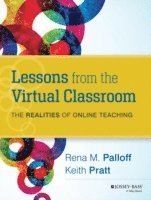
    Lessons from the Virtual Classroom

    The Realities of Online Teaching

    AvRena M. Palloff,Keith Pratt

    Häftad, Engelska, 2013

    439 kr

    Beställningsvara. Skickas inom 5-8 vardagar. Fri frakt över 249 kr.

    Beskrivning

    Lessons from the Virtual Classroom, Second EditionThe second edition of the classic resource Lessons from the Cyberspace Classroom offers a comprehensive reference for faculty to hone their skills in becoming more effective online instructors. Thoroughly revised and updated to reflect recent changes and challenges that face online teachers, Lessons from the Virtual Classroom is filled with illustrative examples from actual online courses as well as helpful insights from teachers and students. This essential guide offers targeted suggestions for dealing with such critical issues as evaluating effective courseware, working with online classroom dynamics, addressing the needs of the online student, making the transition to online teaching, and promoting the development of the learning community.Praise for Lessons from the Virtual Classroom, Second Edition"Palloff and Pratt demonstrate their exceptional practical experience and insight into the online classroom. This is an invaluable resource for those tasked with creating an online course."— D. Randy Garrison, professor, University of Calgary, and author, Blended Learning in Higher Education: Framework, Principles, and Guidelines"Faculty will deeply appreciate and make use of the many explicit examples of how to design, prepare, and teach both blended and fully online courses."— Judith V. Boettcher, faculty coach and author, The Online Teaching Survival Guide: Simple and Practical Pedagogical Tips"Lessons from the Virtual Classroom is filled with insightful caveats and recommendations, pointed examples to enhance your practice, succinct summaries of the research, and engaging visual overviews. Each page brings the reader a renewed sense of confidence to teach online as well as personal joy that there is finally a resource to find the answers one is seeking."— Curtis J. Bonk, professor of education, Indiana University-Bloomington, and author, Empowering Online Learning: 100+ Activities for Reading, Reflecting, Displaying, and Doing

    Produktinformation

    • Utgivningsdatum:2013-08-13
    • Mått:178 x 234 x 23 mm
    • Vikt:408 g
    • Format:Häftad
    • Språk:Engelska
    • Antal sidor:272
    • Upplaga:2
    • Förlag:John Wiley & Sons Inc
    • ISBN:9781118123737

    Utforska kategorier

    • Material och digital teknik i undervisningen inom Psykologi och pedagogik

    Mer om författaren

    Rena M. Palloff and Keith Pratt have consulted to universities in the development and delivery of online learning since 1994. In conjunction with Fielding Graduate University, they developed the Online Teaching and Learning academic certificate program. They are the authors of Lessons from the Cyberspace Classroom, The Virtual Student, Collaborating Online, Building Online Learning Communities, Assessing Online Learning, and The Excellent Online Instructor all from Jossey-Bass.

    Innehållsförteckning

    • Figures, Table, and Exhibits xiPreface to the Second Edition: The Face of Online Learning Today xiiiThe Authors xixAcknowledgments xxiPart One: Rethinking Education for an Online World 11 Online Learning in the Twenty-First Century 3Online Learning Today 6Current and Emerging Technologies 8Emerging Issues for Both Faculty and Administrators 9Technology for Online Teaching Is Chosen Without Faculty Input • Governance Issues Have Emerged • Intellectual Property, Course Design, and Course Ownership Issues • Just Like Faculty, Students Need to Be Trained to Learn Online • Instructor WorkloadRecent Developments in K–12 Online Learning 16The Effectiveness of Distance Delivery 182 The Art of Online Teaching 21Lack of Preparation 22Who Should Teach Online? 23Training, Training, and More Training 24Using Mobile Technology in Faculty Training 27New Processes, New Relationships 28Online Pedagogy 30Keys to Success 30Ensuring Access to and Familiarity with Technology • Establishing Guidelines and Procedures • Achieving Maximum Participation • Promoting Collaboration • Promoting ReflectionThe Final Transition: Assessing and Evaluating Students and Ourselves 41Supporting Instructors to Make the Transition 433 Administrative Issues and Concerns 45Faculty Time, Compensation, and Questions of Tenure 47Program Planning and Development 49Another Look at Faculty and Student Support, Training, and Development 52Governance and Intellectual Property 54Student Retention 56Some Last Thoughts on Administrative Issues and Concerns 584 The Tools of Online Teaching 61Technology in the Twenty?]First Century 62Matching the Technology to the Course 64What Are Web 2.0 Technologies? 70Common Forms of Web 2.0 Technologies • Using Web 2.0 Tools in Online Courses Choosing Technology Wisely 75When the Technology Is a Problem • Evaluating Technology • Use of Technology • Infrastructure • Instructional StrategyWhen Money Is an Issue 81Accessibility Is a Major Concern 82Part Two: Teaching and Learning Online 855 Transforming Courses for the Online Classroom 87Starting Over: Considerations in the Development of an Online Course 89Who Are My Students? • Is This a Course That Will Successfully Transfer to the Online Environment? • How Do I Define Learning in This Content Area, and What Do I Want to See as the Learning Outcomes? • What Do I Want to Accomplish Through This Course? • What Guidelines, Rules, Roles, and Norms Need to Be Established for Course Completion? • How Do I Plan to Deliver Course Material? • How Comfortable Am I in Releasing Control to the Learners? • How Do I Want to Organize the Course Site? • How Will I Assess Student Performance in This Course? • How Will I Address Attendance Requirements? The Process of the Course 106Beginnings • Once the Course Has Started • Endings6 Teaching Courses Developed by Others 119A Focus on Content 121Ability to Adjust the Course 122Examples of Customization 123When Customizing Is Not Possible 124Building Community into the Process 125Evaluating a Course Developed by Another 126Issues of Intellectual Property 129Courses with Rolling Admission 130Final Thoughts on Teaching a Course Developed by Another 1327 Working with the Virtual Student 135If We Build It, They Will Come 136The Successful Learner in the Online Classroom 137Addressing Different Learning Styles 140Recognizing and Working with Those Who Do Not Succeed 141The Role of the Learner in the Online Learning Process 142Knowledge Generation • Collaboration • Process Management Maximizing the Potential of the Virtual Student 148Use Best Practices from the Face?]to?]Face Classroom to Promote Participation Online • If a Student Is Absent for a Week, Contact Him or Her to Determine the Reason • If Students Have Technical Difficulties, Offer Support or Connect Them with Tech Support • If Conflict Hurts Participation, Intercede with the Students Involved • If Security Breaches Cause Nonparticipation, Report Them Quickly to Reestablish a Sense of Privacy • Log On to the Online Classroom Three or More Times a Week (Daily If Possible!) to Keep the Discussion Moving • Learn How to Ask Broad Questions That Stimulate Thinking to Promote Participation • Include Humor in Your Posts to Help Students Feel Welcome and Safe • Post a Welcoming Response to Student Introductions to Help All Join More SuccessfullyTeaching Students to Learn in the Online Environment 154Respecting Student Intellectual Property 1568 Online Classroom Dynamics 159Group Dynamics and Online Classroom Dynamics 160Applying What We Understand About Groups to Online Classes 163Preforming • Unity • Disunity • Conflict?]Confrontation • Disharmony • Harmony • Performing • Concluding Thoughts About the Soul and Spirit Group Other Ways of Looking at Online Groups 171 The Student • The Group • The Instructor/Facilitator • The Task • The Technology Conflict Revisited 175Working with Difficult Students 179When It Simply Isn’t Working 1819 Lessons Learned in the Virtual Classroom 187A Look Back 187The Myths 188Lessons for Faculty 189Instructors Need Not Fear Online Learning • Course Development Needs to Focus on Interactivity, Not Content • Instructor and Student Roles Need to Change Lessons for Instructional Designers and Faculty Developers 191Both Faculty and Students Need Training • Faculty Who Teach Online Need to Feel Supported Lessons for Administrators 192Support Online Faculty Through Fair Compensation • Institutions Should Develop a Strategic Plan • Institutions Should Develop an Infrastructure First • Technology Should Be Chosen by an Inclusive Committee • Pay Attention to the New Regulatory EnvironmentA Look into the Near Future 195Technology • Course and Program Quality and Design • Professional Development • How Faculty and Students Interact • Research into Online EducationAppendix A: Sample Training for Faculty 203Introduction to and Best Practices in Online Teaching 203LEARNING UNITS • Week 1 • Week 2 • Week 3 • Week 4 Intensive Training Focused on Collaboration and Building Online Learning Communities 212Day 1: Defining and Recontextualizing Community • Day 2: Human and Practical Considerations in Online Learning • Day 3: Moving Teaching and Learning Online • Day 4: Promoting Collaborative Learning • Day 5: Transformative LearningAppendix B: Additional Resources 219Communities of Practice 219Mobile Applications and Web 2.0 Applications 220Certificate Programs in Online Teaching 221Online Conferences 222Online Journals About Online Teaching 223Professional Organizations 223Course Evaluation Rubrics 224References 225Index 235