• Fri frakt över 249 kr
  • •
  • Snabba leveranser
  • •
  • Billiga böcker
Kundservice

Du är på sajten för privatpersoner.

Företag, bibliotek eller offentlig verksamhet?

Du handlar på classic.bokus.com, där alla dina funktioner finns intakta.
Till classic.bokus.com
Bokus logotyp. Gå till startsidan.
  • Erbjudanden
  • Nyheter
  • Student
  • Topplistor
  • Barn & ungdom
  • Bokus Play
  • E-böcker
  • Pocketböcker
  • Spel & pussel

10% rabatt på allt med kod: NYSTART10 →

Sidfot

Mina sidor

    Hjälp

    • Kundservice
    • Vanliga frågor och svar
    • Frakt och leverans
    • Retur vid ångerrätt
    • Reklamera vara
    • Betalning
    • Köpvillkor
    • Allmänna villkor
    • Information om webbplatsens tillgänglighet

    Om Bokus

    • Om oss
    • Pressrum
    • För studenter
    • För företag
    • För bibliotek och offentlig verksamhet
    • För leverantörer
    • Hållbarhet

    Populärt

    • Aktuella erbjudanden
    • Presentkort
    • Studentlitteratur
    • Nya böcker
    • Topplistor
    • Signerade böcker
    • Engelska böcker

    Inspiration

    • Boktips
    • BookTok
    • Populära bokserier
    • Barnbokskaraktärer
    • Populära författare
    Logotyp för Bokus
    Följ oss på Facebook (extern länk)Följ oss på Instagram (extern länk)Följ oss på YouTube (extern länk)Följ oss på TikTok (extern länk)
    bokus @ CookiesAnpassa cookiesIntegritetspolicyKöpvillkor
    Till Citymail hemsida (extern länk)Till Budbee hemsida (extern länk)Till Postnord hemsida (extern länk)Till Schenker hemsida (extern länk)Till Early Bird hemsida (extern länk)Till Walleys hemsida (extern länk)
    1. Naturvetenskap och teknik
    2. Teknik och industri
    3. Elektronik och kommunikationer

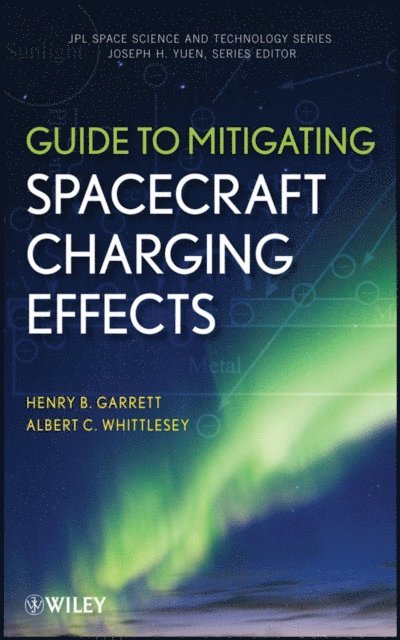
    Guide to Mitigating Spacecraft Charging Effects

    AvHenry B. Garrett,Albert C. Whittlesey

    Inbunden, Engelska, 2012

    Del 3 i serien JPL Space Science and Technology Series

    1 831 kr

    Beställningsvara. Skickas inom 3-6 vardagar. Fri frakt över 249 kr.

    Beskrivning

    The definitive guide to the modern body of spacecraft charging knowledge—from first principles for the beginner to intermediate and advanced conceptsThe only book to blend the theoretical and practical aspects of spacecraft charging, Guide to Mitigating Spacecraft Charging Effects defines the environment that not only creates the aurora, but which also can have significant effects on spacecraft, such as disruption of science measurements and solar arrays from electrostatic discharge (ESD). It describes in detail the physics of the interaction phenomenon as well as how to construct spacecraft to enhance their survivability in the harsh environment of space.Combining the authors' extensive experience in spacecraft charging—and in their provision of design support to NASA, JPL, the commercial satellite market, and numerous other projects—this incredible book offers both a robust physics background and practical advice for neophytes in the field and experienced plasma physicists and spacecraft engineers.In addition to containing numerous equations, graphs, tables, references, and illustrations, Guide to Mitigating Spacecraft Charging Effects covers: Solar cell technology, especially higher voltage arrays, and the new design approaches that are appropriate for them Information about the space plasma environment New analytic computer codes to analyze spacecraft charging Spacecraft anomalies and failures which emphasized designs that are of greater importance than others

    Produktinformation

    • Utgivningsdatum:2012-06-08
    • Mått:159 x 241 x 15 mm
    • Vikt:907 g
    • Format:Inbunden
    • Språk:Engelska
    • Serie:JPL Space Science and Technology Series
    • Antal sidor:208
    • Förlag:John Wiley & Sons Inc
    • ISBN:9781118186459

    Utforska kategorier

    • Elektronik och kommunikationer inom Naturvetenskap och teknik
    • Rymdforskning inom Naturvetenskap och teknik

    Mer om författaren

    Henry B. Garrett, PhD, is a principal scientist and, until 2011, the chief technologist for the Office of Safety and Mission Success at NASA's Jet Propulsion Laboratory (JPL). He represented JPL at the Pentagon as part of the Ballistic Missile Defense Organization where he acted as deputy program manager for the highly successful DoD/NASA Clementine Lunar Mission and Program Manager for the Clementine InterStage Adapter Satellite. The recipient of the Air Force's Harold Brown Award and Legion of Merit and NASA Medals for Exceptional Engineering Achievement and for Exceptional Service, Dr. Garrett is the coauthor of Spacecraft Environment Interactions and the author of several NASA spacecraft charging guidelines.Albert C. Whittlesey, member of the staff, Principal in the Office of Safety and Mission Success, has been a part of the Electromagnetic Compatibility (EMC) group since his arrival at JPL in 1962. Mr. Whittlesey has authored numerous symposium presentations and journal articles about various facets of EMC and spacecraft charging. He received a NASA Exceptional Engineering Achievement Medal for his technical leadership in EMC and ESD. Mr. Whittlesey is also the author of several NASA spacecraft charging guidelines with Dr. Garrett.

    Innehållsförteckning

    • Note from the Series Editor xiForeword xiiiPreface xv1 Introduction 12 Introduction to the Physics of Charging and Discharging 62.1 Physical Concepts, 62.1.1 Plasma, 62.1.2 Penetration, 82.1.3 Charge Deposition, 102.1.4 Conductivity and Grounding, 112.1.5 Breakdown Voltage, 112.1.6 Dielectric Constant, 122.1.7 Shielding Density, 122.1.8 Electron Fluxes (Fluences) at Breakdown, 122.2 Electron Environment, 132.2.1 Units, 142.2.2 Substorm Environment Specifications, 152.3 Modeling Spacecraft Charging, 162.3.1 The Physics of Surface Charging, 172.3.2 The Physics of Dielectric Charging, 192.4 Discharge Characteristics, 192.4.1 Dielectric Surface Breakdowns, 212.4.2 Buried (Internal) Charge Breakdowns, 222.4.3 Spacecraft-to-Space Breakdowns, 222.5 Coupling Models, 232.5.1 Lumped-Element Modeling, 232.5.2 Electromagnetic Coupling Models, 233 Spacecraft Design Guidelines 263.1 Processes, 263.1.1 Introduction, 263.1.2 Design, 273.1.3 Analysis, 283.1.4 Testing and Measurement, 283.1.5 Inspection, 293.2 Design Guidelines, 293.2.1 General ESD Design Guidelines, 293.2.2 Surface ESD Design Guidelines, Excluding Solar Arrays, 403.2.3 Internal ESD Design Guidelines, 413.2.4 Solar Array ESD Design Guidelines, 443.2.5 Special Situations ESD Design Guidelines, 544 Spacecraft Test Techniques 624.1 Test Philosophy, 624.2 Simulation of Parameters, 634.3 General Test Methods, 644.3.1 ESD-Generating Equipment, 644.3.2 Methods of ESD Applications, 685 Control and Monitoring Techniques 765.1 Active Spacecraft Charge Control, 765.2 Environmental and Event Monitors, 766 Material Notes and Tables 796.1 Dielectric Material List, 796.2 Conductor Material List, 80A Nomenclature 83A.1 Constants and Measurement Units, 83A.2 Acronyms and Abbreviations, 84A.3 Defined Terms, 89A.4 Variables, 92A.5 Symbols, 93B The Space Environment 95B.1 Introduction to Space Environments, 95B.1.1 Quantitative Representations of the Space Environment, 95B.1.2 Data Sources, 99B.2 Geosynchronous Environments, 102B.2.1 Geosynchronous Plasma Environments, 102B.2.2 Geosynchronous High-Energy Environments, 104B.3 Other Earth Environments, 110B.3.1 MEO, 110B.3.2 PEO, 111B.3.3 Molniya Orbit, 112B.4 Other Space Environments, 112B.4.1 Solar Wind, 112B.4.2 Earth, Jupiter, and Saturn Magnetospheres Compared, 113C Environment, Electron Transport, and Spacecraft Charging Computer Codes 122C.1 Environment Codes, 122C.1.1 AE8/AP8, 122C.1.2 CRRES, 122C.1.3 Flux Model for Internal Charging (FLUMIC), 123C.1.4 GIRE/SATRAD, 123C.1.5 Handbook of Geophysics and the Space Environment, 123C.1.6 L2 Charged Particle Environment (L2-CPE), 123C.1.7 MIL-STD-1809, Space Environment for USAF Space Vehicles, 123C.1.8 Geosynchronous Plasma Model, 124C.1.9 Others, 124C.2 Transport Codes, 124C.2.1 Cosmic Ray Effects on MicroElectronics 1996 (CREME96), 124C.2.2 EGS4, 125C.2.3 Geant4, 125C.2.4 Integrated TIGER Series (ITS), 125C.2.5 MCNP/MCNPE, 126C.2.6 NOVICE, 126C.2.7 NUMIT, 126C.2.8 SHIELDOSE, 127C.2.9 SPENVIS/DICTAT, 127C.2.10 TRIM, 127C.2.11 Summary, 128C.3 Charging Codes, 128C.3.1 Environment Work Bench (EWB), 128C.3.2 Multi-Utility Spacecraft Charging Analysis Tool (MUSCAT), 128C.3.3 Nascap-2k and NASCAP Family of Charging Codes, 129C.3.4 SEE Interactive Spacecraft Charging Handbook, 129C.3.5 Spacecraft Plasma Interaction System (SPIS), 129D Internal Charging Analyses 132D.1 The Physics of Dielectric Charging, 132D.2 Simple Internal Charging Analysis, 134D.3 Detailed Analysis, 135D.4 Spacecraft Level Analysis, 136D.4.1 Dose-to-Fluence Approximation, 136E Test Methods 138E.1 Electron-Beam Tests, 138E.2 Dielectric Strength/Breakdown Voltage, 139E.3 Resistivity–Conductivity Determination, 140E.4 Simple Volume Resistivity Measurement, 141E.5 Electron-Beam Resistivity Test Method, 142E.6 NonContacting Voltmeter Resistivity Test Method, 143E.7 Dielectric Constant, Time Constant, 144E.8 Vzap Test [MIL-STD-883G, Method 3015.7 Human Body Model (HBM)], 145E.9 Transient Susceptibility Tests, 146E.10 Component/Assembly Testing, 148E.11 Surface Charging ESD Test Environments, 148E.12 System Internal ESD Testing, 148F Voyager SEMCAP Analysis 150G Simple Approximations: Spacecraft Surface Charging Equations 152H Derivation of Rule Limiting Open-Circuit Board Area 156I Expanded Worst-Case Geosynchronous Earth Environments Descriptions 159J Key Spacecraft Charging Documents 162J.1 U.S. Government Documents, 162J.1.1 DoD, 162J.1.2 NASA, 164J.2 Non-U.S. Government Documents, 166J.2.1 American Society for Testing and Materials (ASTM), 166J.2.2 European Cooperation for Space Standardization (ECSS)/European Handbooks, 166J.2.3 European Space Research and Technology Centre, 167J.2.4 Japanese Aerospace Exploration Agency (JAXA), 167J.2.5 Other, 167K List of Figures and Tables 168Index 173