• Fri frakt över 249 kr
  • •
  • Snabba leveranser
  • •
  • Billiga böcker
Kundservice

Du är på sajten för privatpersoner.

Företag, bibliotek eller offentlig verksamhet?

Du handlar på classic.bokus.com, där alla dina funktioner finns intakta.
Till classic.bokus.com
Bokus logotyp. Gå till startsidan.
  • Erbjudanden
  • Nyheter
  • Student
  • Topplistor
  • Barn & ungdom
  • Bokus Play
  • E-böcker
  • Pocketböcker
  • Spel & pussel

10% rabatt på allt med kod NYSTART10 →

Sidfot

Mina sidor

    Hjälp

    • Kundservice
    • Vanliga frågor och svar
    • Frakt och leverans
    • Retur vid ångerrätt
    • Reklamera vara
    • Betalning
    • Köpvillkor
    • Allmänna villkor
    • Information om webbplatsens tillgänglighet

    Om Bokus

    • Om oss
    • Pressrum
    • För studenter
    • För företag
    • För bibliotek och offentlig verksamhet
    • För leverantörer
    • Hållbarhet

    Populärt

    • Aktuella erbjudanden
    • Presentkort
    • Studentlitteratur
    • Nya böcker
    • Topplistor
    • Signerade böcker
    • Engelska böcker

    Inspiration

    • Boktips
    • BookTok
    • Populära bokserier
    • Barnbokskaraktärer
    • Populära författare
    Logotyp för Bokus
    Följ oss på Facebook (extern länk)Följ oss på Instagram (extern länk)Följ oss på YouTube (extern länk)Följ oss på TikTok (extern länk)
    bokus @ CookiesAnpassa cookiesIntegritetspolicyKöpvillkor
    Till Citymail hemsida (extern länk)Till Budbee hemsida (extern länk)Till Postnord hemsida (extern länk)Till Schenker hemsida (extern länk)Till Early Bird hemsida (extern länk)Till Walleys hemsida (extern länk)
    1. Ekonomi och Ledarskap
    2. Företagsekonomi
    3. Organisation och ägarskap

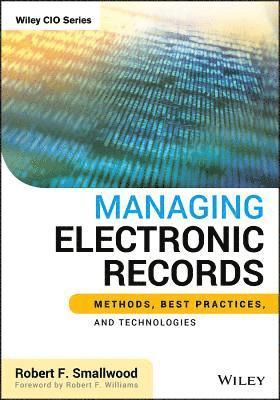
    Managing Electronic Records

    Methods, Best Practices, and Technologies

    AvRobert F. Smallwood

    Inbunden, Engelska, 2013

    Del 582 i serien Wiley CIO

    1 681 kr

    Tillfälligt slut

    Fler format och utgåvor

    E-bok

    1 719 kr

    E-bok

    1 719 kr

    Beskrivning

    The ultimate guide to electronic records management, featuring a collaboration of expert practitioners including over 400 cited references documenting today's global trends, standards, and best practices Nearly all business records created today are electronic, and are increasing in number at breathtaking rates, yet most organizations do not have the policies and technologies in place to effectively organize, search, protect, preserve, and produce these records. Authored by an internationally recognized expert on e-records in collaboration with leading subject matter experts worldwide, this authoritative text addresses the widest range of in-depth e-records topics available in a single volume.Using guidance from information governance (IG) principles, the book covers methods and best practices for everything from new e-records inventorying techniques and retention schedule development, to taxonomy design, business process improvement, managing vital records, and long term digital preservation. It goes further to include international standards and metadata considerations and then on to proven project planning, system procurement, and implementation methodologies. Managing Electronic Records is filled with current, critical information on e-records management methods, emerging best practices, and key technologies. Thoroughly introduces the fundamentals of electronic records managementExplains the use of ARMA's Generally Accepted Recordkeeping Principles (GARP®)Distills e-records best practices for email, social media, and cloud computingReveals the latest techniques for e-records inventorying and retention schedulingCovers MS SharePoint governance planning for e-records including policy guidelinesDemonstrates how to optimally apply business process improvement techniquesMakes clear how to implement e-document security strategies and technologiesFully presents and discusses long term digital preservation strategies and standardsManaging e-records is a critical area, especially for those organizations faced with increasing regulatory compliance requirements, greater litigation demands, and tightened internal governance. Timely and relevant, Managing Electronic Records reveals step-by-step guidance for organizing, managing, protecting, and preserving electronic records.

    Produktinformation

    • Utgivningsdatum:2013-05-17
    • Mått:180 x 257 x 43 mm
    • Vikt:862 g
    • Format:Inbunden
    • Språk:Engelska
    • Serie:Wiley CIO
    • Antal sidor:464
    • Förlag:John Wiley & Sons Inc
    • Medarbetare:RobertF. Williams
    • ISBN:9781118218297

    Utforska kategorier

    • Organisation och ägarskap inom Ekonomi och Ledarskap

    Mer om författaren

    ROBERT F. SMALLWOOD is a Partner and Executive Director of the E-Records Institute at IMERGE Consulting. With more than twenty-five years' experience in the field, Mr. Smallwood is one of the most published and respected authorities on e-records and document management. His clients include major corporations, as well as government agencies at all levels.

    Innehållsförteckning

    • Foreword xvPreface xviiAcknowledgments xixPart one—E-Records Concepts 1Chapter 1 E-Records Definitions, Business Drivers, and Benefits 3Records Management Business Rationale 5Why Is Records Management So Challenging? 6Benefits of Electronic Records Management 7Additional Intangible Benefits 8Notes 10Chapter 2 Information Governance: The Crucial First Step 11First, Better Policies; Then, Better Technology for Better Enforcement 12Defining Information Governance 13Stakeholder Consultation Is Key 14Accountability Is Key 14Why IG Is Good Business 15Impact of a Successful IG Program 16Critical Factors in an IG Program 16Who Should Determine IG Policies? 19Notes 20Chapter 3 Generally Accepted Recordkeeping Principles ® 21Charmaine Brooks, CRMGAR Principles 21Assessment and Improvement Roadmap 28Generally Accepted Recordkeeping Principles ® Benchmarks 31Notes 34Chapter 4 Managing E-Documents and Records 35Enterprise Content Management 35Document Management Principles 37Electronic Document Management Systems 38Electronic Records Management 39Records Management Principles 40ERM Principles in Detail 40Notes 51Part two—E-Records Fundamentals 53Chapter 5 Inventorying E-Records 55The Generally Accepted Recordkeeping Principles ® 56E-Records Inventory Challenges 56Records Inventory Purposes 57Records Inventorying Steps 58UK Approach to the Records Inventorying Process 73Appraising the Value of Records 74Ensuring Adoption and Compliance of RM Policy 75Notes 77Chapter 6 Taxonomy Development for E-Records 79Barb Blackburn, CRM, with Robert Smallwood; edited by Seth EarleyImportance of Navigation and Classification 81When Is a New Taxonomy Needed? 81Taxonomies Improve Search Results 82Records Grouping Rationale 83Business Classification Scheme, File Plans, and Taxonomy 84Classification and Taxonomy 85Metadata and Taxonomy 85Prebuilt versus Custom Taxonomies 87Controlled Vocabularies and Hierarchical Taxonomies 88Thesaurus Use in Taxonomies 89Taxonomy Types 89Which Taxonomy Type Should You Use? 94Taxonomy Project Planning 96Leveraging Subject Matter Experts 96Gather Existing Information Sources 97Document Inventory 98Business Process Analysis 99Construct the Taxonomy 101What to Do with Items That Do Not Neatly Fit 102Taxonomy Testing: A Necessary Step 104Taxonomy Maintenance 105Taxonomy Management Tools for Continued Maintenance 106Social Tagging and Folksonomies 106Notes 108Chapter 7 Developing Retention Schedules for E-Records 111Robert Smallwood; edited by Paula Lederman, MLSWhat Is a Records Retention Schedule? 112Benefits of a Retention Schedule 113General Principles of Retention Scheduling 114Developing a Records Retention Schedule 115Why Are Retention Schedules Needed? 115What Records Do You Have to Schedule? Inventory and Classification 117Rationale for Records Groupings 119Records Series Identification and Classification 119Retention of E-Mail Records 120How Long Should You Keep Old E-Mail? 121Destructive Retention of E-Mail 121Records Appraisal: Value Assessment and Prioritization 122Legal Requirements and Compliance Research 125Event-Based Retention Scheduling for Disposition of E-Records 127Prerequisites for Event-Based Disposition 128Final Disposition and Closure Criteria 129Retaining Transitory Records 130Implementation of the Retention Schedule and Disposal of Records 130Ongoing Maintenance of the Retention Schedule 131Audit to Manage Compliance with the Retention Schedule 131Notes 133Chapter 8 Managing Vital E-Records 135Defining Vital Records 135Types of Vital Records 136Impact of Losing Vital Records 137Creating, Implementing, and Maintaining a Vital Records Program 138Implementing Protective Procedures 141Cloud Computing Offers a New Option 144Auditing the Vital Records Program 145Additional Resources 146Notes 147Chapter 9 ERM Link to Business Process Improvement 149Stephen Goodfellow, CRMImproving Processes, Improving Quality 149Six Sigma 150Learning from the Failures of the Past 152Typical Components when Improving a Business Process 153Business Process and E-Records Link 154Documenting Business Processes 154First Steps in Documenting a Process: Information Gathering 155Creating a Process Narrative 156Flowcharting 157Process Analysis 158Workflow 159E-Records Are Very Personal to People 160Change Management 161Communicate, Communicate, Communicate 162Find the Source; Avoid the Cycle 163Avoid Scope-creep: Defining “The Project” and Its Scope 164Changing Processes Gets Personal 165Notes 167Chapter 10 Workflow and Business Process Management Software 169Jon Pyke and Robert SmallwoodWorkflow Software 170Business Process Management Suites 171Notes 177Part three—Information Delivery Platforms—Managing E-Records 179Chapter 11 Managing E-Mail and IM Records 181Employees Regularly Expose Organizations to E-Mail Risk 182E-Mail Polices Should Be Realistic and Technology Agnostic 183E-Record Retention: Fundamentally a Legal Issue 183Preserve E-Mail Integrity and Admissibility with Automatic Archiving 184Instant Messaging 186Best Practices for Business IM Use 187Technology to Monitor IM 189Tips for Safer IM 189Notes 191Chapter 12 Managing E-Records in the Cloud 193Defining Cloud Computing 194Key Characteristics of Cloud Computing 195What Cloud Computing Really Means 196Cloud Deployment Models 196Greatest Security Threats to Cloud Computing 197IG Guidelines: Managing Documents and Records in the Cloud 204Managing E-Docs and Records in the Cloud: A Practical Approach 205Long-Term Content Migration Issues 206Cloud Services Lack Basic Records Management Capabilities 207Notes 208Chapter 13 Managing Social Media Business Records 211Types of Social Media in Web 2.0 211Additional Social Media Categories 212Social Media in the Enterprise 213Key Ways Social Media Is Different from E-Mail and Instant Messaging 214Biggest Risks of Social Media 215Legal Risks of Social Media Posts 216Tools to Archive Social Media 217IG Considerations for Social Media 219Key Social Media Policy Guidelines 219Records Management Considerations for Social Media 220Emerging Best Practices for Managing Social Media Records 222Notes 223Chapter 14 SharePoint Governance for E-Records and Documents 225Monica Crocker, CRM, PMP; edited by Robert SmallwoodProcess Change, People Change 226Where to Begin the Planning Process 227Records Management Policy Considerations 231Roles and Responsibilities 231Establish Processes 232Training Plan 233Communications Plan 233Notes 235Part four—Technical Issues 237Chapter 15 International E-Records Standards 239Benefits of Standards 241Major International Standards 242Additional Guidance from ANSI, ARMA, AIIM, NIST, BSI 248Major National and Regional ERM Standards 251Other National Standards 261Where to Find More Information on ERM Standards 262Notes 264Chapter 16 Metadata Governance, Standards, and Strategies 271Types of Metadata 273Core Metadata Issues 273International Metadata Standards and Guidance 274National Metadata Standards 277Metadata Strategies 280Notes 283Chapter 17 Long-Term Digital Preservation 285Charles M. Dollar and Lori J. AshleyDefining Long-Term Digital Preservation 285Key Factors in Long-Term Digital Preservation 286Threats to Preserving Records 288Digital Preservation Standards 289PREMIS Preservation Metadata Standard 296Recommended Open Standard Technology Neutral Formats 297Digital Preservation Requirements 301Long-Term Digital Preservation Capability Maturity Model ® 301Scope of the Capability Maturity Model 304Digital Preservation Capability Performance Metrics 309Digital Preservation Strategies and Techniques 309Evolving Marketplace 312Looking Forward 312Notes 314Chapter 18 Storage and Hardware Considerations 317The Onslaught of “Big Data” 317Basic Types of Computer Storage 318Today’s E-Records Storage Solutions 319Nonerasable Nonrewritable Requirement for Securities Broker-Dealers 319Nonalterable Media Helps Meet Regulations in Healthcare and Other Industries 320Notes 321Part five—Project and Program Management Issues 323Chapter 19 E-Records Project Planning and Program Management Issues 325Robert Smallwood; edited by Monica Crocker, CRM, PMPAvoiding Problems 326Communication Is Key 327Getting an Early Win 327Selecting the Right Team Members 329Project Charter 329Standards in Project Management 330Project Management Methodologies 330Determining the Best Approach 335Moving to an Ongoing Program 335Monitoring and Accountability 335Continuous Process Improvement 336Why Continuous Improvement Is Needed 336Notes 338Chapter 20 Building the Business Case to Justify an ERM Program 341Determine What Will Fly in Your Organization 341Strategic Business Drivers for Project Justification 342Benefits of Electronic Records Management 344Presenting the Business Case 346Notes 347Chapter 21 Securing Executive Sponsorship 349Executive Sponsor Role 350Project Manager: Key Tasks 350It’s the Little Things 352Evolving Role of the Executive Sponsor 352Notes 353Chapter 22 Procurement Governance: The Buying Process 355Evaluation and Selection Process: RFI, RFP, or RFQ? 355Evaluating Software Providers: Key Criteria 361Negotiating Contracts: Ensuring the Decision 366More Contract Caveats 369How to Pick a Consulting Firm: Evaluation Criteria 369Notes 372Chapter 23 Best Practices for Electronic Records Management 373Detailed ERM Best Practices 376Conclusion 377Notes 378Appendix A Laws and Major Regulations Related to Records Management 379Appendix B Listing of Technology and Service Providers 391Appendix C Trends in Electronic Medical Records Technology 399John W. OrthGlossary 411About the Author 425About the Major Contributors 427Index 429