• Fri frakt över 249 kr
  • •
  • Snabba leveranser
  • •
  • Billiga böcker
Kundservice

Du är på sajten för privatpersoner.

Företag, bibliotek eller offentlig verksamhet?

Du handlar på classic.bokus.com, där alla dina funktioner finns intakta.
Till classic.bokus.com
Bokus logotyp. Gå till startsidan.
  • Erbjudanden
  • Nyheter
  • Student
  • Topplistor
  • Barn & ungdom
  • Bokus Play
  • E-böcker
  • Pocketböcker
  • Spel & pussel

10% rabatt på allt med kod: NYSTART10 →

Sidfot

Mina sidor

    Hjälp

    • Kundservice
    • Vanliga frågor och svar
    • Frakt och leverans
    • Retur vid ångerrätt
    • Reklamera vara
    • Betalning
    • Köpvillkor
    • Allmänna villkor
    • Information om webbplatsens tillgänglighet

    Om Bokus

    • Om oss
    • Pressrum
    • För studenter
    • För företag
    • För bibliotek och offentlig verksamhet
    • För leverantörer
    • Hållbarhet

    Populärt

    • Aktuella erbjudanden
    • Presentkort
    • Studentlitteratur
    • Nya böcker
    • Topplistor
    • Signerade böcker
    • Engelska böcker

    Inspiration

    • Boktips
    • BookTok
    • Populära bokserier
    • Barnbokskaraktärer
    • Populära författare
    Logotyp för Bokus
    Följ oss på Facebook (extern länk)Följ oss på Instagram (extern länk)Följ oss på YouTube (extern länk)Följ oss på TikTok (extern länk)
    bokus @ CookiesAnpassa cookiesIntegritetspolicyKöpvillkor
    Till Citymail hemsida (extern länk)Till Budbee hemsida (extern länk)Till Postnord hemsida (extern länk)Till Schenker hemsida (extern länk)Till Early Bird hemsida (extern länk)Till Walleys hemsida (extern länk)
    1. Naturvetenskap och teknik
    2. Teknik och industri
    3. Elektronik och kommunikationer

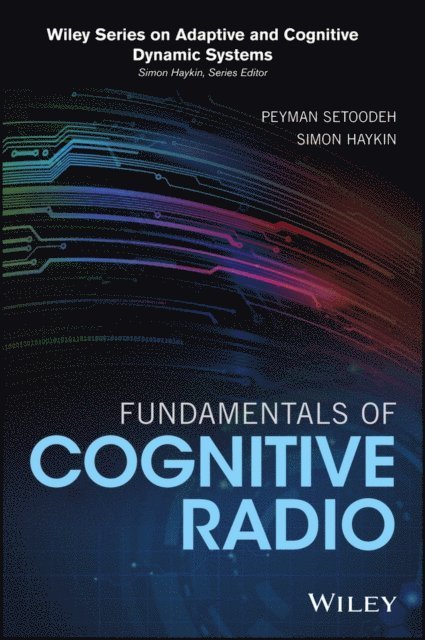
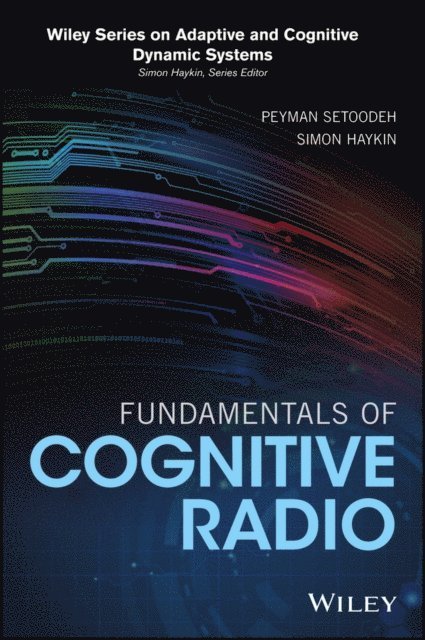
    Fundamentals of Cognitive Radio

    AvPeyman Setoodeh,Simon Haykin

    Inbunden, Engelska, 2017

    Del i serien Adaptive and Cognitive Dynamic Systems: Signal Processing, Learning, Communications and Control

    1 442 kr

    Beställningsvara. Skickas inom 11-20 vardagar. Fri frakt över 249 kr.

    Beskrivning

    A comprehensive treatment of cognitive radio networks and the specialized techniques used to improve wireless communicationsThe human brain, as exemplified by cognitive radar, cognitive radio, and cognitive computing, inspires the field of Cognitive Dynamic Systems. In particular, cognitive radio is growing at an exponential rate. Fundamentals of Cognitive Radio details different aspects of the human brain and provides examples of how it can be mimicked by cognitive dynamic systems. The text offers a communication-theoretic background, including information on resource allocation in wireless networks and the concept of robustness.The authors provide a thorough mathematical background with data on game theory, variational inequalities, and projected dynamic systems. They then delve more deeply into resource allocation in cognitive radio networks. The text investigates the dynamics of cognitive radio networks from the perspectives of information theory, optimization, and control theory. It also provides a vision for the new world of wireless communications by integration of cellular and cognitive radio networks. This groundbreaking book: Shows how wireless communication systems increasingly use cognition to enhance their networksExplores how cognitive radio networks can be viewed as spectrum supply chain networksDerives analytic models for two complementary regimes for spectrum sharing (open-access and market-driven) to study both equilibrium and disequilibrium behaviors of networksStudies cognitive heterogeneous networks with emphasis on economic provisioning for resource sharingIntroduces a framework that addresses the issue of spectrum sharing across licensed and unlicensed bands aimed for Pareto optimalityWritten for students of cognition, communication engineers, telecommunications professionals, and others, Fundamentals of Cognitive Radio offers a new generation of ideas and provides a fresh way of thinking about cognitive techniques in order to improve radio networks.

    Produktinformation

    • Utgivningsdatum:2017-12-12
    • Mått:155 x 231 x 20 mm
    • Vikt:431 g
    • Format:Inbunden
    • Språk:Engelska
    • Serie:Adaptive and Cognitive Dynamic Systems: Signal Processing, Learning, Communications and Control
    • Antal sidor:240
    • Förlag:John Wiley & Sons Inc
    • ISBN:9781118302965

    Utforska kategorier

    • Elektronik och kommunikationer inom Naturvetenskap och teknik
    • Kognitiv psykologi inom Psykologi och pedagogik

    Mer om författaren

    PEYMAN SETOODEH is a Professor at the School of Electrical and Computer Engineering at Shiraz University, Shiraz, Iran.SIMON HAYKIN is a Distinguished University Professor at McMaster University, Hamilton, Ontario, Canada.

    Innehållsförteckning

    • List of Figures xvList of Tables xxiiiPreface xxvAcknowledgments xxviiAcronyms xxix1 Introduction 11.1 The Fourth Industrial Revolution 11.2 Cognitive Radio 41.3 The Spectrum-Underutilization Problem 71.4 Countrywide Measurements of Spectrum Utilization 81.5 Why be Interested in Cognitive Radio Networks? 91.6 Directed Information Flow 111.7 Cognitive Radio Networks 141.8 Mathematical Toolbox 171.8.1 Game Theory 171.8.2 Control Theory 181.8.3 Optimization under Uncertainty 191.9 Dominant Sources of Uncertainty in Cognitive Radio Networks 201.10 Issue of Trustworthiness 221.11 Vision for the Book 222 GameTheory 252.1 Game Theory Terminology 252.1.1 Noncooperative Games versus Cooperative Games 262.1.2 Static Games versus Dynamic Games 262.1.3 One-Shot Games versus Repeated Games 262.1.4 Games with Complete Information versus Games with Incomplete Information 262.1.5 Games with Perfect Information versus Games with Imperfect Information 262.2 Noncooperative Games 272.2.1 Nash Equilibrium 282.2.2 Variational Inequalities 282.3 Cooperative Games 282.3.1 Nash Bargaining 292.4 Minority Games 292.5 Concluding Remarks 303 Cognitive Radio Transceiver 313.1 Spectrum Sensing 323.1.1 Attributes of Reliable Spectrum Sensing 333.1.2 The Multitaper Method 333.1.3 Space-Time Processing 383.1.4 Time-Frequency Analysis 413.1.5 Cyclostationarity: Fourier Perspective 503.1.6 Rayleigh Fading Channels 543.1.7 Remarks on Nonparametric Spectrum Sensing 553.1.8 Filter-Bank Implementation of the Multitaper Method 573.1.9 Cooperative Spectrum Sensing 573.2 Dynamic Spectrum Management 583.2.1 The Tsigankov–Koulakov Model 603.2.2 Self-Organizing Dynamic Spectrum Management 613.2.3 Dynamic Spectrum Management Based on Minority Games 683.2.4 Self-Organized Maps versus Minority Games 703.3 Transmit-Power Control 713.3.1 Waterfilling Interpretation of Information Capacity Theorem 753.3.2 Iterative Waterfilling Algorithm (IWFA) 773.3.3 IWFA as a Multistage Optimization Problem in Light of System Uncertainties 803.3.4 Robust IWFA 803.3.5 The Price of Robustness 813.3.6 Robust IWFA versus Classic IWFA 823.4 Information Value 913.5 Concluding Remarks 934 Cognitive Radio Networks 944.1 Cognitive Radio Networks Viewed as Spectrum-Supply Chain Networks 944.2 Open-access Cognitive Radio Networks 994.2.1 Network Dynamics 1024.2.2 Cognitive Radio Network Viewed as a Hybrid Dynamic System 1094.2.3 Network Stability in the Presence of Uncertainty and Time Delay 1114.2.4 Double-layer Dynamics of Cognitive Radio Networks 1154.3 Market-driven Cognitive Radio Networks 1214.3.1 Legacy Owners 1244.3.2 Spectrum Brokers 1254.3.3 Secondary Users 1264.3.4 Equilibrium of the Spectrum-Supply Chain Network 1274.3.5 Network Dynamics 1294.3.6 Network Stability 1294.3.7 The Transportation Network Representation of the Spectrum-Supply Chain Network 1294.4 Supply Chain Efficiency 1314.5 Concluding Remarks 1334.5.1 Two Regimes of Cognitive Radio Networks 1334.5.2 Supply Chain Networks 1354.5.3 Cognitive Radio Commercialization 1364.5.4 The Role of Cognition in Cognitive Radio Networks 1375 Sustainability of the Spectrum-Supply Chain Network 1405.1 Unlicensed Bands as Public Goods 1405.2 The Spectrum-Supply Chain Network as an Artificial Economy 1425.3 Aiming for Lindahl Equilibria 1445.4 Concluding Remarks 1476 Cognitive Heterogeneous Networks 1486.1 Heterogeneous Networks 1486.2 Horizontal Mergers of Spectrum-Supply Chain Networks 1516.2.1 Premerger Status 1516.2.2 Spectrum Sharing 1546.2.3 Infrastructure Sharing 1556.2.4 Spectrum and Infrastructure Sharing 1556.3 Synergy Measure for Horizontal Mergers 1556.4 Concluding Remarks 156Appendix A Mathematical Model for Open-Access CognitiveRadio Networks 157Appendix B Proof of Theorems 167References