• Fri frakt över 249 kr
  • •
  • Snabba leveranser
  • •
  • Billiga böcker
Kundservice

Du är på sajten för privatpersoner.

Företag, bibliotek eller offentlig verksamhet?

Du handlar på classic.bokus.com, där alla dina funktioner finns intakta.
Till classic.bokus.com
Bokus logotyp. Gå till startsidan.
  • Erbjudanden
  • Nyheter
  • Student
  • Topplistor
  • Barn & ungdom
  • Bokus Play
  • E-böcker
  • Pocketböcker
  • Spel & pussel

10% rabatt på allt med kod: NYSTART10 →

Sidfot

Mina sidor

    Hjälp

    • Kundservice
    • Vanliga frågor och svar
    • Frakt och leverans
    • Retur vid ångerrätt
    • Reklamera vara
    • Betalning
    • Köpvillkor
    • Allmänna villkor
    • Information om webbplatsens tillgänglighet

    Om Bokus

    • Om oss
    • Pressrum
    • För studenter
    • För företag
    • För bibliotek och offentlig verksamhet
    • För leverantörer
    • Hållbarhet

    Populärt

    • Aktuella erbjudanden
    • Presentkort
    • Studentlitteratur
    • Nya böcker
    • Topplistor
    • Signerade böcker
    • Engelska böcker

    Inspiration

    • Boktips
    • BookTok
    • Populära bokserier
    • Barnbokskaraktärer
    • Populära författare
    Logotyp för Bokus
    Följ oss på Facebook (extern länk)Följ oss på Instagram (extern länk)Följ oss på YouTube (extern länk)Följ oss på TikTok (extern länk)
    bokus @ CookiesAnpassa cookiesIntegritetspolicyKöpvillkor
    Till Citymail hemsida (extern länk)Till Budbee hemsida (extern länk)Till Postnord hemsida (extern länk)Till Schenker hemsida (extern länk)Till Early Bird hemsida (extern länk)Till Walleys hemsida (extern länk)
    1. Naturvetenskap och teknik
    2. Teknik och industri
    3. Elektronik och kommunikationer

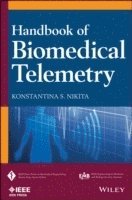
    Handbook of Biomedical Telemetry

    AvKonstantina S. Nikita,Konstantina S. Nikita

    Inbunden, Engelska, 2014

    Del i serien IEEE Press Series on Biomedical Engineering

    1 934 kr

    Beställningsvara. Skickas inom 5-8 vardagar. Fri frakt över 249 kr.

    Beskrivning

    A must-have compendium on biomedical telemetry for all biomedical professional engineers, researchers, and graduate students in the fieldHandbook of Biomedical Telemetry describes the main components of a typical biomedical telemetry system, as well as its technical challenges. Written by a diverse group of experts in the field, it is filled with overviews, highly-detailed scientific analyses, and example applications of biomedical telemetry. The book also addresses technologies for biomedical sensing and design of biomedical telemetry devices with special emphasis on powering/integration issues and materials for biomedical telemetry applications.Handbook of Biomedical Telemetry: Describes the main components of a typical biomedical telemetry system, along with the technical challengesDiscusses issues of spectrum regulations, standards, and interoperability—while major technical challenges related to advanced materials, miniaturization, and biocompatibility issues are also includedCovers body area electromagnetics, inductive coupling, antennas for biomedical telemetry, intra-body communications, non-RF communication links for biomedical telemetry (optical biotelemetry), as well as safety issues, human phantoms, and exposure assessment to high-frequency biotelemetry fieldsPresents biosensor network topologies and standards; context-aware sensing and multi-sensor fusion; security and privacy issues in biomedical telemetry; and the connection between biomedical telemetry and telemedicineIntroduces clinical applications of Body Sensor Networks (BSNs) in addition to selected examples of wearable, implantable, ingestible devices, stimulator and integrated mobile healthcare system paradigms for monitoring and therapeutic interventionCovering biomedical telemetry devices, biosensor network topologies and standards, clinical applications, wearable and implantable devices, and the effects on the mobile healthcare system, this compendium is a must-have for professional engineers, researchers, and graduate students.

    Produktinformation

    • Utgivningsdatum:2014-10-10
    • Mått:164 x 242 x 42 mm
    • Vikt:1 193 g
    • Format:Inbunden
    • Språk:Engelska
    • Serie:IEEE Press Series on Biomedical Engineering
    • Antal sidor:736
    • Förlag:John Wiley & Sons Inc
    • ISBN:9781118388617

    Utforska kategorier

    • Elektronik och kommunikationer inom Naturvetenskap och teknik
    • Biomedicinsk teknik inom Medicin

    Mer om författaren

    KONSTANTINA S. NIKITA is a Professor within the School of Electrical and Computer Engineering at NTUA (National Technical University of Athens). She has authored or coauthored six books, 170 papers in refereed international journals, and over 300 papers in international conference proceedings. The holder of two patents, Dr. Nikita is a senior member of the Institute of Electrical and Electronics Engineers (IEEE); an Associate Editor of the IEEE Transactions on Biomedical Engineering, the Journal of Biomedical and Health Informatics, and the Bioelectromagnetics Journal; a member of the EMBS BHI Technical Committee; the Founding Chair and Ambassador of the IEEE-Engineering in Medicine and Biology Society, Greece Chapter; and Vice Chair of the IEEE Greece Section.

    Innehållsförteckning

    • Preface xxiAcknowledgments xxiiiContributors xxv1 Introduction to Biomedical Telemetry 1Konstantina S. Nikita1.1 What is Biomedical Telemetry? 11.2 Significance of Area 31.3 Typical Biomedical Telemetry System 41.4 Challenges in Biomedical Telemetry 51.5 Commercial Medical Telemetry Devices 141.6 Overview of Book 19References 23Part I Biomedical Telemetry Devices 272 Design Considerations of Biomedical Telemetry Devices 29Dominik Cirmirakis and Andreas Demosthenous2.1 Introduction 292.2 Energy Transfer Types 302.3 Architecture of Inductively Coupled Biomedical Telemetry Devices 312.4 Data Transmission Methods 392.5 Safety Issues 442.6 Conclusion 51References 513 Sensing Principles for Biomedical Telemetry 56Athanasios Lioumpas, Georgia Ntouni, and Konstantina S. Nikita3.1 Introduction 563.2 Biosensor Structure 573.3 Electrochemical Biosensors 593.4 Optical Biosensors 633.5 Thermal/Calorimetric Biosensors 673.6 Piezoelectric Biosensors 693.7 Other Types of Biosensors 713.8 Conclusions 72References 734 Sensing Technologies for Biomedical Telemetry 76Toshiyo Tamura4.1 Introduction 764.2 Noninvasive Sensors and Interfaces 774.3 Invasive and Implantable Sensors 924.4 Conclusion 101References 1015 Power Issues in Biomedical Telemetry 108Manos M. Tentzeris, Rushi Vyas, Wei Wei, Yoshihiro Kawahara, Li Yang, Stavros Georgakopoulos, Vasileios Lakafosis, Sangkil Kim, Hoseon Lee, Taoran Le, Sagar Mukala, and Anya Traille5.1 Introduction and Powering Mechanisms 1085.2 Motion-Powered Radio Frequency Identification (RFID) Wireless Sensors 1095.3 Noninvasive Wireless Methods for Powering on Sensors 1125.4 Conclusion 129References 129Part II Propagation and Communication Issues for Biomedical Telemetry 1316 Numerical and Experimental Techniques for Body Area Electromagnetics 133Asimina Kiourti and Konstantina S. Nikita6.1 Introduction 1336.2 Electrical Properties of Human Body Tissues 1356.3 Numerical Modeling 1396.4 Physical Modeling 1546.5 Safety Issues 1646.6 Conclusion 167References 1687 Inductive Coupling 174Maysam Ghovanloo and Mehdi Kiani7.1 Introduction 1747.2 Induction Principles 1757.3 Wireless Power Transmission 1787.4 Inductive Coupling for Biomedical Telemetry 1867.5 Inductive Data Transmission 1927.6 Broader Applications 2017.7 Future Research Directions 2027.8 Conclusion 202References 2038 Antennas and RF Communication 209Asimina Kiourti and Konstantina S. Nikita8.1 Introduction 2098.2 Background Information 2118.3 On-Body Antennas 2128.4 Implantable Antennas 2238.5 Ingestible Antennas 2358.6 Conclusion and Future Research Directions 245References 2469 Intrabody Communication 252Laura M. Roa, Javier Reina-Tosina, Amparo Callejón-Leblic, David Naranjo, and Miguel Á. Estudillo-Valderrama9.1 Introduction 2529.2 Intrabody Communication Transmission Methods 2569.3 Dielectric Properties of Human Body 2599.4 Experimental Characterization of IBC Channel 2659.5 Introduction to IBC Models 2739.6 IBC Propagation Channel 2829.7 Conclusion 292Acknowledgments 294References 29410 Optical Biotelemetry 301Koichi Shimizu10.1 Introduction 30110.2 Optical Technology for Optical Biotelemetry 30310.3 Communication Technology for Optical Telemetry 30610.4 Propagation of Optical Signal 30910.5 Multiplexing in Optical Telemetry 31310.6 Applications of Optical Telemetry 31610.7 Conclusion 327References 32811 Biosensor Communication Technology and Standards 330Lars Schmitt, Javier Espina, Thomas Falck, and Dong Wang11.1 Introduction 33011.2 Biosensor Application Scenarios 33211.3 Biosensor Communication Technologies 33511.4 Conclusion 364References 36512 Context-Aware Sensing and Multisensor Fusion 368Stefan Hey12.1 Introduction 36812.2 Context-Aware Sensing 36812.3 Multisensor Fusion 37312.4 Example Application: Stress Measurement 37812.5 Conclusion and Future Research Directions 379References 37913 Security and Privacy in Biomedical Telemetry: Mobile Health Platform for Secure Information Exchange 382Nikolaos Bourbakis, Alexandros Pantelopoulos, and Raghudeep Kannavara13.1 Introduction 38213.2 Digital Security 38313.3 Wearable Health Monitoring Systems (WHMS) Platform 39013.4 Processing of Physiological Data 39413.5 Secure Information Exchange 40013.6 Conclusion and Future Research Directions 414Acknowledgment 415References 41514 Connection Between Biomedical Telemetry and Telemedicine 419Emmanouil G. Spanakis, Vangelis Sakkalis, Kostas Marias, and Manolis Tsiknakis14.1 Introduction 41914.2 Biomedical Instrumentation 42014.3 Biomedical Telemetry and Telemedicine: Related Work 42114.4 Theory and Applications of Biomedical Telemetry 42314.5 Integration of Biomedical Telemetry with Telemedicine 42314.6 Wireless Communication Protocols and Standards 42514.7 Cross-Layer Design of Wireless Biomedical Telemetry and Telemedicine Health Networks 42514.8 Telecommunication Networks in Health Care for Biomedical Telemetry 42814.9 Future Research Directions and Challenges 43714.10 Conclusion 440References 44215 Safety Issues in Biomedical Telemetry 445Konstantinos A. Psathas, Asimina Kiourti, and Konstantina S. Nikita15.1 Introduction 44515.2 Operational Safety 44615.3 Product and Device Hazards 45015.4 Patient and Clinical Safety 45415.5 Human Factor and Use Issues 45815.6 Electromagnetic Compatibility and Interference Issues 46115.7 Applicable Guidelines 46415.8 Occupational Safety 47115.9 Future Research Directions 47215.10 Conclusion 473References 474Part III Example Applications of Biomedical Telemetry 47916 Clinical Applications of Body Sensor Networks 481Richard M. Kwasnicki and Guang-Zhong Yang16.1 Introduction 48116.2 Healthcare Paradigm Shift for Pervasive Sensing 48316.3 Usage Scenarios 48416.4 Opportunities and Future Challenges 49416.5 Conclusion 501Acknowledgment 502References 50217 Wearable Health Care System Paradigm 505Yang Hao and Robert Foster17.1 Introduction 50517.2 Wireless Wearable Technology in Health Care 50617.3 Methods and Design Approach for Wireless Wearable Systems 50917.4 Example Wireless Body Area Network (WBAN) Applications in Health Care 51617.5 Conclusion 521References 52118 Epidermal Sensor Paradigm: Inner Layer Tissue Monitoring 525Dimitris Psychoudakis, Chi-Chih Chen, Gil-Young Lee, and John L. Volakis18.1 Introduction 52518.2 Review of Electromagnetic Properties of Human Body 52618.3 Propagation Modes for Body-Centric Wireless Communications 53118.4 Human Torso Model for Body-Centric Wireless Communication 53718.5 Two-Layer Model for Internal Organ Monitoring 54218.6 Epidermal RF Sensor for Inner Layer Tissue Monitoring 54218.7 Extraction of Dielectric Constant 54418.8 Conclusion 546References 54719 Implantable Health Care System Paradigm 549Masaharu Takahashi and Koichi Ito19.1 Introduction 54919.2 Multilayered Model Simulating Human Body 55019.3 Cardiac Pacemaker Embedded in Multilayered Models 55419.4 Implantable Health Care System Paradigm 56219.5 Conclusion and Future Research Directions 568References 57020 Ingestible Health Care System Paradigm for Wireless Capsule Endoscopy 572Nikolaos Bourbakis and Alexandros Karargyris20.1 Introduction 57220.2 WCE and Endoscopic Imaging 57620.3 Diagnostic Methods and Challenges 58520.4 Future Directions: Design New Generation of WCE 58620.5 Conclusion and WCE Global Health Care 591References 59121 Stimulator Paradigm: Artificial Retina 593Carlos J. Cela, Keyoor C. Gosalia, Anil Kumar RamRakhyani, Gianluca Lazzi, Shruthi Soora, Gerard J. Hayes, and Michael D. Dickey21.1 Introduction 59321.2 Telemetry for Artificial Retina 59421.3 Intraocular Telemetry Antennas 59521.4 Multicoil Telemetry 61121.5 Future Research Directions: Flexible and Liquid Antennas 61821.6 Conclusion 620References 62022 mHealth-Integrated System Paradigm: Diabetes Management 623Alessio Fioravanti, Giuseppe Fico, Alejandro González Patón, Jan-Paul Leuteritz, Alejandra Guillén Arredondo, and María Teresa Arredondo Waldmeyer22.1 Clinical Treatment 62322.2 Diabetes Treatment through Telemetry 62422.3 Problems Related to Current Treatments 62522.4 Assessment: State of the Art 62522.5 Technological Solution 62622.6 METABO System 62722.7 Evaluation Methodology: Data Collection and System Testing 62922.8 Results 63122.9 Conclusion 631Acknowledgments 632References 63223 Advanced Material-Based Sensing Structures 633Manos M. Tentzeris, Sangkil Kim, Vasileios Lakafosis, Hoseon Lee, Taoran Le, Rushi Vyas, Sagar Mukala, and Anya Traille23.1 Introduction 63323.2 Human-Body-Wearable Antennas 63423.3 Carbon-Nanotube-Based Ammonia Detection for Medical Diagnosis 65623.4 Graphene-Based Ammonia Detection for Medical Diagnosis 67023.5 Integrated Wireless Modules 67923.6 Conclusion 685References 686Index 691