• Fri frakt över 249 kr
  • •
  • Snabba leveranser
  • •
  • Billiga böcker
Kundservice

Du är på sajten för privatpersoner.

Företag, bibliotek eller offentlig verksamhet?

Du handlar på classic.bokus.com, där alla dina funktioner finns intakta.
Till classic.bokus.com
Bokus logotyp. Gå till startsidan.
  • Erbjudanden
  • Nyheter
  • Student
  • Topplistor
  • Barn & ungdom
  • Bokus Play
  • E-böcker
  • Pocketböcker
  • Spel & pussel

10% rabatt på allt med kod: NYSTART10 →

Sidfot

Mina sidor

    Hjälp

    • Kundservice
    • Vanliga frågor och svar
    • Frakt och leverans
    • Retur vid ångerrätt
    • Reklamera vara
    • Betalning
    • Köpvillkor
    • Allmänna villkor
    • Information om webbplatsens tillgänglighet

    Om Bokus

    • Om oss
    • Pressrum
    • För studenter
    • För företag
    • För bibliotek och offentlig verksamhet
    • För leverantörer
    • Hållbarhet

    Populärt

    • Aktuella erbjudanden
    • Presentkort
    • Studentlitteratur
    • Nya böcker
    • Topplistor
    • Signerade böcker
    • Engelska böcker

    Inspiration

    • Boktips
    • BookTok
    • Populära bokserier
    • Barnbokskaraktärer
    • Populära författare
    Logotyp för Bokus
    Följ oss på Facebook (extern länk)Följ oss på Instagram (extern länk)Följ oss på YouTube (extern länk)Följ oss på TikTok (extern länk)
    bokus @ CookiesAnpassa cookiesIntegritetspolicyKöpvillkor
    Till Citymail hemsida (extern länk)Till Budbee hemsida (extern länk)Till Postnord hemsida (extern länk)Till Schenker hemsida (extern länk)Till Early Bird hemsida (extern länk)Till Walleys hemsida (extern länk)
    1. Naturvetenskap och teknik
    2. Matematik och naturvetenskap
    3. Biologi

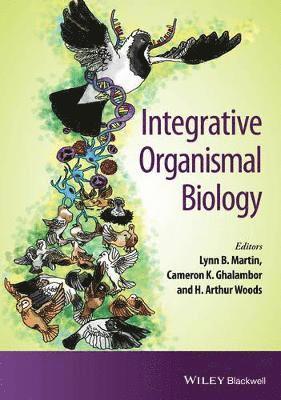
    Integrative Organismal Biology

    AvLynn B. Martin,Cameron K. Ghalambor

    Häftad, Engelska, 2015

    1 649 kr

    Beställningsvara. Skickas inom 11-20 vardagar. Fri frakt över 249 kr.

    Beskrivning

    Integrative Organismal Biology synthesizes current understandings of the causes and consequences of individual variation at the physiological, behavioral and organismal levels. Emphasizing key topics such as phenotypic plasticity and flexibility, and summarizing emerging areas such as ecological immunology, oxidative stress biology and others, Integrative Organismal Biology pulls together information from diverse disciplines to provide a synthetic view of the role of the individual in evolution.  Beginning with the role of the individual in evolutionary and ecological processes, the book covers theory and mechanism from both classic and modern perspectives. Chapters explore concepts such as phenotypic plasticity, genetic and epigenetic variation, physiological and phenotypic variation, homeostasis, and gene and physiological regulatory networks. A concluding section interweaves these concepts through a series of case studies of life processes such as aging, reproduction, and immune defense.Written and edited by leaders in the field, Integrative Organismal Biology will be an important advanced textbook for students and researchers across a variety of subdisciplines of integrative biology.

    Produktinformation

    • Utgivningsdatum:2015-01-30
    • Mått:175 x 252 x 20 mm
    • Vikt:680 g
    • Format:Häftad
    • Språk:Engelska
    • Antal sidor:352
    • Förlag:John Wiley and Sons Ltd
    • ISBN:9781118398784

    Utforska kategorier

    • Biologi inom Naturvetenskap och teknik

    Mer om författaren

    Lynn B. Martin is Assistant Professor in the Department of Integrative Biology at the University of South Florida. Dr. Martin is on the editorial boards for Functional Ecology and Proceedings of the Royal Society of London B, and serves as an ad hoc reviewer for numerous journals including American Naturalist, General and Comparative Endocrinology, Evolutionary Ecology, and Science. Cameron K. Ghalambor is Associate Professor in the Department of Biology at Colorado State University. The author of numerous peer-reviewed publications, Dr. Ghalambor also provides reviews for a number of journals including Evolution and Nature, and has served as a grant reviewer for the National Science Foundation, Murdoch Trust, and Natural Environment Research Council, UK.Art Woods is Associate Professor in the Division of Biological Sciences at the University of Montana, Missoula. Dr. Woods serves as a reviewer for numerous journals including Journal of Experimental Biology, Physiological and Biochemical Zoology, Proceedings of the Royal Society of London B, Functional Ecology, and American Naturalist. In 2009 Dr. Woods received one of the National Science Foundation's prestigious CAREER awards in support of his research on leaf microclimates and plant-insect interactions.

    Recensioner i media

    “The organism was once the major driving focus of research questions, and this book should usher in a new era of technologically advanced organismcentered research.”  (The Quarterly Review of Biology, 1 December 2015)

    Innehållsförteckning

    • Acknowledgments xiiiNotes on Contributors xv1 Plasticity, Complexity, and the Individual 1Cameron K. Ghalambor, Lynn B. Martin, and H. Arthur WoodsIntroduction 1Bridging the Conceptual Divide 3Integrative Organismal Biology: Progress to Date 4Phenotypic Plasticity: The Link between Individuals, Environments, and Evolution 6The Problem of Complexity 9Embracing the Individual and the Union of Functional and Evolutionary Biology 11Conclusion 14References 152 The Ecological and Evolutionary Importance of Variation in Life History Reaction Norms 23Daniel H. NusseyIntroduction 23The Reaction Norm Approach and Individual by Environment Interactions (I × E) 25Why Do Reaction Norms Vary? 27Causes and Consequences of Variation in Avian Phenological Plasticity 29Integrating Field and Laboratory Studies of Life History Plasticity 32The Challenges Ahead 34References 353 Curve-thinking: Understanding Reaction Norms and Developmental Trajectories as Traits 39Joel Kingsolver, Sarah Diamond, and Richard GomulkiewiczIntroduction 39Characterizing Curves 41Variation among Curves 42Simplicity and Biological Hypotheses 48Summary and Future Directions 51Acknowledgments 52References 524 Plasticity and Personality 55Kimberley J. Mathot and Niels J. DingemanseAnimal Personality: Moving beyond Optimality and Embracing Individual Differences 55Individual Differences in Behavioral Plasticity 58Personality-Related Differences in Plasticity 60Adaptive Explanations for Personality-Related Differences in Plasticity 61Ecological and Evolutionary Implications of Personality and Plasticity 63Genetic and Environmental Underpinnings 64Designs to Study Personality-Related Differences in Plasticity 65Conclusions and Future Directions 66References 665 Induction and Function of Polyphenic Morphs: Proximate Regulatory Mechanisms and Evolutionary Implications 71Anthony J. Zera and Jennifer A. BrissonIntroduction 71Background on Endocrinology and Gene Regulation 74Case Studies 77Summary and Future Directions 83Acknowledgments 85References 856 Evolutionary Systems Biology: Shifting Focus to the Context-dependency of Genetic Effects 91Mihaela Pavličev and Günter P. WagnerIntroduction 91Two Ends of the Spectrum in Evolutionary Biology 92Context-Dependency in Population Genetics: Epistasis 94Genetic Effects Structured by Development: Pleiotropy 95What Are the Consequences of Context-Dependency? 95Generalizing SPC Model: Interaction of Gene Effects, or Effects of Interactions? 100Conclusion 103References 1047 The Role of Ecological Epigenetics in Integrative Biology 109Aaron W. Schrey, Joshua Banta, Holly J. Kilvitis, and Christina L. RichardsIntroduction 109Ecological Epigenetics 112Case Study: Arabidopsis Thaliana 114Conclusion 115References 1158 An Elephant in the Fog: Unifying Concepts of Physiological Stasis and Change 119H. Arthur Woods and J. Keaton WilsonIntroduction 119Elaborations of Stasis and Change 120Axes of (Dis)similarity 124Constructing a Conceptual Elephant 126Unification Diffuses Concepts and Tools 127Costs and Constraints 130Conclusion 131Acknowledgments 132References 1329 Physiological Regulatory Networks: The Orchestra of Life? 137Lynn B. Martin and Alan A. CohenIntroduction 137What is a Physiological Regulatory Network (PRN)? 138Known and Expected Characteristics of PRNs 140Organismal Implications of PRNs: Stability and Resiliency 142Ecological and Evolutionary Implications of PRNs: Constraints and Evolvability 146Open Issues 147Conclusion 148Glossary 148References 14910 Integrating Costs of Reproduction Between the Sexes 153Robert M. CoxIntroduction 153Integrating Costs of Reproduction through Common Currencies 154Intralocus Sexual Conflict and Life-History Evolution 156Immunocompetence Handicaps and Sex-Specific Costs 158Integrating Sex-Specific Processes through Shared Regulatory Axes 159Summary 163Acknowledgments 164References 16411 Immune Systems: Linking Organisms, Populations, and Evolution Through Disease 169James S. AdelmanIntroduction 169Immune Systems: A Brief Overview 170Proposed Divers of Immune Heterogeneity 172Consequences of Immune Heterogeneity: Theoretical Studies 173Consequences of Immune Heterogeneity: Empirical Studies 178Bridging the Divide between Theory and Experiment 180Acknowledgments 181References 18112 Developmental Plasticity of Individual Variation in Stress Responses 187Haruka WadaIntroduction 187When is a Change in Environment a Stressor? 188Organismal Responses to Stressors 189Integrating Developmental Plasticity 191Future Directions 196Conclusion 200References 20013 A Common Framework for the Regulation of Growth And Size: Stepping Away From the Trees to See the Forest 207Goggy Davidowitz and Bryan R. HelmIntroduction 207A General Framework for the Regulation of Growth and Body Size 208Commonalities in the Regulation of Body Size Across Taxa 209Using the Framework to Address the Ecology and Evolution of Growth and Size 213Acknowledgments 214References 21414 Adding Fuel to the “Fire of Life”: Energy Budgets Across Levels of Variation in Ectotherms and Endotherms 219Vincent Careau, Shaun S. Killen, and Neil B. MetcalfeIntroduction 219Intrinsic Factors that Explain Variation in MR 221Extrinsic Factors that Explain Variation in MR 222Energy Budgets 223Metabolic Scopes: A Different Kind of Energetic Budgeting 226Energetic Constraints on Individual Behavior 227Conclusions and Future Perspectives 229References 22915 Biological Timekeeping: Individual Variation, Performance, and Fitness 235Scott A. MacDougall-Shackleton, Heather E. Watts, and Thomas P. HahnIntroduction 235Endogenous versus Environmental Drivers 235Responses to Entrainment by Endogenous Clocks Varies over Their Cycle 236General Properties of Biological Rhythms 238Circadian Rhythms 238Circannual Cycles and Seasonality 244Conclusion 250Acknowledgments 250References 25016 Senescence: Integrating Biology From Cradle To the Grave 257Mark F. Haussmann and Lisa A. TreidelIntroduction 257Ultimate Theories of Aging 258Proximate Theories of Aging 259Future Directions 265References 26917 Linking Physiology, Climate, and Species Distributional Ranges 277Francisco Bozinovic and Daniel E. NayaIntroduction 277Limits to Geographic Ranges: Examples Involving Capacities and Tolerances 278Limits to Geographic Ranges: Examples Involving Tolerances and Plasticity 281Proximate Causes behind Macrophysiological Patterns 283Conclusions and Future Directions 286Acknowledgments 287References 28718 Trade-offs and Biological Diversity: Integrative Answers to Ecological Questions 291Paul R. MartinIntroduction 291Evolutionary Trade-Offs and the Distributions of Species 298Are Trade-Offs Universal? 299Trade-Offs, Integrative Biology, and Moving Forward 300Acknowledgments 303References 30319 Conclusions: The Central Role of the Organism in Biology 309H. Arthur Woods, Lynn B. Martin, and Cameron K. GhalamborIntroduction 309How Do Complex Traits Interact with Complex Environments? 311Where Does Organismal Diversity Come From and How Does It Evolve? 312How Useful is Reductionism? 313What are the Consequences of Emergence for Organismal Biology? 314Conclusions to the Conclusions 315Acknowledgments 315References 315Index 319