• Fri frakt över 249 kr
  • •
  • Snabba leveranser
  • •
  • Billiga böcker
Kundservice

Du är på sajten för privatpersoner.

Företag, bibliotek eller offentlig verksamhet?

Du handlar på classic.bokus.com, där alla dina funktioner finns intakta.
Till classic.bokus.com
Bokus logotyp. Gå till startsidan.
  • Erbjudanden
  • Nyheter
  • Student
  • Topplistor
  • Barn & ungdom
  • Bokus Play
  • E-böcker
  • Pocketböcker
  • Spel & pussel

10% rabatt på allt med kod: NYSTART10 →

Sidfot

Mina sidor

    Hjälp

    • Kundservice
    • Vanliga frågor och svar
    • Frakt och leverans
    • Retur vid ångerrätt
    • Reklamera vara
    • Betalning
    • Köpvillkor
    • Allmänna villkor
    • Information om webbplatsens tillgänglighet

    Om Bokus

    • Om oss
    • Pressrum
    • För studenter
    • För företag
    • För bibliotek och offentlig verksamhet
    • För leverantörer
    • Hållbarhet

    Populärt

    • Aktuella erbjudanden
    • Presentkort
    • Studentlitteratur
    • Nya böcker
    • Topplistor
    • Signerade böcker
    • Engelska böcker

    Inspiration

    • Boktips
    • BookTok
    • Populära bokserier
    • Barnbokskaraktärer
    • Populära författare
    Logotyp för Bokus
    Följ oss på Facebook (extern länk)Följ oss på Instagram (extern länk)Följ oss på YouTube (extern länk)Följ oss på TikTok (extern länk)
    bokus @ CookiesAnpassa cookiesIntegritetspolicyKöpvillkor
    Till Citymail hemsida (extern länk)Till Budbee hemsida (extern länk)Till Postnord hemsida (extern länk)Till Schenker hemsida (extern länk)Till Early Bird hemsida (extern länk)Till Walleys hemsida (extern länk)
    1. Medicin
    2. Omvårdnad och medicinska stödfunktioner
    3. Biomedicinsk teknik

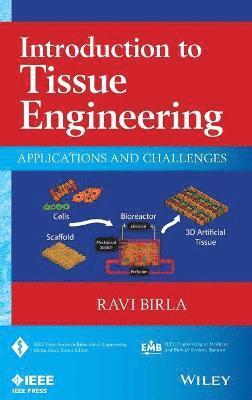
    Introduction to Tissue Engineering

    Applications and Challenges

    AvRavi Birla

    Inbunden, Engelska, 2014

    Del i serien IEEE Press Series on Biomedical Engineering

    1 745 kr

    Beställningsvara. Skickas inom 5-8 vardagar. Fri frakt över 249 kr.

    Fler format och utgåvor

    E-bok

    2 020 kr

    E-bok

    2 014 kr

    Beskrivning

    A comprehensive reference and teaching aid on tissue engineering—covering everything from the basics of regenerative medicine to more advanced and forward thinking topics such as the artificial liver, bladder, and tracheaRegenerative medicine/tissue engineering is the process of replacing or regenerating human cells, tissues, or organs to restore or establish normal function. It is an incredibly progressive field of medicine that may, in the near future, help with the shortage of life-saving organs available through donation for transplantation.Introduction to Tissue Engineering: Applications and Challenges makes tissue engineering more accessible to undergraduate and graduate students alike. It provides a systematic and logical eight-step process for tissue fabrication. Specific chapters have been dedicated to provide in-depth principles for many of the supporting and enabling technologies during the tissue fabrication process and include biomaterial development and synthesis, bioreactor design, and tissue vascularization. The tissue fabrication process is further illustrated with specific examples for liver, bladder, and trachea. Section-coverage includes an overall introduction of tissue engineering; enabling and supporting technologies; clinical applications; and case studies and future challenges.Introduction to Tissue Engineering: Presents medical applications of stem cells in tissue engineeringDeals with the effects of chemical stimulation (growth factors and hormones)Covers current disease pathologies and treatment options (pacemakers, prosthesis)Explains bioengineering, design and fabrication, and critical challenges during tissue fabricationOffers PowerPoint slides for instructorsFeatures case studies and a section on future directions and challengesAs pioneering individuals look ahead to the possibility of generating entire organ systems, students may turn to this text for a comprehensive understanding and preparation for the future of regenerative medicine.

    Produktinformation

    • Utgivningsdatum:2014-08-15
    • Mått:160 x 239 x 25 mm
    • Vikt:748 g
    • Format:Inbunden
    • Språk:Engelska
    • Serie:IEEE Press Series on Biomedical Engineering
    • Antal sidor:360
    • Förlag:John Wiley & Sons Inc
    • ISBN:9781118628645

    Utforska kategorier

    • Biomedicinsk teknik inom Medicin

    Mer om författaren

    RAVI BIRLA, PHD, is Associate Professor in the Department of Biomedical Engineering at the University of Houston. Dr. Birla’s research focuses on the fabrication of 3D cardiovascular constructs, including bioengineering 3D artificial heart muscle, cell-based cardiac pumps, tissue engineering ventricles, and bioartificial hearts.

    Innehållsförteckning

    • Preface xiiiAcknowledgments xvList of Abbreviations xviiImportant Terminology and Concepts xxi1 Introduction to Tissue Engineering 11.1 Introduction to Tissue Engineering, 21.2 Chronic Shortage of Donor Organs, 31.3 The Tissue Engineering Paradigm, 41.4 Definition of Tissue Engineering, 51.5 Process of Bioengineering 3D Artificial Tissue, 91.6 Design Principles for Tissue Engineering, 121.7 Building Blocks of Tissue Engineering, 141.8 Scientific and Technological Challenges, 151.9 Functional Assessment of Artificial Tissue, 161.10 Seminal Papers in Tissue Engineering, 181.11 Applications of 3D Artificial Tissue, 201.12 Two-Dimensional Versus Three-Dimensional Culture, 221.13 Integration of Core Technologies, 221.14 Growth of Tissue Engineering, 241.15 Disciplines in Tissue Engineering, 261.16 Tissue Engineering and Related Fields, 28Summary, 33Practice Questions, 34References, 352 Cells for Tissue Engineering 402.1 Cells and Tissue Engineering, 412.2 Cell Structure and Function, 432.3 The Dynamic Extracellular Matrix, 472.4 Cell Signaling, 482.5 Cellular Junctions, 502.6 Mammalian Tissue and Artificial Tissue, 522.7 Cell Sourcing, 522.8 The Cell Transplantation Process, 552.9 Cells for Cell Transplantation, 582.10 Mode of Action of Cells During Cell Transplantation, 592.11 Cell Transplantation and Tissue Engineering, 602.12 The Cell Culture Process, 612.13 Applications of Monolayer 2D Cell Culture, 642.14 Cell Culture Versus Tissue Engineering, 652.15 Introduction to Stem Cell Engineering, 662.16 Human Embryonic Stem Cells, 702.17 Induced Pluripotent Stem Cells, 712.18 Adult Stem Cells, 72Summary, 72Practice Questions, 73References, 743 Biomaterials for Tissue Engineering 843.1 Definition of Biomaterials, 853.2 Scheme for Biomaterial Development, 883.3 Historical Perspective on Biomaterials, 903.4 Tensile Properties, 923.5 Modulation of Tensile Properties, 953.6 Material Degradation, 973.7 Biocompatibility, 1003.8 Biomimetic Biomaterial, 1043.9 Classification of Biomaterials, 1063.10 Biomaterial Platforms, 1083.11 Smart Materials, 1133.12 The Dynamic Extracellular Matrix, 1143.13 Idealized Biomaterial, 116Summary, 118Practice Questions, 119References, 1214 Tissue Fabrication Technology 1304.1 Introduction to Tissue Fabrication Technologies, 1314.2 Self-Organization Technology, 1334.3 Cell Sheet Engineering, 1354.4 Scaffold-Based Tissue Fabrication, 1374.5 Cell and Organ Printing, 1404.6 Solid Freeform Fabrication, 1424.7 Soft Lithography and Microfluidics, 1434.8 Cell Patterning, 1454.9 Idealized System to Support Tissue Fabrication, 148Summary, 149Practice Questions, 150References, 1515 Vascularization of Artificial Tissue 1565.1 Introduction, 1575.2 Seminal Publications in Angiogenesis Research, 1595.3 Vascularization Defined, 1605.4 Molecular Mechanism of Vasculogenesis, 1615.5 Molecular Mechanism of Angiogenesis, 1635.6 Molecular Mechanism of Arteriogenesis, 1645.7 Therapeutic Angiogenesis, 1665.8 Tissue Engineering and Vascularization, 1675.9 Conceptual Framework for Vascularization During Artificial Tissue Formation, 1695.10 In Vivo Models of Vascularization, 1725.11 Idealized Vascularization Strategy for Tissue Engineering, 1745.12 Flow Chart and Decision Making, 1765.13 Biologically Replicated Vascularization Strategies, 1795.14 Biologically Mediated Vascularization Strategies, 1815.15 Biologically Inspired Vascularization Strategies, 184Summary, 186Practice Questions, 187References, 1886 Bioreactors for Tissue Engineering 1936.1 Introduction to Bioreactors, 1946.2 Bioreactors Defined, 1956.3 Classification of Bioreactors, 1976.4 Design Considerations, 2006.5 Idealized Bioreactor System, 2026.6 Bioreactors and Tissue Engineering, 2056.7 Bioreactors for Mammalian Cell Culture, 2076.8 Bioreactors for Scaffold Fabrication, 2096.9 Bioreactors for Scaffold Cellularization, 2126.10 Perfusion Systems, 2156.11 Bioreactors for Stretch, 2196.12 Electrical Stimulation, 221Summary, 226Practice Questions, 227References, 2307 Tracheal Tissue Engineering 2377.1 Structure and Function of the Trachea, 2387.2 Congenital Tracheal Stenosis, 2407.3 Genetic Regulation of Tracheal Development, 2417.4 Post Intubation and Post Tracheostomy Tracheal Stenosis, 2437.5 Treatment Modalities for Tracheal Stenosis, 2457.6 Design Considerations for Tracheal Tissue Engineering, 2477.7 Process of Bioengineering Artificial Tracheas, 2477.8 Tissue Engineering Models for Artificial Tracheas, 2507.9 Tracheal Tissue Engineering—An Example of a Clinical Study, 2537.10 Tracheal Tissue Engineering—A Second Example of a Clinical Study, 255Summary, 258Practice Questions, 258References, 2608 Bladder Tissue Engineering 2658.1 Bladder Structure and Function, 2668.2 Neurogenic Bladder Dysfunction, 2678.3 Surgical Bladder Augmentation, 2698.4 Development of the Urinary Bladder, 2708.5 Design Considerations for Bladder Tissue Engineering, 2708.6 Process of Bioengineering Artificial Bladders, 2718.7 Cell Sheet Engineering for Bladder Tissue Engineering, 2738.8 Small Intestinal Submucosa (SIS) for Bladder Tissue Engineering, 2758.9 Plga as a Biomaterial for Bladder Tissue Engineering, 2788.10 Acellular Grafts for Bladder Tissue Engineering, 2808.11 Organ Models for Bladder Tissue Engineering, 2838.12 Clinical Study for Bladder Tissue Engineering, 284Summary, 285Practice Questions, 286References, 2889 Liver Tissue Engineering 2959.1 Structure and Function of the Liver, 2969.2 Acute Liver Failure, 2979.3 Liver Transplantation, 2999.4 Liver Regeneration, 3019.5 Liver Development, 3029.6 Design Considerations for Liver Tissue Engineering, 3039.7 Process of Bioengineering Artificial Liver Tissue, 3039.8 Stem Cells for Liver Tissue Engineering, 3059.9 Surface Patterning Technology for Liver Tissue Engineering, 3079.10 Biomaterial Platforms for Liver Tissue Engineering, 3099.11 Fabrication of 3D Artificial Liver Tissue, 3099.12 Vascularization for Liver Tissue Engineering, 3119.13 Bioreactors for Liver Tissue Engineering, 3129.14 Spheroid Culture for Liver Tissue Engineering, 313Summary, 314Practice Questions, 315References, 317Index 323