• Fri frakt över 249 kr
  • •
  • Snabba leveranser
  • •
  • Billiga böcker
Kundservice

Du är på sajten för privatpersoner.

Företag, bibliotek eller offentlig verksamhet?

Du handlar på classic.bokus.com, där alla dina funktioner finns intakta.
Till classic.bokus.com
Bokus logotyp. Gå till startsidan.
  • Erbjudanden
  • Nyheter
  • Student
  • Topplistor
  • Barn & ungdom
  • Bokus Play
  • E-böcker
  • Pocketböcker
  • Spel & pussel

10% rabatt på allt med kod: NYSTART10 →

Sidfot

Mina sidor

    Hjälp

    • Kundservice
    • Vanliga frågor och svar
    • Frakt och leverans
    • Retur vid ångerrätt
    • Reklamera vara
    • Betalning
    • Köpvillkor
    • Allmänna villkor
    • Information om webbplatsens tillgänglighet

    Om Bokus

    • Om oss
    • Pressrum
    • För studenter
    • För företag
    • För bibliotek och offentlig verksamhet
    • För leverantörer
    • Hållbarhet

    Populärt

    • Aktuella erbjudanden
    • Presentkort
    • Studentlitteratur
    • Nya böcker
    • Topplistor
    • Signerade böcker
    • Engelska böcker

    Inspiration

    • Boktips
    • BookTok
    • Populära bokserier
    • Barnbokskaraktärer
    • Populära författare
    Logotyp för Bokus
    Följ oss på Facebook (extern länk)Följ oss på Instagram (extern länk)Följ oss på YouTube (extern länk)Följ oss på TikTok (extern länk)
    bokus @ CookiesAnpassa cookiesIntegritetspolicyKöpvillkor
    Till Citymail hemsida (extern länk)Till Budbee hemsida (extern länk)Till Postnord hemsida (extern länk)Till Schenker hemsida (extern länk)Till Early Bird hemsida (extern länk)Till Walleys hemsida (extern länk)
    1. Naturvetenskap och teknik
    2. Geovetenskap
    3. Miljövetenskap och miljöpolitik

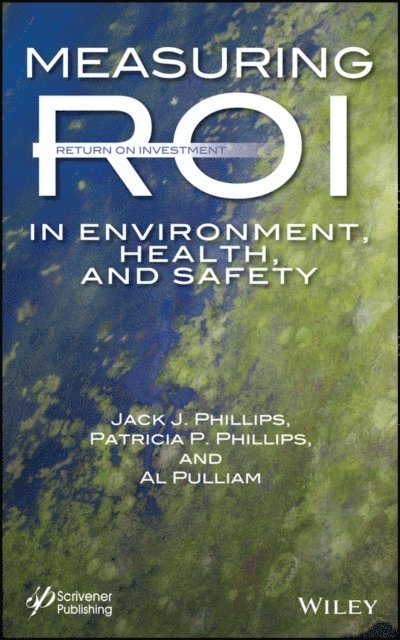
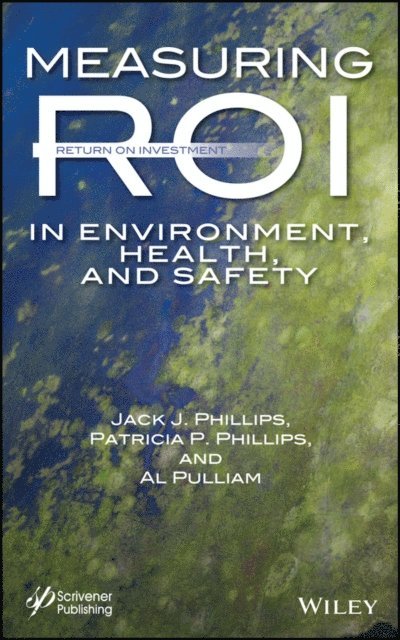
    Measuring ROI in Environment, Health, and Safety

    AvJack J. Phillips,Patricia Pulliam Phillips

    Inbunden, Engelska, 2014

    1 037 kr

    Beställningsvara. Skickas inom 5-8 vardagar. Fri frakt över 249 kr.

    Beskrivning

    Using the most successful evaluation system in the world for measuring impact and ROI—the ROI Methodology—learn how to measure the success of all business programs and projects involving environmental initiatives, health-related programs for employees and citizens, and various safety programs in all types of settingsFew topics are more important than the health and safety of employees, associates, and citizens. Organizations focus a tremendous amount of money/resources on maintaining a zero-harm approach to its employees, the greater community, and the surrounding environment. At the same time, organizations are implementing many types of wellness and fitness programs ensuring that employees remain healthy, safe, and productive. Measuring ROI in Environment, Health, and Safety shows how to measure the success of all types of programs and projects involving environmental initiatives, health-related programs for employees and citizens, and various safety programs in all types of settings.Environmental efforts, or green projects, can represent value for organizations. Eighty percent can deliver a positive ROI, and the other 20 percent are often required by regulation. In either case, it is critical to understand whether or not these projects are working. This new book will show step-by-step how to measure the success of many types of green programs. Within an organization, responsibility for environment, health, and safety is often under the direction of the same executive team. Their concern is always about how well the programs are working and, more importantly, what can be done to ensure that they are more successful.ROI in Environment, Health, and Safety introduces the ROI Methodology, now used by over 4,000 organizations, and the most successful and utilized evaluation system in the world for measuring program impact and ROI. It shows step-by-step how to capture the reaction to the various initiatives and programs a firm may institute, the learning necessary to make them successful, progress in terms of application and implementation, the specific business impact measures driven by these programs, and, finally, the financial ROI. Along the way, data is collected for process improvement to ensure that if certain programs are not working, they can be adjusted for success.

    Produktinformation

    • Utgivningsdatum:2014-03-18
    • Mått:161 x 244 x 30 mm
    • Vikt:767 g
    • Format:Inbunden
    • Språk:Engelska
    • Antal sidor:488
    • Förlag:John Wiley & Sons Inc
    • ISBN:9781118639788

    Utforska kategorier

    • Miljövetenskap och miljöpolitik inom Naturvetenskap och teknik

    Mer om författaren

    Dr. Jack J. Phillips, PhD, is Chairman of the ROI Institute and a world-renowned expert on measurement and evaluation. Phillips provides consulting services for Fortune 500 companies and workshops for major conference providers worldwide. Phillips is also the author or editor of more than 30 books and more than 100 articles. His work has been featured in the Wall Street Journal, Bloomberg Businessweek, Fortune, and on CNN.Dr. Patricia Pulliam Phillips, PhD, is an internationally recognized author, consultant, and President and CEO of the ROI Institute. Phillips provides consulting services to organizations worldwide. She helps organizations build capacity when using the ROI Methodology by facilitating the ROI certification process and teaching the ROI Methodology in workshops and graduate-level courses.Al Pulliam, MSPH, is a veteran environment, occupational health and safety professional with over 20 years experience, which includes EHS management in heavy manufacturing, industrial construction, commercial construction, and consulting. He is currently on an extended contract assignment in the aerospace industry. He holds a master of science in public health from the Tulane University School of Public Health and Tropical Medicine.

    Innehållsförteckning

    • Preface xxiList of Authors xxxi1 Environment, Health and Safety is Everywhere 11.1 The New Role of EHS 21.2 Environmental Initiatives 21.3 Safety Initiatives 61.4 Health and Fitness 131.5 Managing Change in EHS 171.6 Final Thoughts 192 Is It Worth It? 212.1 EHS Killers 222.2 Value Redefi ned 282.3 Why Now? 312.4 EHS Chain of Impact 352.5 Shortcomings of Current Measurement and Evaluation Systems 382.6 EHS Leadership: A Requirement for Success 432.7 Challenges Along the Way 442.8 Final Thoughts 473 Investing in Environment, Safety and Health Initiatives 493.1 Overview 493.2 Strategy 1: Avoid the Investment 503.3 Strategy 2: Invest the Minimum 553.4 Strategy 3: Invest with the Rest 583.5 Strategy 4: Invest Until It Hurts 623.6 Strategy 5: Invest as Long as there is Payoff 663.7 Final Thoughts 704 The ROI Methodology: A Tool to Measure and Improve 734.1 A Brief Overview 744.2 Results Framework 744.3 Results Framework and Business Alignment 794.4 Benefi ts of Developing the Chain of Impact 824.5 The ROI Process Model 834.6 Operating Standards and Philosophy 964.7 Case Application and Practice 964.8 Implementation 974.9 Benefi ts of Applying the ROI Methodology 984.10 Final Thoughts 1015 Project Positioning 1035.1 Creating Business Alignment 1045.2 Determining Payoff Needs 1075.3 Determining Business Needs 1115.4 Determining Performance Needs 1185.5 Determining Learning Needs 1205.6 Determining Preference Needs 1215.7 Developing Objectives for EHS Projects and Programs 1225.8 Case Study Examples 1265.9 Final Thoughts 1346 Measuring Reaction and Learning 1356.1 Why Measure Reaction? 1356.2 Sources of Data for Measuring Reaction 1386.3 Areas of Feedback 1396.4 Data Collection Timing for Measuring Reaction 1406.5 Data Collection Methods for Measuring Reaction 1416.6 Use of Reaction Data 1426.7 Why Measure Learning? 1436.8 Challenges and Benefi ts of Measuring Learning 1446.9 Learning Measurement Issues 1466.10 Data Collection Methods for Measuring Learning 1476.11 Use of Learning Data 1496.12 Final Thoughts 1507 Measuring Application, Implementation and Impact 1517.1 Why Measure Application and Implementation? 1527.2 Application Measurement Issues 1537.3 Data Collection Methods for Measuring Application 1577.4 Barriers to Application 1597.5 Use of Application Data 1607.6 Why Measure Impact? 1607.7 Impact Measurement Issues 1617.8 Data Collection Methods for Measuring Impact 1657.9 Considerations for Selecting Data Collection Methods 1697.10 Measuring the Hard to Measure 1727.11 Final Thoughts 1738 Isolating the Impact of EHS Projects 1758.1 Why the Concern About Isolating Project Impact? 1768.2 Preliminary Issues 1798.3 Methods to Isolate the Impact of Projects 1818.4 Considerations When Selecting Isolation Methods 1988.5 Final Thoughts 1999 Converting Impact Data to Money 2019.1 Why the Concern About Converting Data to Monetary Values? 2029.2 Five Steps to Convert Data to Money 2049.3 The Five Steps to Convert Data in Practice 2069.4 Methods to Convert Impact Measures to Money 2079.5 Considerations When Selecting Data Conversion Methods 2159.6 Intangible Benefi ts of EHS Projects 2199.7 Final Thoughts 22610 Calculating the ROI 22710.1 Why the Concern About Project Costs? 22810.2 Fundamental Cost Issues 22910.3 Fully Loaded Cost Profi le 23310.4 Cost Classifi cations 23510.5 The ROI Calculation 23610.6 ROI Misuse 23810.7 ROI Targets 24010.8 Intangibles Revisited 24110.9 Other ROI Measures 24110.10 Final Thoughts 24311 Reporting Results 24511.1 Why the Concern About Communicating Results? 24611.2 Principles of Communicating Results 24711.3 The Process for Communicating Results 25011.4 The EHS Scorecard 26111.5 Final Thoughts 26812 Implementing and Sustaining ROI 27112.1 The Concern About Implementing and Sustaining ROI 27212.2 Implementing the Process: Overcoming Resistance 27312.3 Assessing the Climate 27412.4 Developing Roles and Responsibilities 27412.5 Establishing Goals and Plans 27812.6 Revising or Developing Policies and Guidelines 27912.7 Preparing the Project Team 28012.8 Initiating ROI Projects 28212.9 Preparing Sponsors and Management Team 28312.10 Removing Obstacles 28412.11 Monitoring Progress 28612.12 Final Thoughts 28713 Measuring ROI in Safety Management for Project Leaders 29113.1 Background 29113.2 Why Evaluate this Program? 29413.3 The ROI Process 29513.4 Planning for Evaluation 29713.5 Data Collection Plan 29713.6 ROI Analysis Plan 29713.7 Action Planning: A Key to ROI Analysis 30013.8 ROI Forecast with Reaction Data 30313.9 Improving Response Rates 30513.10 Results 30613.11 Communication Strategy 31613.12 Lessons Learned 31613.13 Discussion Questions 31714 Measuring ROI in a Modular/Reusable Safety Railing System 31914.1 Background 32014.2 Problem Defi nition 32114.3 Project Background 32214.4 Business Alignment 32314.5 Evaluation Methodology 32314.6 Evaluation Results 32814.7 Communication Strategy 33614.8 Lessons Learned 33614.9 Questions For Discussion 33715 Measuring ROI in an Ergonomics-Based Risk Management Intervention 33915.1 Background 33915.2 Evaluation Methodology 34315.3 Evaluation Results 35015.4 Communication Strategy 35615.5 Lessons Learned 35616 Measuring ROI in Stress Management 36116.1 Background 36116.2 Why ROI? 36516.3 Program Results 37316.4 Communication Strategies 38416.5 Policy and Practice Implications 38516.6 Questions for Discussion 38517 Measuring ROI in a Safety Incentive Program 38717.1 Background 38717.2 The Solution 38917.3 Data Collection and Analysis 39117.4 Data Interpretation and Conclusion 39317.5 Calculating the Return on Investment 39417.6 Communication of Results 39517.7 Questions for Discussion 39618 Measuring ROI in a Job Safety Training Program at a Major Food Retailer 39718.1 Background 39818.2 Evaluation Methodology 40018.3 Calculating ROI 40618.4 Barriers and Enablers 40818.5 Communication Plan 40918.6 Conclusion 41118.7 About the Author 41119 Measuring ROI in a Work-at-Home Program 41319.1 FMI: PART A 41419.2 FMI: PART B 42119.3 FMI: PART C 42419.4 FMI: PART D 42719.5 FMI: PART E 42819.6 FMI: PART F 43219.7 Questions for Discussion 44019.8 FMI: PART G 44019.9 Questions for Discussion 442Index 443