• Fri frakt över 249 kr
  • •
  • Snabba leveranser
  • •
  • Billiga böcker
Kundservice

Du är på sajten för privatpersoner.

Företag, bibliotek eller offentlig verksamhet?

Du handlar på classic.bokus.com, där alla dina funktioner finns intakta.
Till classic.bokus.com
Bokus logotyp. Gå till startsidan.
  • Erbjudanden
  • Nyheter
  • Student
  • Topplistor
  • Barn & ungdom
  • Bokus Play
  • E-böcker
  • Pocketböcker
  • Spel & pussel

10% rabatt på allt med kod: NYSTART10 →

Sidfot

Mina sidor

    Hjälp

    • Kundservice
    • Vanliga frågor och svar
    • Frakt och leverans
    • Retur vid ångerrätt
    • Reklamera vara
    • Betalning
    • Köpvillkor
    • Allmänna villkor
    • Information om webbplatsens tillgänglighet

    Om Bokus

    • Om oss
    • Pressrum
    • För studenter
    • För företag
    • För bibliotek och offentlig verksamhet
    • För leverantörer
    • Hållbarhet

    Populärt

    • Aktuella erbjudanden
    • Presentkort
    • Studentlitteratur
    • Nya böcker
    • Topplistor
    • Signerade böcker
    • Engelska böcker

    Inspiration

    • Boktips
    • BookTok
    • Populära bokserier
    • Barnbokskaraktärer
    • Populära författare
    Logotyp för Bokus
    Följ oss på Facebook (extern länk)Följ oss på Instagram (extern länk)Följ oss på YouTube (extern länk)Följ oss på TikTok (extern länk)
    bokus @ CookiesAnpassa cookiesIntegritetspolicyKöpvillkor
    Till Citymail hemsida (extern länk)Till Budbee hemsida (extern länk)Till Postnord hemsida (extern länk)Till Schenker hemsida (extern länk)Till Early Bird hemsida (extern länk)Till Walleys hemsida (extern länk)
    1. Medicin
    2. Medicin: allmänt
    3. Hälso- och sjukvård

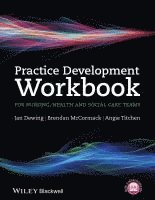
    Practice Development Workbook for Nursing, Health and Social Care Teams

    AvJan Dewing,Brendan McCormack

    Häftad, Engelska, 2014

    514 kr

    Beställningsvara. Skickas inom 5-8 vardagar. Fri frakt över 249 kr.

    Beskrivning

    If you’re looking to develop and improve your nursing, health or social care practice, either individually or as part of a team, the Practice Development Workbook for Nursing, Health and Social Care Teams offers a wide-ranging selection of activities, tools and resources covering vital aspects of practice development.  Written as a companion volume to the latest edition of the best-selling Practice Development in Nursing and Healthcare, this new resource grounds practice development in day-to-day nursing and health and social care through accessible, informative learning activities.  It also focuses on practical ways in which teams can make their workplace cultures more effective and person-centred, and enables practitioners to empower themselves to make compassionate care a fundamental part of effective health and social care systems.Key features: Offers a full range of resources and tools to support all stages of learning and development towards person-centred practice, including learning activities, templates, posters, tips and hints, information sheets, and checklists.Includes practical advice for teams to involve patients, clients and residents in the transformation of workplace cultures and bringing about sustainable changePerfect for use both by individuals or by those working in group settingsPresents informative and accessible information through activities and key learning points rather than just theoryFully linked to Practice Development in Nursing and Healthcare, second edition, but can also be used as a stand-alone resourceIncludes access to a companion website featuring even more tools and resources, including: sample Powerpoint presentations, worksheets and reflection tools, questionnaires and checklists, evaluation tools, as well as a bonus chapter on 'Sharing and Celebrating'

    Produktinformation

    • Utgivningsdatum:2014-05-30
    • Mått:224 x 279 x 15 mm
    • Vikt:721 g
    • Format:Häftad
    • Språk:Engelska
    • Antal sidor:256
    • Förlag:John Wiley and Sons Ltd
    • ISBN:9781118676707

    Utforska kategorier

    • Hälso- och sjukvård inom Medicin

    Mer om författaren

    Jan Dewing is Head of Person-centred Research and Practice Development at East Sussex Healthcare NHS Trust, Eastbourne, UK; Co-Director, Centre for Practice Development (including Lead for Kent Sussex Surrey, Dementia Care Innovation Hub), Canterbury Christchurch University, Canterbury, UK; Visiting Professor, Person-centred Practice Research Centre, University of Ulster, Ulster, Northern Ireland; Visiting Professor, School of Nursing & Midwifery University of Wollongong, Wollongong NSW, Australia.Brendan McCormack is Director of the Institute of Nursing and Health Research, and Head of the Person-centred Practice Research Centre, University of Ulster, Ulster, Northern Ireland; Professor II, Buskerud University College, Drammen, Norway; Adjunct Professor of Nursing, University of Technology, Sydney, Australia; Visiting Professor, School of Medicine & Dentistry, University of Aberdeen, Aberdeen, Scotland.Angie Titchen is Independent Practice Development Consultant, Principal Investigator at the Knowledge Centre for Evidence-Based Practice, Fontys University of Applied Sciences, Eindhoven, The Netherlands; Visiting Professor, University of Ulster, Ulster, Northern Ireland; Adjunct Professor, Charles Sturt University, Bathurst NSW, Australia; Associate Fellow, University of Warwick, Warwick, UK.

    Innehållsförteckning

    • Preface ixAbout the companion website xi1 Introduction: Getting the best out of this resource 1Introduction 1This resource matters because 4Who is it for? 5How can this resource be used in your workplace? 7What is practice development? 9The principles of practice development work 11The person-centred practice framework 12Useful websites and resources 142 Knowing and demonstrating values and beliefs about person-centred care 17Introduction 17Reflection on my own values and beliefs about the care/services I give or receive 20Going for a reflective walk on your own or with someone else 21Values and beliefs of the care setting 23Leaders’ values and beliefs 25Sheet 2.1: Worksheet for recording learning activities with a buddy: Values and beliefs about care 27Sheet 2.2: Discussion groups 28Discussion trigger 2.1: Short videos 30Quick evaluation to raise profile of values and beliefs in the care home (available on companion website)Invitation and information sheet for patients/residents, families and care staff for the values and beliefs clarification activity (available on companion website)Discussion trigger 2.2: Posters (available on companion website)Discussion trigger 2.3: Factsheets (available on companion website)Discussion trigger 2.4: Scenarios (available on companion website)Discussion trigger 2.5: Scenarios created by sensory walkabouts (available on companion website)Discussion trigger 2.6: Accessing group/team values and beliefs through emotional triggers (available on companion website)Sheet 2.3: Handout: How to feature values and beliefs in your work around the care setting/care home 32Sheet 2.4: Values and beliefs template 33Sheet 2.5: Values and beliefs clarification activity: A facilitator’s guide (This section also includes materials that are on the companion website) 34Sheet 2.6: Instruction sheet for patients/residents, families and care staff for the values and beliefs clarification activity 383 Developing a shared vision for person-centred care 39Introduction 39Guide: Setting up a practice development coordinating group for visioning activities 43Sheet 3.1: Templates for group meeting agendas and notes 44Sheet 3.2: Group relaxation activity (available on companion website) 45Sheet 3.3: Creative methods for developing a shared vision: Programme of three workshops (you decide which one you might do) 45Sheet 3.4: Workshop guidance: Visualisation through painting and/or collage 46Sheet 3.5: Workshop guidance: Creating and sharing personal visions 48Sheet 3.6: Workshop guidance: Vision statement development 50Sheet 3.7: Guide: Visioning with a virtual group 51Sheet 3.8: Questionnaire: Developing a shared vision for person-centred care at 52Sheet 3.9: Visioning the practice development processes and developing ground rules (one-to-one) 53Sheet 3.10: Visioning the practice development processes and developing ground rules (small informal group) 55Sheet 3.11: Workshop guidance: Visioning the practice development processes and developing ground rules 57Sheet 3.12: What do we do next? 58Useful websites and resources 594 Introduction to measuring progress and evaluation 60Introduction: Why measuring and evaluation is important 60Workshop guidance: Current evaluation methods within your organisation 63Trigger for group discussion: What are ‘metrics’ and how do we measure person-centred care? 65Trigger for group discussion: Practice development principles for measuring and evaluation 66Learning activity for teams: Evaluating care plans 67Learning activity for teams: Evaluating your respect for dignity, privacy and the control people have in your service 70Learning activity for teams: Cats, skirts, handbags and lipstick 73‘At a Glance’: Summary plan for personalised care (available on companion website) Learning activity for staff who serve food & drink: Evaluating the service you offer 74Learning activity for housekeepers: Evaluating the cleaning, housekeeping or repair service you offer 76Learning activity for team or home managers and those with an interest in learning and practice development: Evaluating the learning support systems for care teams 79Guide: Reflection tools 82Reflection tools and examples (available on companion website) Getting the commitment of stakeholders 84Template for developing a communication plan with stakeholders 85Guide: Setting up and sustaining a practice development coordinating group 86Examples of session plans (available on companion website) Developing a common vision about our roles (available on companion website) Claims, Concerns and Issues: An evaluation tool for working with stakeholders 87A template for stakeholders’ views: Claims, Concerns and Issues 88An example of Claims, Concerns and Issues (1) 89An example of Claims, Concerns and Issues (2) 90Guide: Facilitating Claims, Concerns and Issues 915 Getting started together: Measuring and evaluating where we are now 93Introduction 93Guidance on developing evaluation questions 95SWOT or TOWS tool 96Forcefield analysis 97Gathering evidence in the workplace 98Example of a poster/flyer about gathering evidence (available on companion website)Example of a poster/information sheet about carrying out observations (available on companion website)Example of information sheet for families/decision makers of people for whom process consent might apply (e.g. people with severe cognitive impairment) (available on companion website)Guide: Method and documentation of consent process for individuals with severely impaired capacity (available on companion website)Giving and receiving feedback after evidence has been gathered 100Workplace observations: Walkabout guide 102Workplace observations: In a fixed place 103Workplace observations: Record sheet 104Combined observations: Record sheet for feedback 105Guide: Observations of care 106Guide: Patient/resident/relative narrative interview 106Guide: Conversation with patients/residents with severe cognitive impairment 108Two person-centred assessment tools (available on companion website) Handout: Culture 111Method for facilitating a workshop on workplace culture (available on companion website) Handout: Effective workplace culture 112Useful websites and resources 1136 A practice development plan 114Introduction 114Pulling it together activity 1: Individual/informal group activity for analysis of evidence (in preparation for action planning) 119Pulling it together workshop 1: Analysis of evidence gathered through observations, narratives and conversations 122Pulling it together workshop 2: Comparing findings and interpretations 124Worksheet for recording learning about person-centred care through practice development activities and workshops (available on companion website) Pulling it together activity 2: Individual/informal group activity for identifying indicators to prioritise action planning 127Pulling it together workshop 3: Identifying indicators and using them to prioritise action planning 129Practice development coordinating group: Roles and responsibilities 132Person-centred practice templates (also available on companion website) 133Evidence summary and action plan for aims and goals based on the person-centred practice framework 134Overview action planning guide 138Overview action planning template (available on companion website) Action point planning sheet (available on companion website) SMART and SMARTER goals 1397 Mini-projects: Ongoing and integrated action, evaluation, learning and planning 140Introduction 140Examples of mini-projects 143Mini-projects: Guide to structure and processes 145Sheet 7.1: Leading a project/working/action or learning group 148Sheet 7.2: Mini-project action planning template 149Sheet 7.3: Example: Filled in mini-project action planning template 155What do you do with this next? 1618 Learning in the workplace 162Introduction 162Part 1: Creating a person-centred learning environment 167Sheet 8.1: A learning culture guide 168A framework for work-based learning (available on companion website) Sheet 8.2: Activity and guidance for managers for creating a person-centred learning environment 171Sheet 8.3: Evaluation and process review of group work and sessions 174Sheet 8.4: Giving and receiving feedback handout 176Indicators of effective feedback (available on companion website) Indicators of ineffective feedback (available on companion website) Part 2: Active learning 178Enabling questions 179Activity 8.1: The 15 minute reflection space 181Activity 8.2: Practising the use of open enabling questions in active learning 182Sheet 8.5: Preparation for activities 3–6 184Activity 8.3: Reflection on ‘self as active learner’ 185Activity 8.4: Types/modes of reflection: The way you tend to reflect (available on companion website) Activity 8.5: Positive incident accounts 186Activity 8.6: Problem-solving tool (available on companion website) Sheet 8.6: Worksheet for recording learning and action points 187Sheet 8.7: Process evaluation: Listening critically to other peoples’ work 188Sheet 8.8: Process evaluation record: Listening skills 189Sheet 8.9: Process evaluation record: What I said 190Sheet 8.10: Active learning evaluation 191Part 3: Learning supervision 192Induction programmes, preceptorship, mentorship, coaching and work-based learning facilitation 193Guide for work-based facilitators: Foundation Degrees (available on companion website) Clinical or professional supervision for the future 195Summary of learning in the workplace 195Useful websites 196Sharing and celebrating9 What if ? When things don’t go so well 199Introduction 199Frequently asked questions 201Most common challenges 207Identifying why things are not going well 212Sheet 9.1: Material from other chapters in this resource that can be used for addressing things that don’t go well 213Activity 9.1: Acknowledging our own part in what didn’t go well 215Activity 9.2: Helping each other learn from what didn’t go well and work out what to do about it 216Activity 9.3: Acknowledging, in the working day, when things don’t go well and affirming plans to change 22110 Practice development as a continuous process 223Introduction 223Activity 10.1: Look after yourself and your health 224Activity 10.2: Keeping it fresh everyday 225Guidance: Keeping practice development fresh 226Examples: The art of re-invention 227Activity 10.3: The art of re-invention 227Linking to new policy agendas 229Useful websites and resources 230References 231Index 233